
Lieferung heute & morgen

Qualitätsgarantie

Willkommens-Angebote freischalten: KOSTENLOSE Lieferung | Bis zu 80 % RABATT | Kostenlose 30-Tage-JoyPlus-Testphase
App herunterladen
A freestanding vanity unit with a 60 cm width is a smart and stylish solution for creating storage in your bathroom. This type of bathroom furniture is ideal for small to medium-sized bathrooms, especially in rental properties or existing layouts where wall mounting is not feasible or desired. It instantly enhances functionality. The standard 60 cm width is compatible with many common basin sizes, while the freestanding design allows for a hassle-free setup without drilling or complex installation.
Its primary purpose is to conceal the P-trap while simultaneously organising bathroom essentials. Such an under-sink cabinet makes efficient use of previously wasted space and contributes to a clean, organised aesthetic.
Choosing the right vanity unit should be based on objective factors. The following technical aspects are crucial for functionality and longevity in a bathroom environment.
The material is decisive for moisture resistance and ease of cleaning.
The exact measurements and structural details determine the fit and practical utility.
Small details can significantly impact daily use.
Based on the technical criteria mentioned, we present two models that stand out for their specific design features.
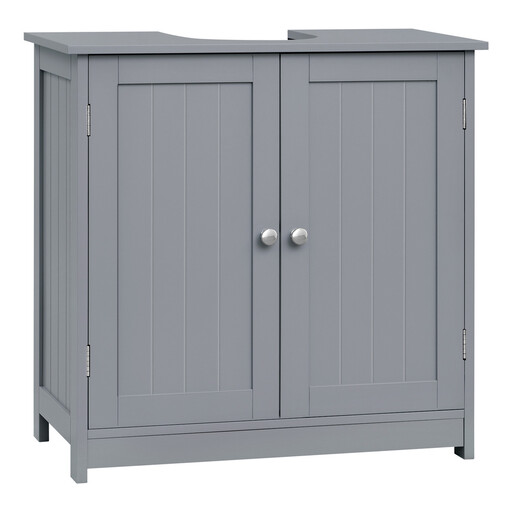
Why we recommend this product The WOLTU model focuses on a purely functional design. Its construction from lacquered E1-grade MDF panels provides a solid foundation for bathroom use. The standout feature is its two doors, which open up to 180°. This maximises accessibility to the interior, making it easier to retrieve and store items.
Pros:
Best Suited For: This model is designed for users seeking a practical and durable 60cm bathroom cabinet. It is particularly suitable when frequent access to the entire contents is needed and a maximum door opening is advantageous.
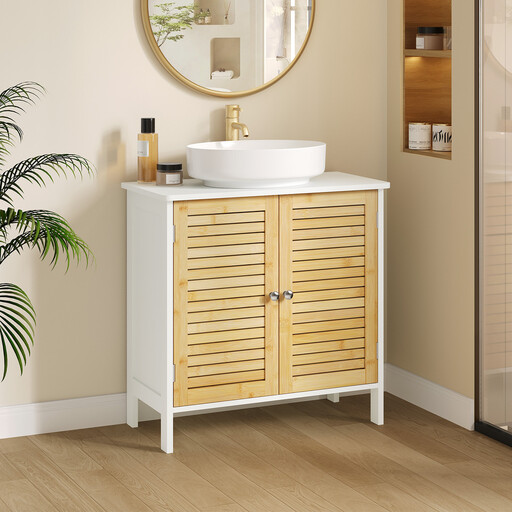
Why we recommend this product The EUGAD cabinet is distinguished by its flexibility and mixed-material design. The combination of a natural bamboo countertop and a white lacquered MDF body offers an attractive aesthetic and leverages the positive properties of both materials. The key functional advantage is the removable and adjustable shelf, which allows for customised storage to fit the height of your toiletries.
Pros:
Best Suited For: This model is aimed at users who value customisable storage space. Anyone looking to neatly store bottles, cans, and boxes of different heights will directly benefit from the adjustable shelf.
The models presented represent common solutions in the freestanding vanity unit market. However, the market offers a wide variety of other designs that differ in material, colour, and door style. Cabinets made entirely from lacquered engineered wood often provide a particularly uniform and low-maintenance surface. For an overview of cabinets with a focus on MDF doors, you can find more models in our dedicated category.
1. How do I correctly measure the space for a vanity unit? Measure three values: the maximum width directly under the basin, the available depth from the wall to the front edge (watch out for any pipes), and the height from the floor to the underside of the basin. Additionally, measure the position and diameter of the P-trap pipe to ensure compatibility with the cabinet's cut-out.
2. Does a freestanding vanity unit require additional wall mounting? No, a freestanding vanity unit is designed to be stable without being fixed to the wall, provided it is on a level and solid floor. For safety, the maximum load capacity should not be exceeded, and weight should be distributed evenly to prevent tipping.
3. What does "E1-grade MDF panels" mean? The E1 grade is a European standard that regulates the emission of formaldehyde from engineered wood products. E1-grade materials release only a very small, non-hazardous amount of formaldehyde into the air. This is a relevant quality indicator for furniture in living areas, bedrooms, and bathrooms.