
Lieferung heute & morgen

Qualitätsgarantie

Willkommens-Angebote freischalten: KOSTENLOSE Lieferung | Bis zu 80 % RABATT | Kostenlose 30-Tage-JoyPlus-Testphase
App herunterladen
Choosing the right table tennis ball is a fundamental decision that can significantly impact the quality of your training and the outcome of a match. Inconsistent bounce, poor durability, or insufficient roundness are common problems that challenge players and clubs. This guide is designed to help you understand the different models of Double Fish table tennis balls and make an informed decision tailored precisely to your needs—whether for intensive training or official competition.
Before making a decision, it's helpful to understand the key quality characteristics and standards. The following points will provide guidance for your purchase.
The star rating is a direct indicator of a table tennis ball's quality and intended use.
In recent years, the market has shifted from traditional celluloid balls to balls made of Acrylonitrile Butadiene Styrene, or ABS. These 40+ ABS plastic balls are now the official standard in competitive sports. They are characterized by greater hardness and improved roundness, resulting in a very uniform and predictable bounce. They are also generally more durable than their celluloid predecessors. The V40+ designation on Double Fish balls refers to this modern material standard.
Your individual needs determine which package size and quality level is most suitable.
Based on the criteria mentioned, we have compiled a selection of Double Fish balls that cover various requirement profiles.
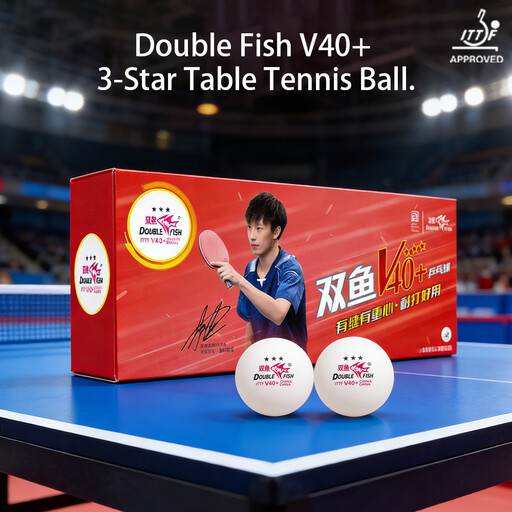
Why It Stands Out: This ball is the official choice for professional competition. With its ITTF Professional Certification and approval for WTT tournaments, it meets the highest standards. Made from high-quality, high-impact ABS material and using precision seam technology, it offers exceptional roundness and a stable centre of gravity. The result is extremely low deformation and maximum flight stability for precise play at the highest level.
Advantages:
Who It's For: This ball is aimed at professional competitive players and ambitious club players who want to train under the exact same conditions found in official tournaments.
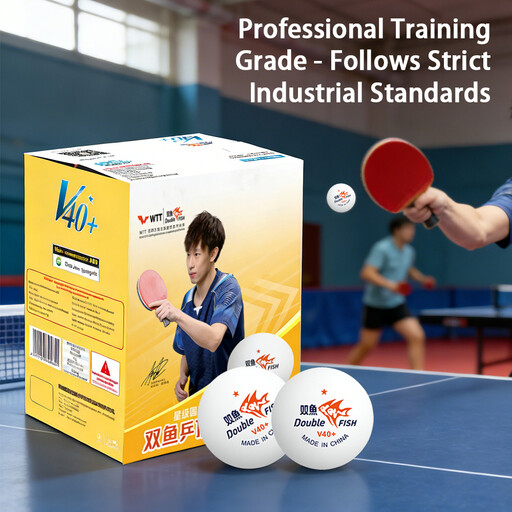
Why It Stands Out: This 1-star ball is designed as a high-quality table tennis training ball that bridges the gap between simple practice and competition. Its construction from a seamed ABS polymer ensures a stable rebound and a good balance of elasticity and hardness. The precise weighting prevents deviations in the centre of gravity and allows for controlled ball placement, making it ideal for players looking to refine their technique.
Advantages:
Who It's For: Ideal for table tennis clubs, coaches, and ambitious recreational players who need a reliable and durable ball in large quantities for daily training.

Why It Stands Out: This no-star ball is the workhorse for training with high ball consumption. It combines wear-resistant technology with precise weighting to ensure a long lifespan and consistent flight characteristics. According to the manufacturer, the production process extends its lifespan by 30%, making it an extremely economical choice for multi-ball practice.
Advantages:
Who It's For: Perfect for table tennis academies, clubs, and coaches who need a large quantity of balls for multi-ball training and value durability and a consistent feel.
The Double Fish brand offers a focused selection for table tennis players. However, if you are considering balls for other sports or from alternative manufacturers, you can find a broader overview in our Sports Balls category.
1. What does the "V40+" marking on table tennis balls mean? The "40+" designation indicates that the ball has a diameter of just over 40 mm. This is the current standard, introduced after the switch from 38 mm to 40 mm balls. The "V" often stands for the new material (Poly/ABS) as opposed to the older celluloid balls. Double Fish V40+ balls thus comply with the modern competition standard.
2. Do ABS plastic balls play differently than the old celluloid balls? Yes, there are noticeable differences. 40+ ABS plastic balls are harder and tend to have a slightly higher, but more uniform, bounce. They also take on slightly less spin than celluloid balls. Since ABS balls are now the global standard for competitions, it is advisable for all ambitious players to train with this material.
3. How should table tennis balls be stored correctly to maximize their lifespan? Table tennis balls should be stored in a cool, dry place away from direct sunlight. Extreme temperatures (both heat and cold) can affect the material and lead to deformation or cracks. Avoid storing heavy objects on top of the balls to prevent dents. Regular cleaning with a soft, dry cloth helps to maintain the surface properties.