
Lieferung heute & morgen

Qualitätsgarantie

Willkommens-Angebote freischalten: KOSTENLOSE Lieferung | Bis zu 80 % RABATT | Kostenlose 30-Tage-JoyPlus-Testphase
App herunterladen
A double roller blind clip fix without drilling is particularly suitable for rented homes, frequently changing living arrangements and windows whose frames must not be permanently damaged. The combination of transparent and opaque fabric stripes allows you to regulate daylight and privacy flexibly.
To avoid making the wrong purchase, however, buyers should be aware of a few common pitfalls. A low price alone says little about whether a blind is suitable for your particular window.
With many double roller blinds, the fabric is narrower than the stated overall width. According to the product specifications for the WOLTU models, the difference is often around 4 to 5 cm. If you order only the glass width, you may not get sufficient privacy at the sides.
As a general guide, many versions follow these measurements:
Always check the actual measurements against the specifications for the version you are buying.
A roller blind fitted without drilling is usually attached to the movable window sash. The key factor is the rebate or frame thickness. Several of the WOLTU models selected here are designed for frame thicknesses of 13 to 23 mm. Other versions specify a range of 1 to 10 mm.
Before ordering, you should therefore:
According to the product description, this fitting method is not designed for roof windows, wooden windows or, depending on the version, sliding, fixed-glazed or tilt windows.
A day and night double roller blind uses alternating transparent or light-filtering and opaque stripes. The fabric layers are shifted against each other using the chain control. Depending on the setting, this creates different levels of light control: transparent, partially covered or largely opaque.
A light-filtering blackout blind should therefore not be confused with a fully room-darkening curtain or a dedicated blackout blind for bedrooms. Side gaps that let in light may remain with blinds fitted inside the window recess. For home offices, bedrooms or rooms exposed to strong sunlight, you should check the desired light effect particularly carefully.
A polyester roller blind is relatively easy to care for in everyday use. According to the product description, the WOLTU models listed are made from 100% polyester and have thermally cut edges, depending on the version. This can help reduce fraying.
The product information usually recommends the following cleaning methods:
For kitchens and bathrooms, it is also important that the fabric is not permanently exposed to water or steam. ‘Suitable for damp rooms’ does not mean that the blind is waterproof.
A privacy roller blind with chain control, or a blind with a side control, can be adjusted continuously. Several versions allow the chain to be fitted on either the left or right. This is useful if there is a window handle, piece of furniture or door on one side.
The operating chain must be secured so that it is out of reach of small children and pets. Any chain safety device provided should be used in accordance with the fitting instructions. Even with sturdy clip-on brackets, you must check before use that the blind is securely fitted and does not shift when the window is operated.
A duo roller blind for windows is suitable for living rooms and bedrooms, offices and children's rooms, as well as kitchens and bathrooms when properly cared for. For balcony and patio doors, make sure the height is sufficient. A double roller blind for doors must not obstruct the door handle or catch when the door is opened and closed.
If you need different sizes, it is best to stay within the same model range wherever possible. This makes it easier to coordinate colours, stripe effects and operation throughout the room.
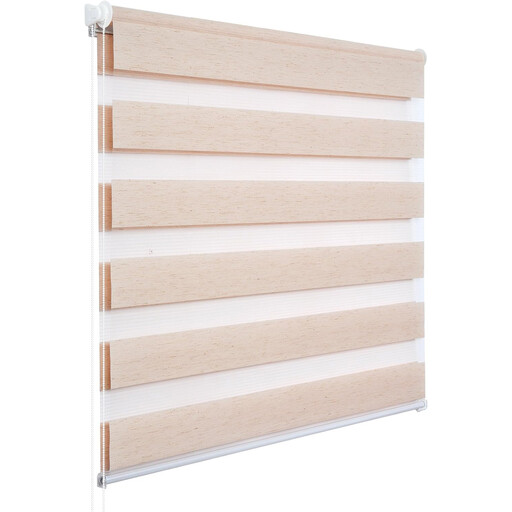
Why this product suits this profile: The 80 × 150 cm size is worth considering for small to medium-sized interior windows. The wood-effect look complements a range of interior styles.
The product description specifies the required frame thickness of 13–23 mm and points out that the fabric is narrower. This allows you to check the fitting method and measurements before buying.
100% polyester, clip-fix fitting without drilling, chain operation and damp cleaning with a soft cloth.
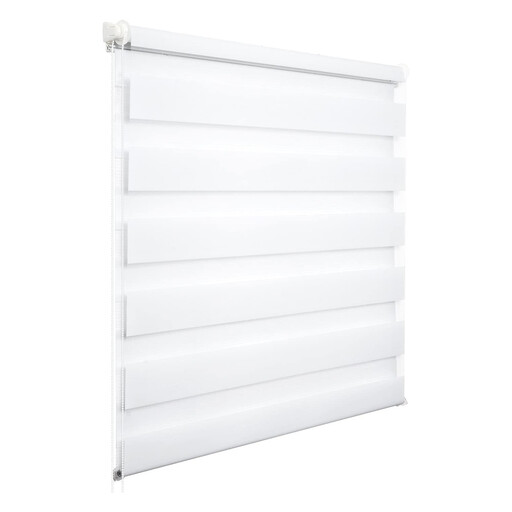
Why this product suits this profile: This version combines a neutral colour with clip-on or screw fitting and a chain control that can be fitted on the left or right.
The specifications state frame thicknesses of 13–23 mm, a recommended ordering width of the glass width plus around 4 cm, and a chain safety device.
Alternating transparent and opaque stripes, polyester fabric, clip-on brackets and additional screw-fitting accessories.
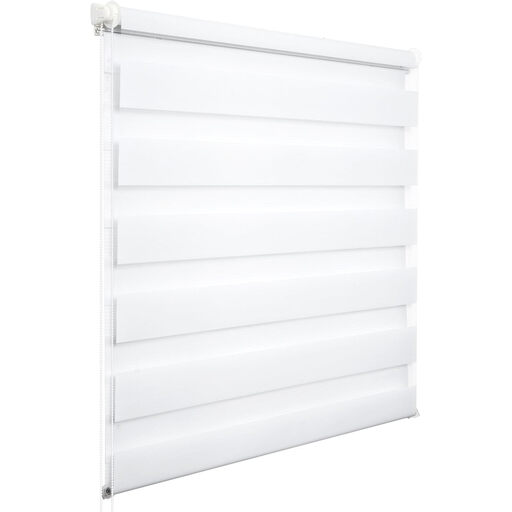
Why this product suits this profile: The 220 cm height is intended for tall windows, balcony doors or patio doors, provided that the frame, handle position and door movement allow for fitting.
The product description states the limitations of clip-on fitting, points out that the fabric is narrower and advises you not to cover the window handle.
Tall design, chain control with a choice of side, thermally cut polyester edges and optional accessories for screw fitting.
We have put together a complete, regularly updated list of products that fully meet these strict selection criteria and the safety regulations applicable in the EU.
The clip-on brackets are attached to the upper section of the movable window sash. The blind is then inserted into the brackets and checked to ensure it is secure. The exact frame thickness must match the specifications for the product in question. Before fitting, check that the window handle remains clear and that the sash can still be operated.
It is not possible to give a fixed lifespan. This depends, among other things, on daily use, exposure to sunlight, moisture, cleaning and correct fitting. Operating the chain control without excessive force, preventing the fabric from rubbing against the handle and following the care instructions will help reduce typical wear and tear.
No. A manually operated double roller blind with chain control does not require electricity and incurs no energy costs during operation. It regulates the amount of light mechanically. Its effect on room temperature depends on the fabric, window, orientation and sunlight, and should not generally be taken as a promise of energy savings.