
Lieferung heute & morgen

Qualitätsgarantie

Willkommens-Angebote freischalten: KOSTENLOSE Lieferung | Bis zu 80 % RABATT | Kostenlose 30-Tage-JoyPlus-Testphase
App herunterladen
A double roller blind without drilling is a practical choice for rented homes, frequently changing living situations and delicate window frames. Installation usually involves clamp brackets attached to the window sash, leaving walls and frames free of drill holes. However, not every model fits every window: unsuitable dimensions, protruding handles or an overly thick frame can impair functionality.
For many roller blinds, the product width refers to the total width, including the brackets. According to product specifications, the usable fabric width may be approximately 4 to 5 cm narrower. If you measure only the glass surface and fail to account for this difference, the blind may not provide sufficient privacy or protection from sunlight at the sides.
A light-filtering pleated blind or a classic privacy roller blind reduces visibility and glare from sunlight while still allowing daylight to enter. For bedrooms, media rooms or particularly bright windows, a blackout roller blind with a dense coating is more suitable. Complete darkening may nevertheless be limited by light gaps at the sides.
A chain-operated roller blind can be adjusted continuously, but the chain must not hang freely in households with children or pets. A chain safety device should be installed according to the instructions and positioned out of children’s reach. Alternatively, consider cordless and chain-free models operated using a bottom rail.
Three measurements are important before placing your order:
For doors, also check whether the blind comes into contact with the door handle, wall or furniture when opening, tilting or closing the door.
A clip-on roller blind is attached directly to the window sash. It is particularly suitable for uPVC windows with sufficient rebate depth. Some products also include screw fittings for permanent installation. Models with suction cups are generally intended for smooth glass or tiled surfaces and temporary use; their grip may weaken on rough or uneven surfaces.
Roof windows are expressly excluded for several of the products mentioned here. Wooden windows are not automatically compatible either. The product description and installation instructions should therefore be checked against the specific window configuration before purchase.
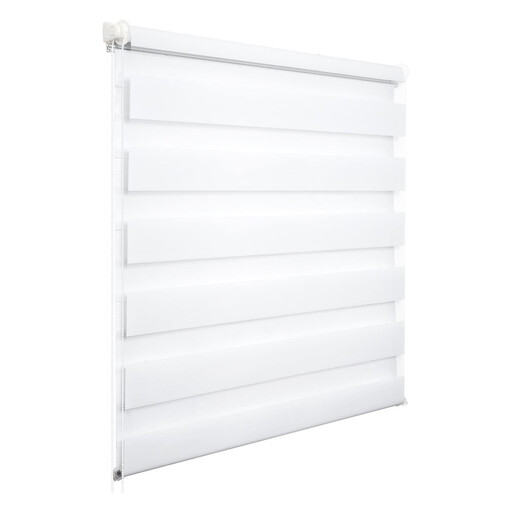
Why it’s a good fit: Its compact size and chain, which can be installed on either side, make it suitable for smaller standard windows in living rooms, bedrooms or home offices.
The product information specifies a suitable frame thickness of 13–23 mm and explains the difference between total width and fabric width.
Alternating transparent and opaque stripes enable continuous light adjustment. Clean with a damp cloth or soft brush.

Why it’s a good fit: According to the product description, this model is operated using a bottom rail and has no freely hanging control chain.
The design reduces the risk of a dangling chain. Small installation components should nevertheless be kept out of children’s reach.
200 g/m² polyester with a coated reverse side; according to the product information, it is water-repellent and designed for clamp installation on frames measuring 16–22 mm thick.

Why it’s a good fit: This opaque pleated blind is designed for indoor spaces such as bedrooms, living rooms and offices, and can be positioned at both the top and bottom.
The product description clearly states the compatible frame thickness of 10–23 mm and excludes roof windows. This makes it possible to check compatibility in advance.
100% polyester according to the product information, with a metal frame, moisture-resistant surface and cleaning with a damp cloth.
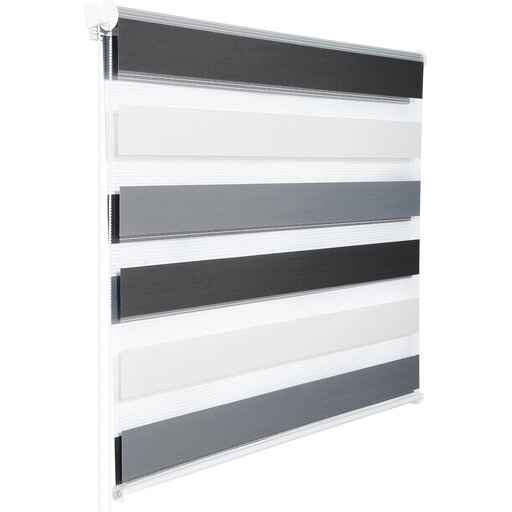
Why it’s a good fit: The zebra design is ideal for rooms where privacy and daylight need to be adjusted throughout the day.
The striped design is not presented as providing complete blackout. Its primary purpose is flexible control of light and privacy.
No-drill clamp installation, polyester fabric and a control chain that, according to the product information, can be fitted on the left or right.
The complete category includes additional no-drill roller blinds for interior windows in various sizes, fabric types and installation options.
Before installation, the window frame should be clean, dry and free of dust. Fit the clamp brackets according to the instructions and align them securely. The blind must not obstruct the window handle or rub against the frame when the window is tilted. For pleated blinds with tension or retaining cords, follow the instructions for setting the correct tension.
For most products, a soft, slightly damp cloth or soft brush is sufficient for cleaning. Abrasive products, harsh cleaners and machine washing can damage the polyester fabric, coating or mechanism. For chain-operated blinds, regularly check that the chain and bracket remain securely attached.
This depends on the frame, clamp brackets, weight and frequency of use. With the correct frame thickness and proper installation, a clip-on system can be suitable for regular indoor use. Excessive pulling on the chain or contact with the window handle can strain the fabric and mechanism.
For many models, an order width of approximately 4 cm wider than the glass pane is recommended. However, it is essential to ensure that the overlap does not interfere with the handle, fittings or wall. The relevant product description takes precedence, as fabric width and total width may differ.
A chain-free model can make operation easier in a child’s room. For roller blinds with a chain mechanism, the chain must be secured with a suitable safety device and installed out of children’s reach. Small installation components should likewise be kept away from children.