
Lieferung heute & morgen

Qualitätsgarantie

Willkommens-Angebote freischalten: KOSTENLOSE Lieferung | Bis zu 80 % RABATT | Kostenlose 30-Tage-JoyPlus-Testphase
App herunterladen
A clip-fit double roller blind without drilling can provide flexible privacy and sun protection in rented flats, homes and offices. Unlike a classic Venetian blind or a standard roller blind, a duo roller blind alternates between transparent and opaque fabric strips. This allows you to adjust the amount of light entering the room without fully opening the window or permanently fixing the blind in place.
Despite the simple principle, unnecessary costs are often incurred when buying. Three typical pitfalls are particularly important:
Before buying, measure the width of the window pane and the height of the entire window frame. With a clip-fit roller blind, you should then use the product’s stated overall width. As the fabric is narrower, an ordering width of around glass width plus 4 cm is often recommended, provided this does not cover the window handle.
Also pay attention to:
A blind for windows and doors must be installed so that the handle and the area needed for movement remain unobstructed. Many clip-fit systems are expressly not designed for roof windows, wooden frames or certain tilt, sliding and fixed-glazed windows.
A classic zebra blind or daylight blind uses overlapping fabric strips. Depending on their position, this creates a transparent, semi-private or more heavily screened area. This is practical for living rooms and home offices when you want daylight during the day while still being able to regulate your privacy.
For bedrooms, coated blinds with stronger light-blocking properties are often a better choice. The WOLTU models mentioned in the product details feature a silver-coated reverse side and an opaque or blackout design. Even so, the actual effect depends on the width, the distance from the window and the amount of light entering from the sides.
A chain-operated roller blind can be adjusted in stages; on some models, the chain can be fitted on either the left or right. This makes it easier to adapt the blind around furniture, doors and window handles. In homes with children, chains and pull components should be secured using the specified child-safety device and kept out of reach.
An alternative is cordless roller blinds, operated via the bottom rail. This design may be particularly appealing for children’s rooms and bedrooms, as there is no freely hanging operating chain. Regardless of the operating system, the brackets must be securely fitted and checked before first use.
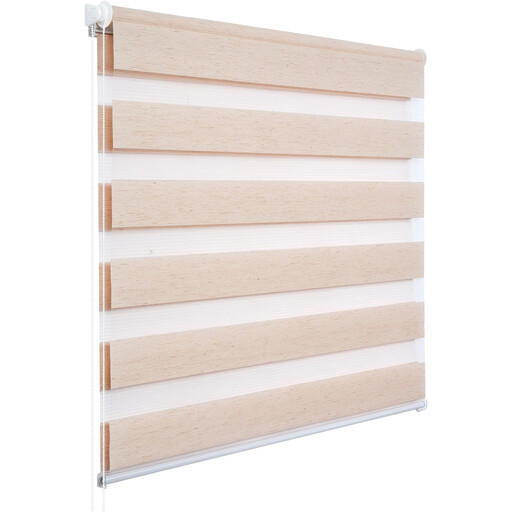
Why this product suits this profile: The size is suitable for many standard windows. The duo roller blind is installed with clip-on brackets, without drilling, and its understated wood-effect finish works well in living rooms, bedrooms or home offices.
The product details explicitly state the approximate difference between the overall width and the fabric width. This makes it easier to check the measurements before ordering.
Two fabric layers, chain operation and moisture-wipeable polyester for flexible control of light and privacy.

Why this product suits this profile: This model combines clip-fit installation with operation via the bottom rail. According to the product description, the coated polyester side is designed to provide stronger light blocking and privacy.
The permitted frame thickness of 16 to 22 mm is specified. Buyers can compare this measurement with their own window before installation.
Cordless height adjustment, coated reverse side and 200-g/m² polyester according to the product data.
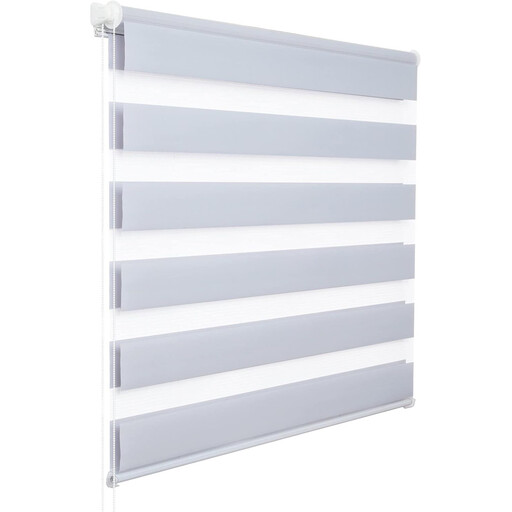
Why this product suits this profile: The greater height is useful for tall windows, patio doors and individual door sections. The chain mechanism can be fitted on the left or right.
The product description points out the fabric width, the frame thickness of 13 to 23 mm and the restriction applying to roof and wooden windows.
220 cm height, moisture-wipeable polyester and stepless light adjustment using alternating fabric strips.

Why this product suits this profile: The compact design is suitable for smaller standard windows. According to the product description, a chain holder is included to keep the operating chain neatly guided.
The installation details specify a frame thickness of 13 to 23 mm, as well as several unsuitable window types. Checking this helps prevent unsuitable purchases.
Two installation options, a chain mechanism that can be fitted on the left or right and, according to the product details, polyester containing recycled material.
We have compiled a complete, regularly updated list of products that fully meet these strict selection criteria and the safety regulations applicable in the EU.
Clean the window frame before installation and check that the clip-on brackets sit fully in place. Once fitted, the blind should hang without any lateral movement. The chain must not rub against the window handle. Depending on the product, care only requires a soft cloth, a soft brush or a slightly damp cloth. Abrasive products, harsh cleaners and machine washing are not suitable for the fabrics mentioned.
How long it lasts depends on the shape of the frame, the correct frame thickness, installation and operation. A clip-fit roller blind is suitable for many uPVC windows, but not automatically for wooden windows, roof windows or uneven surfaces. Check the brackets regularly and do not pull the chain abruptly.
First measure the width of the glass. As the fabric may be around 4 to 5 cm narrower than the overall width, an ordering width of approximately glass width plus 4 cm is often recommended. This must not obstruct the window handle or seals. The specifications for the individual product remain decisive.
A zebra blind lets you regulate the amount of light flexibly, but does not automatically provide complete darkening. Coated, opaque versions are usually more suitable for bedrooms. Also check whether light gaps appear at the sides and whether the model is suitable for the size of your window.