
Lieferung heute & morgen

Qualitätsgarantie

Willkommens-Angebote freischalten: KOSTENLOSE Lieferung | Bis zu 80 % RABATT | Kostenlose 30-Tage-JoyPlus-Testphase
App herunterladen
By Joybuy Product Recommendation Officer, August 28, 2026
A slipping rug is not just an aesthetic nuisance; it's a significant safety hazard, especially in households with children or the elderly. Double-sided carpet tape seems like a simple solution, but choosing the right product is crucial to avoid costly damage to your flooring. Many products fail to live up to their packaging claims, leading to frustration and unexpected repair costs.
This guide will help you navigate the most common pitfalls and select a tape that secures your rug safely without ruining your floor.
Before you make a purchase, you should be aware of the typical problems that arise with low-quality products.
To avoid these problems, you should base your choice on objective criteria. Look for the following three technical features to find a reliable and floor-safe product.
A tape's performance is largely determined by the combination of its adhesive and carrier material.
The most important rule is to check the manufacturer's specifications for suitability with your specific flooring. A good carpet tape for wood floors is specially formulated to not attack the finish of hardwood or laminate. With vinyl and PVC floors, there is a risk of plasticizer migration, where chemical components from the floor transfer into the adhesive, causing permanent stains. Look for products explicitly labeled "safe for vinyl floors." When in doubt, it's wise to test the tape on an inconspicuous area first.
An effective anti-slip tape must create a strong bond to secure the rug but must not cause a permanent adhesion. The quality of a product is demonstrated by how well it masters this balance. Products that can be repositioned during installation offer an extra layer of security. Such a residue-free carpet tape can typically be removed by pulling it slowly and evenly at a low angle from the floor, without the need for tools like heat guns or chemical removers.
Based on the criteria above, we have compiled a selection of products suitable for different needs and budgets.
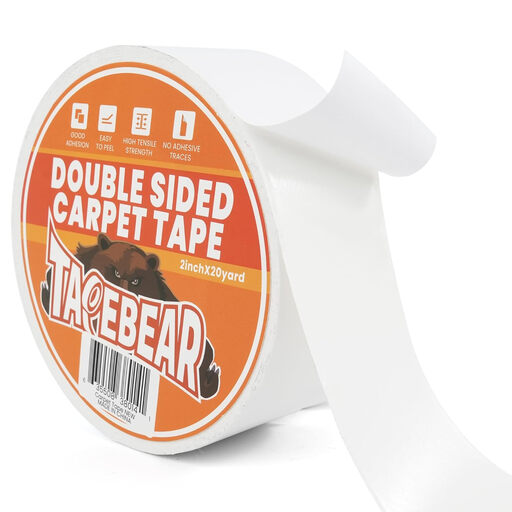
Why This Fits Their Persona: Ideal for users looking to secure a single runner in a hallway or a small rug in the living room. The 20-yard roll provides enough material for standard projects without significant leftovers.
The special plastic and rubber adhesive formulation is designed to ensure a strong bond while minimizing the risk of sticky residue on hard floors like wood, tile, or vinyl.
Strong adhesion on various floor types; leaves no residue on hardwood, tile, or marble according to the manufacturer.
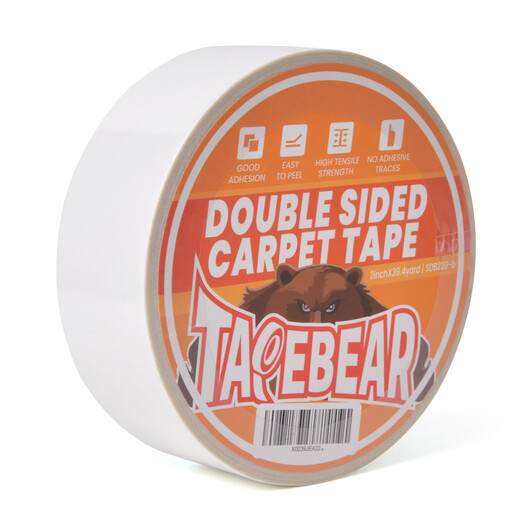
Why This Fits Their Persona: Suitable for large areas, multiple rugs, or high-traffic zones like entryways and hallways. The large 40-yard roll offers excellent value for extensive projects.
The high-strength adhesive formula counteracts the problem of insufficient adhesion. It ensures a durable hold that remains reliable even under heavy use and on rough surfaces.
Extra-strong adhesion for smooth and rough surfaces; can be removed by hand without leaving residue, according to the manufacturer.
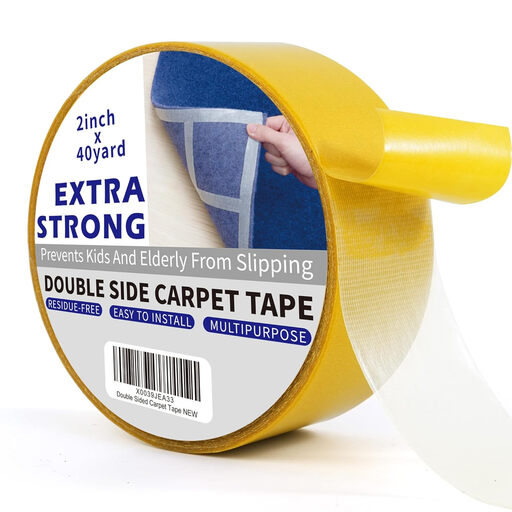
Why This Fits Their Persona: Perfect for renters or anyone who frequently changes their decor. The ability to reposition the tape during installation minimizes the risk of application errors and floor damage.
This tape directly addresses the concern of permanent damage. Its repositionable feature and fabric material allow for controlled application and removal, making it a safer choice for rental properties.
Allows for repositioning during installation; the gauze carrier material ensures high tear resistance and clean removal.
We have compiled a comprehensive list of products that meet strict selection criteria and safety requirements.
The key to residue-free removal lies in the technique and the quality of the tape. A high-quality tape should be removable by lifting a corner and pulling the tape slowly at the lowest possible angle (almost parallel to the floor). Avoid yanking or tearing it abruptly. With high-quality tapes, chemical solvents or heat are generally not required.
Yes, but only if the product is explicitly designated for it. Look for labels like "suitable for hardwood/laminate" or "safe for hardwood floors." These products use adhesives that won't attack the wood floor's finish. It is always recommended to test the tape on a small, inconspicuous area first before applying it extensively.
The lifespan depends on several factors: the quality of the tape, the amount of traffic in the area, the floor's condition, and the frequency of cleaning. A high-quality, heavy-duty tape in a normally trafficked residential area should last for several years. In commercial or extremely high-traffic zones, a replacement may be necessary sooner.