
Lieferung heute & morgen

Qualitätsgarantie

Willkommens-Angebote freischalten: KOSTENLOSE Lieferung | Bis zu 80 % RABATT | Kostenlose 30-Tage-JoyPlus-Testphase
App herunterladen
In any well-organised kitchen, the cutting board is an essential tool. However, choosing one is fraught with pitfalls that can not only strain your wallet but also compromise hygiene. An unsuitable board can quickly warp, develop deep grooves, and become a breeding ground for germs. The risk of cross-contamination is particularly serious when preparing raw meat and fresh vegetables.
This guide will help you identify the crucial features of a functional and durable cutting board and avoid making a poor purchase. We focus on objective criteria that will enable you to make a safe and practical choice.
Before you make a purchasing decision, you should be aware of three common weaknesses that often only become apparent after a few weeks of use:
To avoid the problems mentioned above, you should pay attention to three essential properties. These define the quality and real-world performance of a modern cutting board.
The ideal solution for separating food types is a double-sided cutting board with different materials. One side made of stainless steel (typically food-grade 304 stainless steel) is optimal for preparing raw meat, fish, and poultry. The surface is non-porous, does not absorb odours or liquids, and is easy to clean thoroughly. The other side should be made of a material that is gentler on knives but still robust, such as polypropylene (PP) or a wheat straw composite. This side is perfect as a cutting board for meat and vegetables that are already cooked, as well as for fruit and bread.
A product declared as a dishwasher-safe cutting board must do more than just survive a wash cycle. It must retain its shape and not warp. Materials like stainless steel and high-quality, thicker PP have an advantage here. Look for a construction that is water- and oil-resistant to simplify cleaning by hand or in the machine and ensure longevity.
A safe cutting board must lie completely flat on the work surface. Integrated rubber feet or a surrounding non-slip edge are crucial features. Additionally, a slightly textured surface on the plastic side can improve food grip and prevent slipping during cutting. This is especially important when the board is used as a carving board for roasts or poultry.
Based on the criteria above, we have identified several products suitable for different needs and kitchen habits.
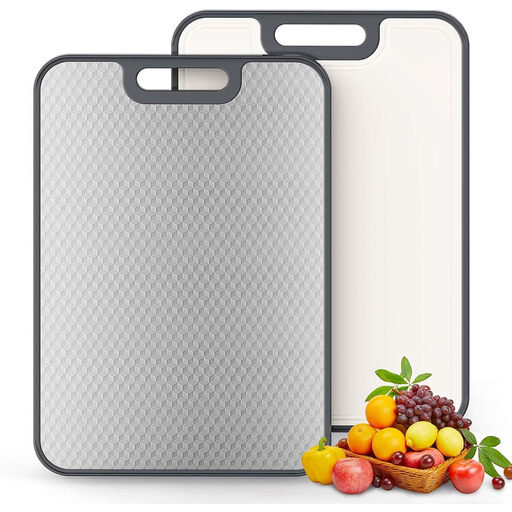
Why This Fits Their Persona: Ideal for families who want to strictly separate raw meat from vegetables. The two different surfaces provide a clear and safe solution for preventing cross-contamination during the hustle and bustle of daily kitchen life.
The stainless steel side is non-porous and resistant to deep scratches, which prevents bacteria from accumulating. The robust construction is dishwasher-safe and resists warping.
Dual-sided system for maximum food safety; durable, odor-resistant, and water-repellent materials.
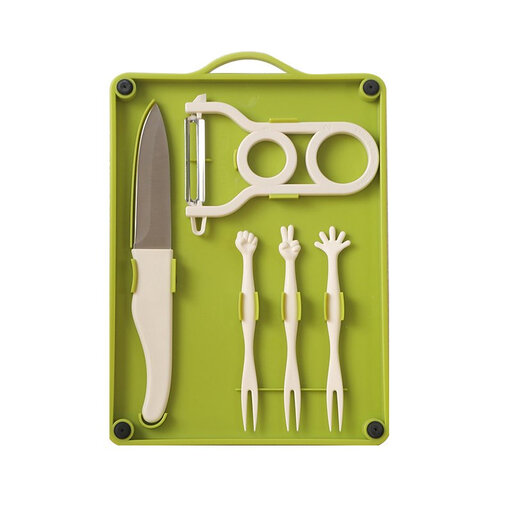
Why This Fits Their Persona: Perfect for quick, straightforward tasks like slicing fruit for cereal or vegetables for a snack. The compact set with a matching knife is practical and space-saving.
As a small, dedicated board for less demanding tasks, it bypasses the warping issue common in large, thin boards. The surface is designed for light cutting.
Compact set including a knife; features an antimicrobial surface treatment for enhanced hygiene, according to the manufacturer.
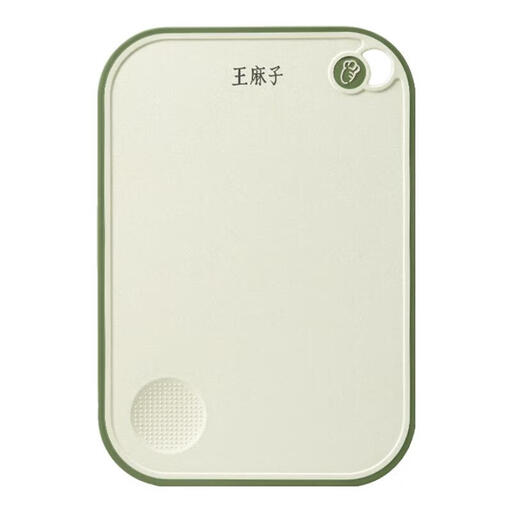
Why This Fits Their Persona: For users seeking an alternative to pure plastic or wood boards. The wheat straw composite material offers a robust yet more resource-friendly option for daily kitchen work.
The dense composite material is more resistant to deep cuts than soft plastic, minimizing the formation of grooves where germs can lodge. The double-sided design supports hygienic separation.
Made from a wheat straw composite; can be used on both sides for flexible and hygienic preparation.
We have compiled a complete, up-to-date list of products that fully meet these strict selection criteria and safety standards.
Most high-quality combination boards are dishwasher-safe. For maximum longevity, it is recommended to briefly rinse the stainless steel side with hot water and dish soap after contact with raw meat before placing the board in the machine. Ensure the board dries completely after cleaning to preserve the material's integrity.
The safest method is strict separation. Use one side of the board (ideally stainless steel) exclusively for raw foods like meat and fish. The other side (e.g., PP or wheat straw) should be reserved for ready-to-eat foods such as vegetables, fruit, bread, or cheese. Always clean the board thoroughly when switching between these food groups.
The lifespan heavily depends on the material and care. A stainless steel surface is extremely durable and has a virtually unlimited lifespan. The plastic or wheat straw side will wear down with knife use. Replacement is advisable when the surface has deep grooves and furrows that can no longer be cleaned completely, or if the board has warped. With proper care, a quality board can be a reliable kitchen helper for several years.