
Lieferung heute & morgen

Qualitätsgarantie

Willkommens-Angebote freischalten: KOSTENLOSE Lieferung | Bis zu 80 % RABATT | Kostenlose 30-Tage-JoyPlus-Testphase
App herunterladen
A double-sided stainless steel chopping board can make kitchen organisation easier: one side can be used for raw meat, while the other is suitable for vegetables, fruit or bread. However, not every model is right for every household. Claims such as “antibacterial”, “rust-resistant” or “dishwasher-safe” should be checked against the specific material and care instructions before you buy.
For keen home cooks, families, health-conscious households, students and people sharing a flat, three common purchasing misconceptions are particularly relevant.
An antibacterial chopping board does not replace thorough cleaning or keeping foods separate during preparation. A smooth, low-porosity surface can reduce the adhesion of residues, but it does not automatically prevent every form of contamination. Cleaning both sides, drying the board and clearly assigning each side to particular foods are also essential.
For product names containing the term “antibacterial”, check whether the claim is supported by specific material information or verifiable evidence. Without such evidence, the product name alone is not enough to assess this as a product feature.
Stainless steel is robust and normally does not absorb liquids like a porous material. At the same time, a hard cutting surface is not equally comfortable for every knife. If you regularly use high-quality kitchen knives, look for a textured surface, a reverse side made from a softer composite material or an additional knife-friendly chopping board.
A chopping board with a juice groove can collect liquid from meat, fruit or vegetables. However, the groove requires additional space around the edge and does not automatically make the board leak-proof. Before buying, measure your worktop, sink and storage space. A large stainless steel chopping board for the kitchen can be particularly impractical on smaller worktops.
Several models on offer specify 304 stainless steel. This designation describes a particular stainless steel alloy and is a more objective reference point than general claims such as “premium material”. However, on its own it says nothing definitive about the workmanship, edges, stability or care requirements.
The following points are important:
A chopping board for meat and vegetables should not merely have two sides; they should also be easy to assign clearly in everyday use. A stainless steel side for raw meat and a wheat straw PP side for vegetables, fruit or bread visibly distinguish the two preparation areas.
This separation reduces the risk of residues from raw meat coming directly into contact with ready-to-eat foods. It does not replace hand-washing, cleaning the worktop or following standard kitchen hygiene practices.
“Easy to clean” does not automatically mean “suitable for the dishwasher”. With a dishwasher-safe chopping board, you must follow the instructions for the specific product. Stainless steel models can be affected by heat, cleaning agents or other items in the dishwasher; composite materials may have different care requirements depending on their construction.
Both sides should be allowed to dry completely after washing. For products that expressly require hand washing only, soft sponges and mild cleaning products are the right choice. Steel wool and aggressive, strongly acidic or strongly alkaline products can damage surfaces.
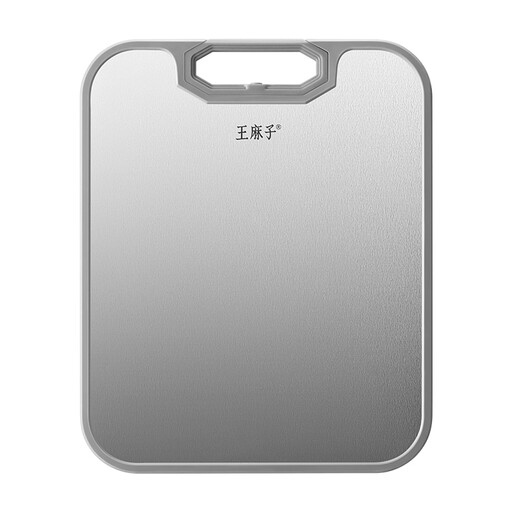
Why this product suits this profile: This double-sided stainless steel model is aimed at shoppers looking for a clear separation between preparation surfaces and straightforward basic equipment.
The double-sided design makes it easier to assign each side to different foods. However, the term “antibacterial” should not be treated as a substitute for cleaning.
Double-sided design and stainless steel construction, as stated in the product name.
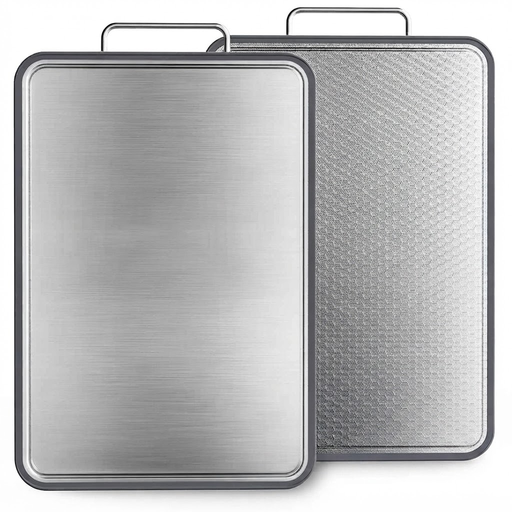
Why this product suits this profile: Measuring 435 × 281 × 10 mm, this model is suitable for users who need a larger preparation area and a juice groove.
The specified size helps you check whether you have enough space. The juice groove is described on both sides rather than being mentioned merely as a general marketing term.
Stainless steel surfaces on both sides, juice grooves and an integrated handle.
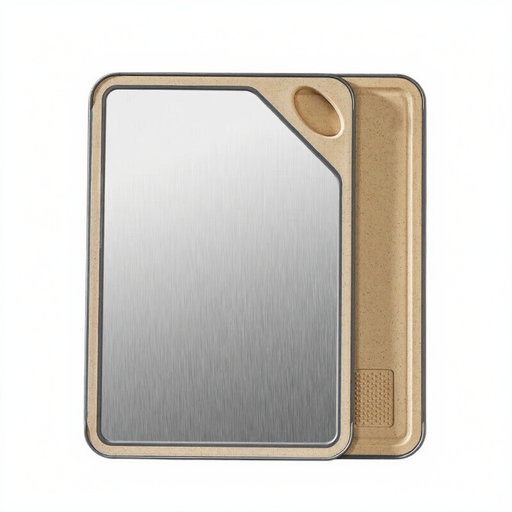
Why this product suits this profile: The combination of 304 stainless steel and wheat straw PP provides two differently designed preparation surfaces in one kitchen board.
The material combination makes it easy to distinguish between use with hard and more delicate foods. The product details also specify a size of 25 × 36 cm and a hanging hole.
One stainless steel side and one wheat straw PP side; space-saving storage thanks to the hanging hole.
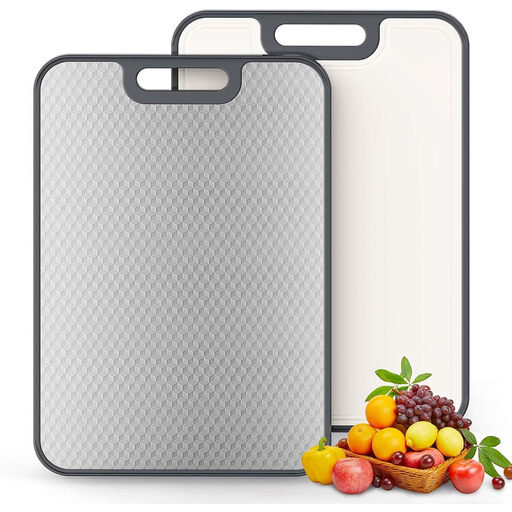
Why this product suits this profile: According to the product details, this model measures 17 × 12 inches and is intended for hand washing or cleaning in the dishwasher.
The stated cleaning options address the care requirements of shared kitchens. Before buying, check that you have enough space for this relatively large board.
Stainless steel and wheat straw PP construction; according to the product description, suitable for hand washing or the dishwasher.
We have put together a complete, regularly updated list of products that fully meet these strict selection criteria and the safety regulations applicable in the EU.
A chopping board cannot solve every organisational problem. If you want to store pots, lids and cooking utensils neatly, you could add a pot lid holder. According to the product details, the Maxcook holder is made from 304 stainless steel, has U-shaped slots and a reinforced support. It is designed to stand on a level worktop and should be cleaned by hand with a soft sponge. Follow the specific care instructions before use: Maxcook 304 stainless steel pot lid holder.
For student accommodation and shared flats, a kitchen utensil set or cookware set may also be useful. The Kitchen Essentials Bundle combines a six-piece cookware set, three chopping boards made from carbonised bamboo and three stainless steel cooking utensils. The product description mentions, among other items, a milk pan, a soup pot, a frying pan and three kitchen tools. Check the material and care information for each component individually: View the Kitchen Essentials Bundle.
A low-porosity stainless steel surface can make cleaning easier because liquids and residues penetrate less deeply than they do with absorbent materials. The board will only remain hygienic with consistent cleaning, thorough drying and sensible separation of the preparation surfaces. “Antibacterial” should not be understood as a medical or complete hygiene guarantee.
That depends on the specific product and its material combination. All-stainless-steel models and boards made from stainless steel with wheat straw PP may have different care instructions. Only use the dishwasher if the manufacturer explicitly states that the board is dishwasher-safe.
Its service life depends on the material thickness, workmanship, knife use, cleaning and storage. Stainless steel is generally resistant to moisture and stains, but it can develop scratches, deformations or damaged coatings. Storing the board flat, using mild cleaning products and avoiding steel wool can help maintain its usability.