
Lieferung heute & morgen

Qualitätsgarantie

Willkommens-Angebote freischalten: KOSTENLOSE Lieferung | Bis zu 80 % RABATT | Kostenlose 30-Tage-JoyPlus-Testphase
App herunterladen
A set of two double-walled coffee glasses often looks much the same in product photos: transparent glass, a modern design and promises of temperature insulation. In practice, however, models can differ significantly in capacity, material, handle design, care requirements and intended use. If you choose based solely on price or appearance, you may end up with a set that does not suit your coffee machine or daily routine.
This buying guide from the Joybuy Product Recommendation Officer explains the most important criteria objectively and shows which design is best suited to different types of user.
A 200 ml glass is better suited to espresso, smaller coffee specialities or tea. For a large filter coffee, latte macchiato or a leisurely cappuccino, 300 to 400 ml may be more practical. The stated “350 ml” capacity usually refers to the maximum volume. The usable capacity is slightly lower if you do not want to fill the drink right to the rim.
Double-walled drinking glasses reduce direct heat exchange between the drink and the outer surface. However, actual temperature retention also depends on the starting temperature, the shape of the glass, the amount of liquid and the surrounding environment. A double-walled glass should therefore not be equated with a vacuum-insulated stainless-steel cup.
Not every model is dishwasher-safe or suitable for use in a microwave. Rapid changes between very cold and very hot temperatures can also put stress on the glass. Although borosilicate glass is considered more resistant to temperature changes, you should not fill a glass straight from the freezer with boiling water.
Borosilicate glass is a relevant material specification for many double-walled coffee glasses because it is designed to cope with contact with different temperatures. This does not mean that it is unbreakable, however. Impacts against hard edges, scratches and sudden temperature changes can damage this type of glass too.
You should also look for a clear product description with details on:
For small espresso specialities, 80 to 100 ml is sufficient. Cappuccino and latte glasses are often between 200 and 350 ml. If you want to use the glasses flexibly for both hot and cold drinks, a set of two with a capacity of 280 to 350 ml often offers a practical everyday size.
The shape also plays a part. A wide glass is practical for milky coffee, iced coffee and desserts. Tall, slender glasses are better suited to layered drinks or cold brew.
A glass mug with a handle is held differently with hot drinks than a handleless drinking glass. The double-walled construction can make the outer surface more comfortable to hold, but it does not replace the need for care when handling freshly brewed coffee or tea.
For the office or breakfast table, insulated coffee cups with handles are generally easier to handle. For cold drinks, you should also check whether condensation forms on the outside and whether the glass stands securely on the table.
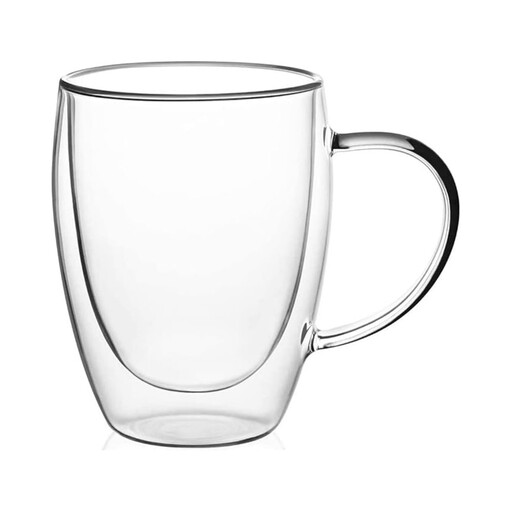
Why this product suits this profile: This set of two combines a 350 ml capacity with handles and, according to the product description, is designed for hot and cold drinks, lattes and cappuccinos.
The product details specify both the set size and the capacity, making it easier to choose than individual glasses with unclear descriptions.
2 glasses, 350 ml per glass, handles, and designed for hot and cold drinks according to the product description.
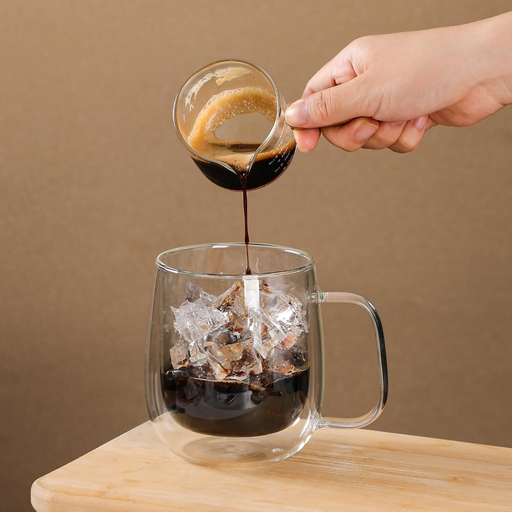
Why this product suits this profile: The description specifies a double-wall design, 350 ml capacity, handles and suitability for coffee, tea and cold drinks.
The stated areas of use reduce the risk of choosing a small espresso format for large portions of milky coffee.
Set of 2, 350 ml capacity, handles, clear glass design and dishwasher-safe according to the product description.
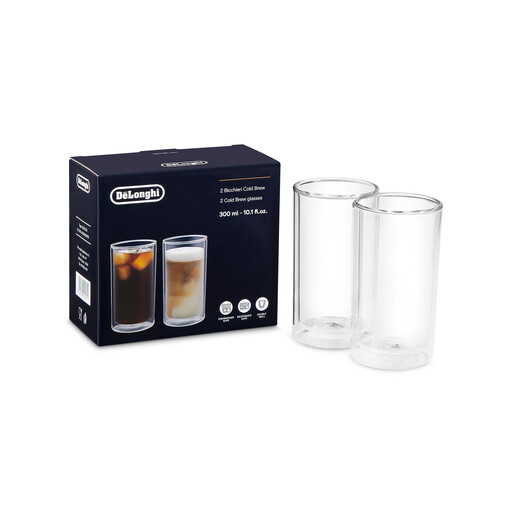
Why this product suits this profile: This set is aimed at households and offices where cold coffee drinks such as cold brew are served regularly. According to the product details, each glass holds up to 300 ml.
Its specific intended use helps prevent you from choosing a classic hot-drinks set for predominantly cold coffee drinks.
2 glasses, each holding up to 300 ml, for cold coffee drinks and dishwasher-safe according to the product description.
We have put together a complete, regularly updated list of products that fully meet these strict selection criteria and the safety regulations applicable in the EU.
Many models are designed for hot and cold drinks according to their respective product descriptions. However, the specific manufacturer’s instructions are what matter. A glass should not be exposed to sudden, significant temperature changes. With very hot drinks, there is still a risk of burns.
For latte and cappuccino glasses, 200 to 350 ml is often a sensible capacity. 200 ml is better suited to smaller portions, while 300 to 350 ml leaves more room for milk, foam or ice. You should also check whether the glass fits beneath your coffee machine’s spout.
No. Suitability depends on the individual model. Some dishwasher-safe coffee glasses are clearly labelled as such, while others should only be washed by hand. Even when dishwasher use is approved, a gentle cycle is recommended to help preserve the clarity of the glass and any seals over the long term.