
Lieferung heute & morgen

Qualitätsgarantie

Willkommens-Angebote freischalten: KOSTENLOSE Lieferung | Bis zu 80 % RABATT | Kostenlose 30-Tage-JoyPlus-Testphase
App herunterladen
Double-walled coffee glasses combine visible drink layers with an insulating construction. They are ideal for coffee, tea, latte drinks and, depending on the design, cold beverages too. However, before buying, it is worth taking a close look at the product details. Not every glass labelled “thermal” offers the same features when it comes to material, capacity or care.
Double-walled drinking glasses may be suitable for hot drinks, but they are still glass products. Knocks against the sink, worktop or other crockery can lead to cracks or breakage. Even borosilicate glass is not designed for every type of sudden temperature change. Filling a glass straight from the freezer with boiling water can be problematic.
A stated volume of 250 ml or 350 ml describes the nominal capacity, not necessarily the optimal fill level to the brim. For a small coffee or espresso, smaller coffee glasses are sufficient. If you regularly serve large milky coffees or teas, coffee glasses of 350 ml are more practical. For a compact portion, coffee glasses of 250 ml or models between 200 and 280 ml are often more suitable.
Not all thermal glasses are automatically dishwasher-safe. The product description should explicitly state whether the glass is suitable for the dishwasher or microwave. With handmade or particularly thin-walled glasses, hand washing can help maintain long-term clarity. Harsh detergents, abrasive sponges and contact with metal can damage the surface.
Coffee glasses made from borosilicate glass are commonly used for hot and cold drinks. The material is designed for temperature changes, but does not replace careful handling. Look for specific manufacturer details such as “heat-resistant”, “suitable for hot drinks” or “microwave-safe”. General terms like “thermal glass” alone tell you little about actual usage.
Between the two glass walls there is an insulating gap. This reduces heat transfer to the outside. With hot drinks, the outer surface can feel more comfortable to touch; with cold drinks, less condensation tends to form. The insulating effect depends on factors such as the construction, fill volume and ambient temperature, and should not be confused with a guaranteed heat retention time.
Three questions are key when choosing:
The intended use also matters: glass cups for coffee and tea with 200 to 280 ml are suitable for smaller everyday portions, while 350 ml offers more room for milk, milk froth or ice cubes.
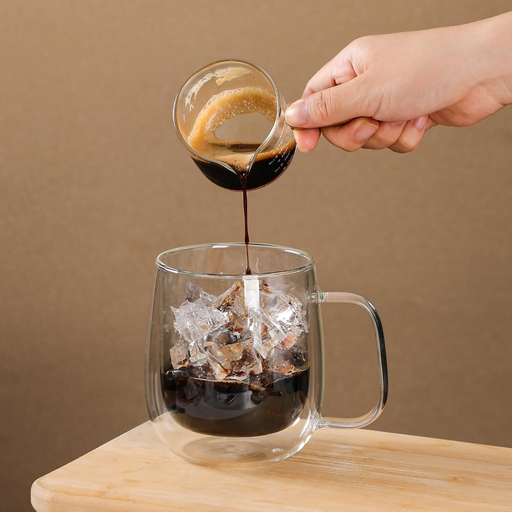
Why this product fits the profile: The 2-pack offers two glasses with a 350 ml capacity and a handle. This makes it ideal for couples, small households or those starting out with double-walled coffee glasses.
The product description clearly states the double wall, capacity and suitability for hot and cold drinks. The set size is clearly indicated.
350 ml, integrated handle, 2-pack and, according to the product description, dishwasher-safe.

Why this product fits the profile: The product name indicates hand-blown borosilicate glass, double-walled construction and dishwasher suitability. 270 ml sits between small and large coffee portions.
Material, construction, volume and care properties are specifically named in the product name, rather than just using a general thermal term.
Hand-blown borosilicate glass, 270 ml, 2-pack and, according to the product name, dishwasher-safe.
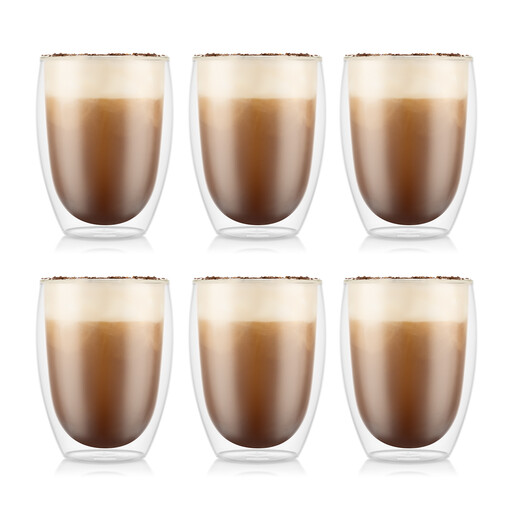
Why this product fits the profile: The 6-pack is designed for households that regularly entertain, offices or smaller catering settings where multiple matching glasses are needed.
The set size and volume are clearly stated. This makes it easier to calculate your needs without having to put together several individual glasses.
6 glasses, each with 350 ml capacity and double-walled thermal glass construction according to the product name.
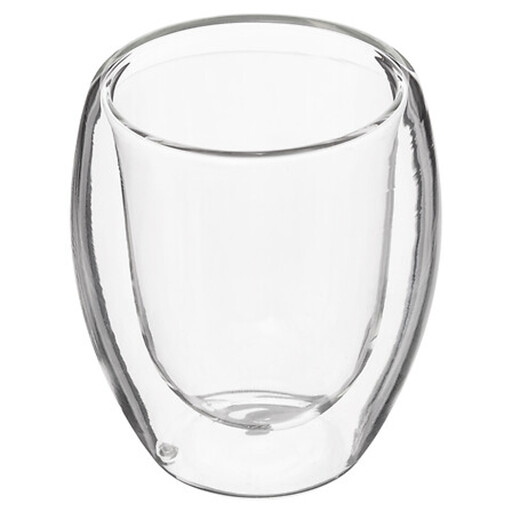
Why this product fits the profile: With an 80 ml capacity, this 2-pack is designed for espresso and small coffee portions, not large milky coffee drinks.
The small capacity prevents ordering the wrong product for large drinks. Additionally, borosilicate glass, double wall and dishwasher suitability are specifically stated.
80 ml, 2-pack, double-walled borosilicate glass and, according to the product details, dishwasher and microwave safe.
We have compiled a complete, regularly updated list of products that fully meet these strict selection criteria and the safety regulations in force in the EU.
Before first use, check the details on the product page and remove any packaging residue. For a long service life, the following rules will help:
This depends on the specific model. Some products are explicitly marked as dishwasher-safe or dishwasher-proof, while others are not. The information should be checked in the product description before purchase. With delicate glasses, hand washing can help preserve optical clarity for longer.
For small coffee portions, around 200 to 280 ml is often sufficient. Coffee glasses of 250 ml suit many standard portions. 350 ml offers more room for milky coffee, latte, tea or cold drinks with ice. What matters is the usual fill volume of your coffee machine, not just the outer shape of the glass.
The double wall reduces heat transfer and can slow down cooling. However, a fixed heat retention time cannot be derived from this. Drink volume, starting temperature, room temperature and how often you drink all affect the result. Thermal glasses should therefore be seen as insulating drinking vessels, not as fully sealable thermal containers.