
Lieferung heute & morgen

Qualitätsgarantie

Willkommens-Angebote freischalten: KOSTENLOSE Lieferung | Bis zu 80 % RABATT | Kostenlose 30-Tage-JoyPlus-Testphase
App herunterladen
Double-walled glasses have become a staple in many kitchens and cafés. The optical floating effect is elegant, and the insulating function promises to keep hot drinks warm longer and cold drinks cool longer. But the reality is often different: many buyers are disappointed after a short time because the glasses don't live up to their promise. Before you invest, you should know the common pitfalls that often only become apparent after the purchase.
This guide reveals the three most common problems with double-walled glasses and explains which objective features you need to look for to make an informed decision.
To avoid the problems mentioned above, you should base your selection on three objective criteria. These will help you assess the quality of a glass, independent of marketing promises.
The choice of material is fundamental. Look for the specification borosilicate glass. Compared to normal soda-lime glass, which is used for most drinking glasses, borosilicate glass has two key advantages:
High-quality borosilicate glass glasses are the foundation for durable thermo glasses.
The longevity of a double-walled glass depends significantly on the seal at the manufacturing point on its base. Some manufacturers, such as Bodum, use a hydrophobic (water-repellent) silicone membrane here. This membrane allows for pressure equalisation between the glass walls—which is important during temperature changes—while simultaneously preventing water from getting in. A simple, glued seal is often the weak point.
Function dictates form. Consider what you will primarily use the glasses for:
Here are some recommendations tailored to specific use cases that meet the quality criteria mentioned above.
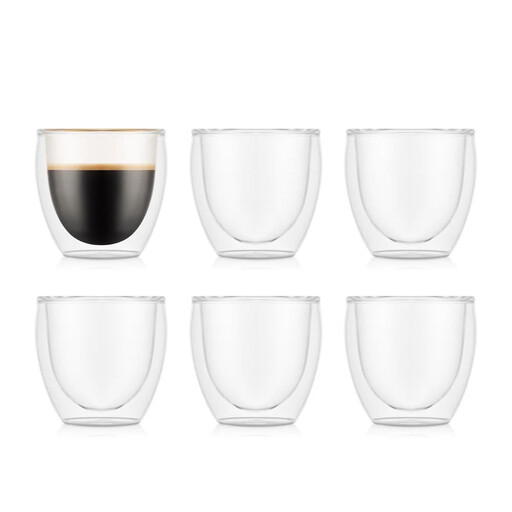
Why it's a great fit: At 80 ml, this glass is the ideal size for a single or double espresso. The classic, curved shape fits well in the hand, and the floating effect showcases the crema perfectly. Ideal for anyone who values an authentic coffee experience.
According to the manufacturer, the Bodum brand uses a silicone membrane on the base that equalises pressure and is designed to prevent water from entering during washing.
The set of six glasses creates a uniform look when serving and offers good value for money for a complete set.
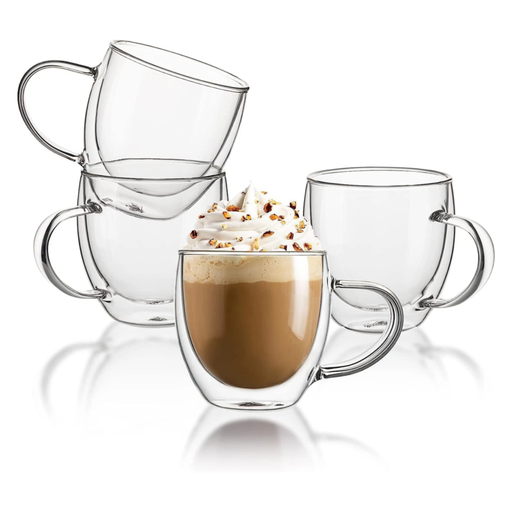
Why it's a great fit: For those who prefer a secure grip. The handle protects your hands from the heat and provides stability. With a 250 ml capacity, the mug is versatile enough for coffee, tea, or hot chocolate—a practical companion for daily use.
The impractical design pitfall is avoided here with a sufficiently large, ergonomic handle. This ensures comfortable and safe handling without your fingers touching the hot glass.
According to the manufacturer, being made from borosilicate glass makes the mug dishwasher-safe and durable enough for daily use.
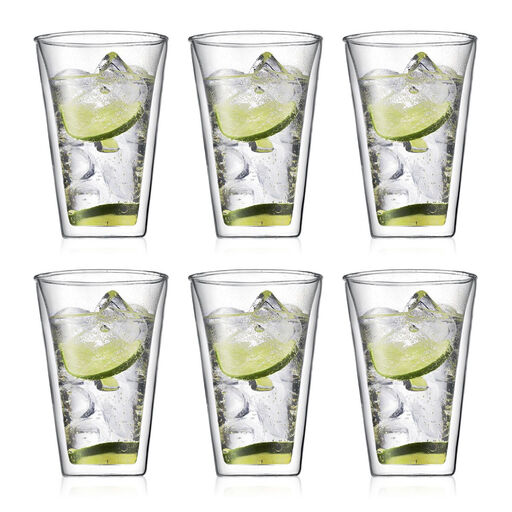
Why it's a great fit: Anyone who loves to entertain guests needs versatile glasses. With a 400 ml capacity, this set is suitable for latte macchiatos, large teas, iced coffees, juices, or even desserts. The simple design complements any table setting.
The use of borosilicate glass reduces the risk of breakage from thermal shock, which is especially advantageous when serving cold drinks with ice cubes to guests.
The large 400 ml volume makes these glasses extremely versatile. They can be used for a wide range of beverages and even for serving starters or desserts.
We have compiled a complete, up-to-date list of products that fully meet these strict selection criteria and UK safety regulations.
Many manufacturers state that their insulated glasses are dishwasher-safe, especially if they are made from borosilicate glass. However, to maximise their lifespan, it is often recommended to wash them in the top rack at lower temperatures. The main risk remains the seal on the base. If you want to be on the safe side, hand washing with a soft sponge is the gentlest method.
If condensation or a cloudy film forms between the glass walls, it is a clear sign that the seal on the base of the glass has failed. Water has entered the cavity during the washing process. This defect is usually irreparable and indicates a weakness in the construction.
Yes, that is their core function. The layer of air between the two walls acts as an insulator. It slows down the heat exchange with the environment. As a result, hot drinks like coffee or tea stay warm longer without the outer wall becoming uncomfortably hot. At the same time, cold drinks stay cool longer, and hardly any condensation forms on the outside of the glass, which prevents water rings on your table.