
Lieferung heute & morgen

Qualitätsgarantie

Willkommens-Angebote freischalten: KOSTENLOSE Lieferung | Bis zu 80 % RABATT | Kostenlose 30-Tage-JoyPlus-Testphase
App herunterladen
Double-walled drinking glasses combine a transparent look with an insulating construction. Between the two glass walls lies a layer of air that reduces heat transfer. This means hot and cold drinks stay at their temperature for longer, while the outside of the glass feels more comfortable to hold, depending on the model.
However, when buying, it’s not just about the modern design. Unclear capacity details, missing care instructions or an unsuitable intended use often lead to the wrong purchase. This guide shows what households, coffee lovers, hosts, cafés and hotels should look for when choosing double-walled drinking glasses.
A glass with 80 ml is better suited to espresso or small coffee specialities. For cappuccino, latte macchiato or tea, 250 to 350 ml is usually more practical. Larger models with 400 to 750 ml, on the other hand, work well for cold drinks, iced coffee or generous servings.
Before buying, you should therefore be clear about whether the glass is for a short espresso, a standard cup of coffee or a long drink. The measurement in millilitres or centilitres is more important than the product name.
Even borosilicate glass drinking glasses can be damaged by strong, sudden temperature changes. A glass should therefore not be filled straight from the freezer with boiling water. Equally important are the details about microwave, oven and dishwasher use.
With double-walled glasses, the construction is more complex than with simple drinking glasses. Manufacturer instructions on cleaning and avoiding thermal shock should be followed.
Double-walled coffee glasses and thermal glasses can separate the outside from the drink. However, this does not replace a secure grip. If you often serve hot drinks, you should check whether glasses with handles are better suited to everyday use.
For cafés, restaurants and hotels, set size, availability of replacements, storage and cleaning effort are also relevant criteria. A single designer glass may be enough for private use, while a set of drinking glasses is more practical in a professional environment.
Borosilicate glass is often used for heat-resistant glasses. However, you should still check the permitted uses for the specific product you choose. ‘Suitable for hot and cold drinks’ is not the same as ‘suitable for oven or freezer’.
Look out for the following details:
For espresso, double-walled espresso glasses of around 80 ml are practical. 250 ml models suit coffee, tea, juice or smaller cold drinks. 350 to 450 ml offer more room for cappuccino, latte, cold brew or tea.
The shape also affects use. A straight tumbler is easy to store, while glasses with handles create more distance between your hand and the glass when serving hot drinks. A lid can be practical for cold drinks but increases the cleaning effort.
A set of 2 is suitable for single-person households, couples or as an addition to existing tableware. A set of 6 is more interesting for families, hosts and catering businesses. With small espresso glasses, a pack of 6 can make sense, as several portions are served at once.
Before ordering, you should also check the product weight, dimensions and storage space. Not every double-walled glass is stackable.
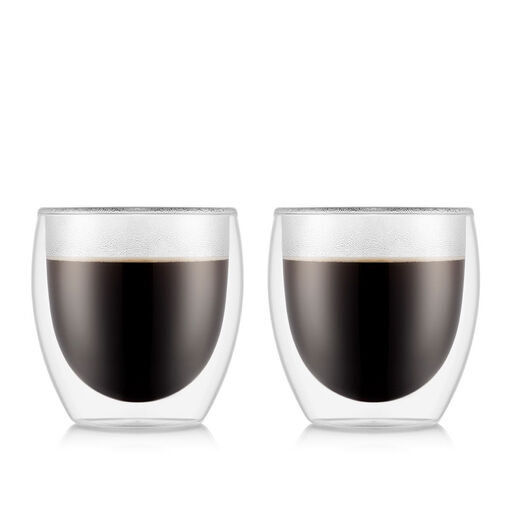
Why this product suits the profile: The set of 2 with 250 ml is ideal for households wanting to try double-walled glasses in everyday use. The size works well for coffee, tea and smaller cold drinks.
The clear 250 ml specification prevents a small glass from being mistakenly planned as a large coffee glass. The set size remains manageable.
2 glasses; 250 ml capacity; double-walled thermal glasses for everyday drinks service.
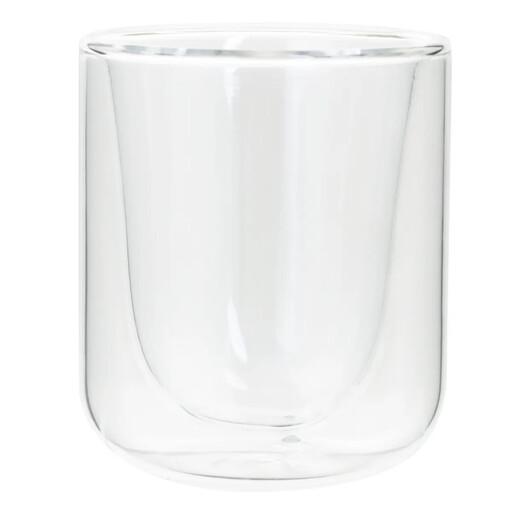
Why this product suits the profile: With 80 ml and double-walled borosilicate glass, this model is designed for espresso, ristretto and small coffee specialities.
The small capacity prevents it from being wrongly categorised as a latte or tea glass. The product details also include information on microwave, dishwasher and temperature changes.
80 ml; double-walled borosilicate glass; according to the product details, dishwasher and microwave safe.
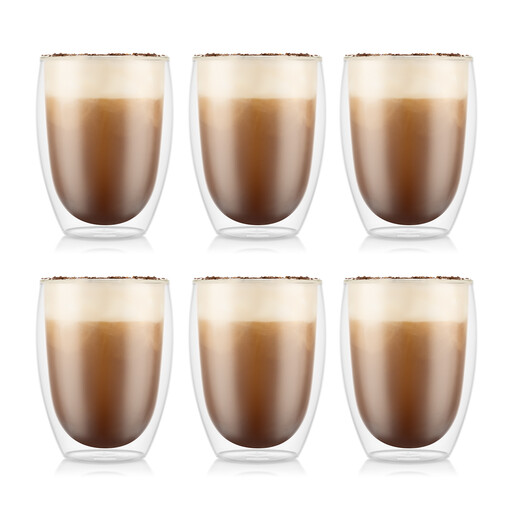
Why this product suits the profile: The set of 6 with 350 ml is designed for multiple servings and suits families, hosts and businesses with regular drinks service.
The larger set size reduces the need to buy individual glasses later. 350 ml is clearly distinct from espresso portions and offers room for coffee, tea or cold drinks.
6 glasses; 350 ml capacity; double-walled thermal glasses for multiple serving portions.
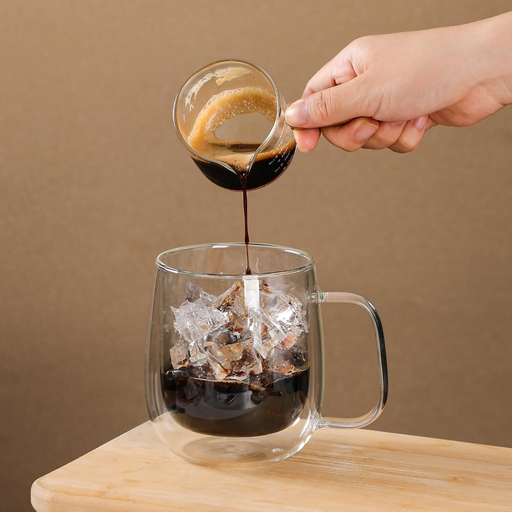
Why this product suits the profile: The glasses with handles are designed for coffee, tea, latte, cappuccino and cold drinks, offering 350 ml volume per glass.
The integrated handle addresses the common mistake of buying based on looks alone and overlooking handling with hot drinks.
2 glasses; 350 ml; handle; according to the product description, suitable for hot and cold drinks and for cleaning in the dishwasher.
We have put together a complete, regularly updated list of products that fully meet these strict selection criteria and the safety regulations in force in the EU.
Many models are designed for both hot and cold drinks. However, the details of the specific product are what matter. Even heat-resistant glasses should not be subjected to strong thermal shock.
For espresso and ristretto, around 80 ml or 8 cl is appropriate. For a larger coffee, tea or cappuccino, models with 250 to 350 ml are a good choice. The right size depends on your usual serving amount.
A fixed lifespan cannot be given in general terms. It depends on the material, workmanship, cleaning and handling. Gentle cleaning, avoiding abrupt temperature changes and careful storage can help extend the service life. The manufacturer’s technical specifications remain the deciding factor.