
Lieferung heute & morgen

Qualitätsgarantie

Willkommens-Angebote freischalten: KOSTENLOSE Lieferung | Bis zu 80 % RABATT | Kostenlose 30-Tage-JoyPlus-Testphase
App herunterladen
Double-walled drinking glasses combine a clear glass appearance with an insulating layer of air between two glass walls. This means the outside can remain comparatively comfortable to touch when serving hot drinks. With cold drinks, they can help reduce condensation. Thermo glasses are therefore versatile for everyday use with coffee, tea, water, cocktails and desserts.
However, not every glass with a transparent appearance is automatically double-walled. Details such as “heat-resistant”, “thermo glass” or “suitable for hot and cold drinks” should also be checked carefully before buying.
A product photo showing several glasses does not always mean that multiple pieces will be delivered. Details such as “1pc”, “Pack of 2” or “Pack of 6” are what matter. If you are looking for a set of glasses for everyday use or entertaining, check the number of pieces and the contents of the delivery directly in the product details.
Heat-resistant drinking glasses are not automatically suitable for every change in temperature. Pouring a very hot drink into a glass and then exposing it to cold water can cause stress in the glass. In practice, this means avoiding sudden temperature changes, not placing glasses on very cold or wet surfaces, and following the manufacturer’s care instructions.
For glasses described as dishwasher-safe, the relevant manufacturer’s statement should be provided explicitly. The product material alone is not sufficient proof. Delicate decorations, handmade surfaces or unusual shapes may also require gentler cleaning.
Many borosilicate glass products are marketed for their resistance to temperature changes. Borosilicate glass has low thermal expansion, which is why it is often used for heat-resistant drinking vessels. Even so, the manufacturer’s specific guidance on temperature changes and use still applies.
Standard glass can also be suitable for cold or warm drinks. When choosing, it is therefore important to consider more than just the material name. Look at the combination of material, wall construction, capacity and care instructions.
The most common sizes can be broadly grouped according to their intended use:
A 280 ml glass looks compact on a small breakfast table. For long drinks with ice or milk, however, a 350 ml or 400 ml glass may be more practical.
With double-walled drinking glasses, the insulating effect should be supported by a clearly described double-wall construction. The layer of air between the walls acts as a thermal barrier. It can reduce heat transfer to your hand and help minimise condensation on the outside when serving cold drinks.
It is also worth checking:
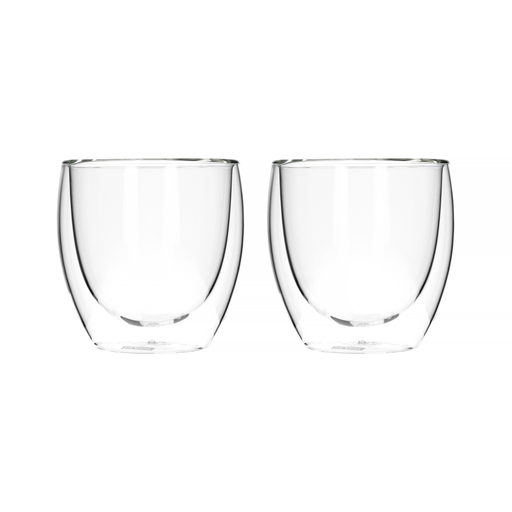
Why this product suits this profile: This set of two compact coffee glasses, each with a capacity of 250 ml, is ideal for households with limited space.
The product name clearly states the number of pieces, capacity and double-wall construction. “Microwave Safe” is also explicitly specified.
Set of 2, 250 ml per glass, borosilicate glass according to the product details, and designed for hot and cold drinks.
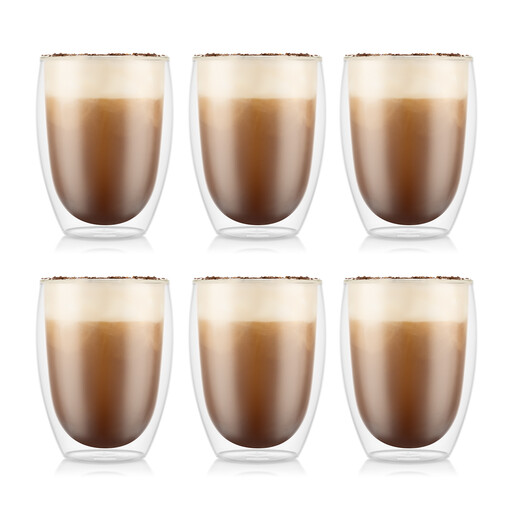
Why this product suits this profile: This set of 6 is ideal for households that need several coffee or tea glasses at the same time.
The pack size means you do not need to put together several individual glasses for guests. The 350 ml capacity is clearly stated.
6 glasses, a capacity of 350 ml and a double-walled thermo glass design according to the product description.
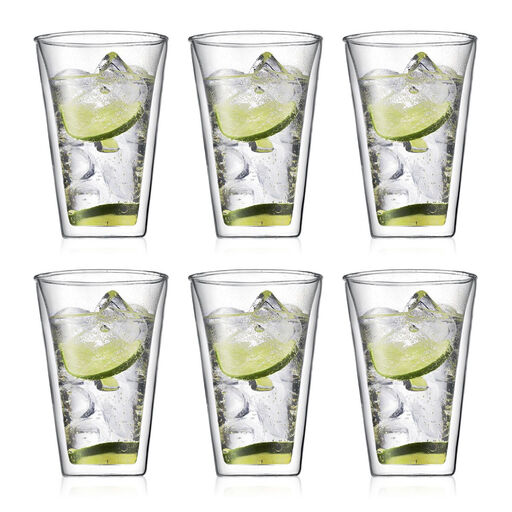
Why this product suits this profile: This large set of 6 is ideal for families, regular hosts and anyone who prefers 400 ml drinking glasses for different beverages.
The product description explicitly states the double wall, number of pieces and 0.4 l capacity. This makes the three key details relevant to frequent users easy to check.
6 large glasses, 0.4 l per glass and a double-walled construction according to the product description; designed for hot and cold drinks.
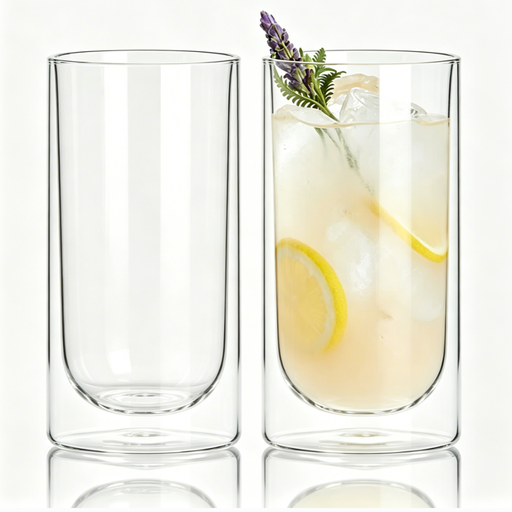
Why this product suits this profile: Two compact glass tumblers for morning coffee, afternoon tea or individual drinks throughout the day.
The description specifies the double wall, 280 ml capacity and suitability for hot and cold drinks. It also explicitly states that condensation is reduced.
Set of 2, 280 ml capacity, heat-resistant glass according to the product details and versatile use.
We have put together a complete, regularly updated list of products that fully meet these strict selection criteria and the safety regulations applicable in the EU.
Before using double-walled glasses for the first time, wash them with warm water and a mild washing-up liquid. For glasses that are dishwasher-safe, leave enough space between them and other crockery to prevent the glass surfaces from knocking against one another. Very hot drinks should not be poured in immediately after taking the glasses out of the fridge.
If glasses are damaged, cracks become visible or parts of the double wall come loose, stop using them. Double-walled glasses also have a small opening in the base: on many models, this is part of the construction and should not be damaged or blocked.
The double wall creates an insulating layer of air and reduces heat exchange. This can help a drink maintain its temperature for longer than it would in a single-walled glass. The actual duration depends on factors including the amount of drink, its starting temperature, the room temperature and the shape of the glass.
Some models are dishwasher-safe, while others are not. The manufacturer’s specific instructions are decisive. For decorated, handmade or unclearly labelled glasses, hand washing is recommended.
For smaller portions, 220 to 280 ml is often sufficient. A 350 ml glass provides more room for lattes, iced tea or larger teas. 400 ml glasses are suitable for large drinks, water and long drinks. The key consideration is whether the glass matches your preferred drink volume, coffee machine and available storage space.