
Lieferung heute & morgen

Qualitätsgarantie

Willkommens-Angebote freischalten: KOSTENLOSE Lieferung | Bis zu 80 % RABATT | Kostenlose 30-Tage-JoyPlus-Testphase
App herunterladen
By Joybuy Product Recommendation Officer, August 29, 2026
Double-walled glasses have become a staple in many households. They keep hot drinks warmer for longer and cold drinks cooler for longer, all while the exterior remains at a comfortable temperature. However, there are several pitfalls during purchase that can quickly spoil the experience. Certain design flaws or material weaknesses often render the glasses unusable after a short time. This guide will help you separate the wheat from the chaff and make an informed decision.
Before you invest in a new coffee glass set, you should be aware of the typical weak points that often only become apparent after a few weeks of use.
To avoid the problems mentioned above, you should pay attention to three central properties when making your choice. These define the quality and longevity of your new glasses.
The material is crucial for functionality and safety. Look for the specification borosilicate glass. Unlike normal soda-lime glass, which is used for most drinking glasses, borosilicate glass is characterized by its high chemical and thermal resistance.
The decision between glasses with handles or a handleless design is more than just a matter of aesthetics.
Capacity is a practical criterion that is often underestimated. Consider which beverages you primarily intend to enjoy.
The shape of the glass should also match the drink. Tall, slender glasses accentuate the layers of a latte macchiato, while more bulbous shapes are suitable for tea or cappuccino.
Here are some recommendations tailored to different needs and preferences.
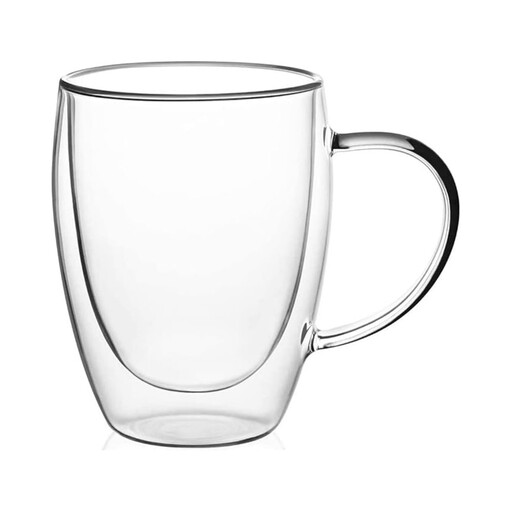
Why This Fits Their Persona: Ideal for those who want a practical and versatile glass for their daily coffee or tea. The handle offers comfort and safety, while the 350ml size is perfect for most hot beverages.
The integrated handle solves the problem of handling very hot drinks, making the glass a practical all-rounder that is not only stylish but also functional.
Made from borosilicate glass for heat resistance. The ergonomic handle ensures a secure grip.
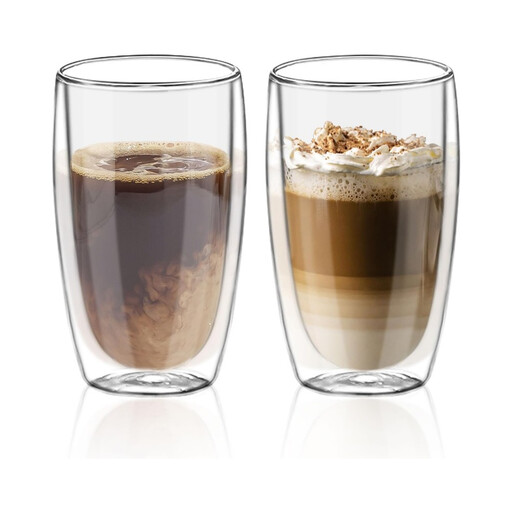
Why This Fits Their Persona: Perfect for anyone who wants to not only drink but also visually celebrate their latte macchiato, iced coffee, or smoothies. The tall, slender shape and large volume are ideal for layered drinks.
With a 450 ml capacity, it avoids the 'wrong size' trap. It offers ample space for all the ingredients of a large latte macchiato without the foam overflowing.
Large volume and tall shape for optimal presentation. Made from heat-resistant borosilicate glass for hot and cold drinks.
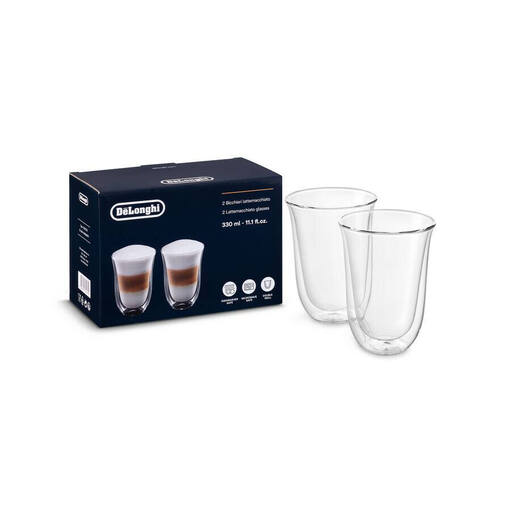
Why This Fits Their Persona: For coffee lovers who value a cohesive aesthetic and choose glasses to match their coffee machine. The minimalist design from De'Longhi fits seamlessly into modern kitchens.
As a product from an established coffee specialist, the design is tailored to its purpose. The dishwasher-safe rating, as stated by the manufacturer, suggests a robust seal.
Elegant, brand-specific design. Optimised for latte macchiato with a 330 ml capacity.
We have compiled a complete, up-to-date list of products that fully meet these strict selection criteria and rigorous safety standards.
Can double-walled glasses go in the dishwasher? Many borosilicate glass cups are declared dishwasher-safe. However, it is advisable to place them on the top rack and avoid aggressive detergents. The critical weak point remains the seal on the bottom. In the long run, hand washing is often gentler and can extend the life of the glasses.
Why is condensation forming between the glass walls? Condensation in the space between the walls is a clear sign that the seal on the bottom of the glass has failed. Water has entered during the washing cycle. The glass has consequently lost its insulating property and is essentially defective. This is a common flaw in cheaper models.
Are double-walled glasses more fragile than regular glasses? Although they consist of two thinner layers of glass, high-quality double-walled glasses made of borosilicate glass are not necessarily more fragile in everyday use. Their weakness lies more in their sensitivity to impact. A hard knock against a table edge is more likely to cause a break than with a thick, solid glass. However, their thermal resistance is significantly higher.