
Lieferung heute & morgen

Qualitätsgarantie

Willkommens-Angebote freischalten: KOSTENLOSE Lieferung | Bis zu 80 % RABATT | Kostenlose 30-Tage-JoyPlus-Testphase
App herunterladen
Double-walled glasses combine a transparent appearance with an insulating layer of air between two glass walls. Depending on the design, they are suitable for coffee, tea, cold drinks or desserts. However, not every model described as thermal glasses offers the same features. The material, capacity, handle and care instructions all determine whether a glass really suits your everyday habits.
Three common misunderstandings in particular can lead to disappointing purchases:
Double-walled glasses are often made from borosilicate glass or soda-lime glass. Borosilicate glass is designed to cope with changes in temperature, which is why it is often used for double-walled coffee glasses. Even so, this material should not be exposed to extreme temperature changes without following the manufacturer’s instructions.
Soda-lime glass is versatile for everyday use, but it is not automatically heat-resistant. The BEER GLASS X4 HANDLE 32CL, for example, is made from thick-walled soda-lime glass. According to the product information, it is dishwasher-safe, but it is not intended for use in a microwave, oven or with boiling water. A sudden change from hot to cold can cause the glass to break.
You should therefore look for specific information about:
The capacity should reflect how you typically intend to use the glass:
When choosing insulated drinking glasses, it is also important to check whether the stated capacity refers to filling the glass to the rim. Allow a little extra room for coffee with milk foam or drinks served with ice.
A handle reduces direct contact between your hand and the glass, making it practical for hot drinks. Coffee glasses with handles are therefore particularly suitable for desks, breakfast or frequent use in cafés and offices. Glasses without handles generally look more compact and, depending on their shape, may be easier to store in cupboards.
Even with dishwasher-safe glasses, you should still follow the care instructions. A glassware programme or a lower temperature can help protect the surface. Aggressive cleaning products and direct contact with cutlery can cause clouding or scratches over time. Damaged glasses with cracks, deep scratches or chips should no longer be used.
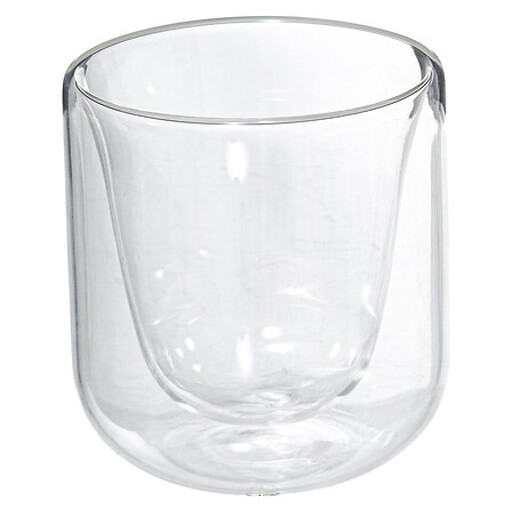
Why this product suits the profile: The compact 200 ml size is suitable for smaller portions of coffee and tea at home or in the office. According to the product information, the mug is made from borosilicate glass and is designed for hot and cold drinks.
The material and care information is more specific than a simple marketing claim about “thermal glasses”. The product description states that it is suitable for microwaves and dishwashers.
200 ml capacity; borosilicate glass; according to the supplier, suitable for microwaves and dishwashers.
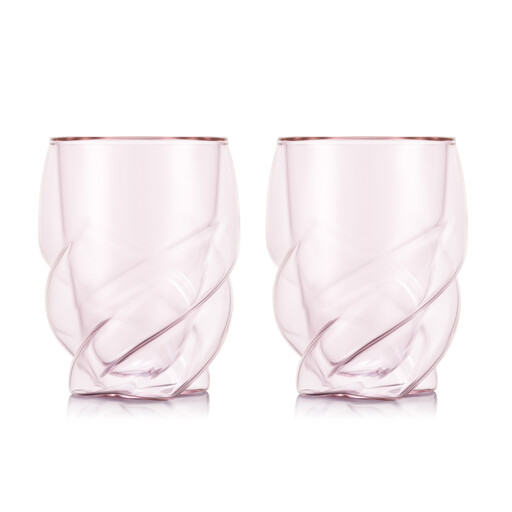
Why this product suits the profile: This set of two 270 ml glasses is aimed at households looking for double-walled coffee glasses for coffee, tea and cold drinks. According to the product name, they are made from mouth-blown borosilicate glass and are dishwasher-safe.
The material, manufacturing method, capacity and cleaning properties are clearly stated in the product name. This makes it easier to compare the glasses with simpler single-walled models.
270 ml; set of two; mouth-blown borosilicate glass according to the product information; dishwasher-safe according to the product name.
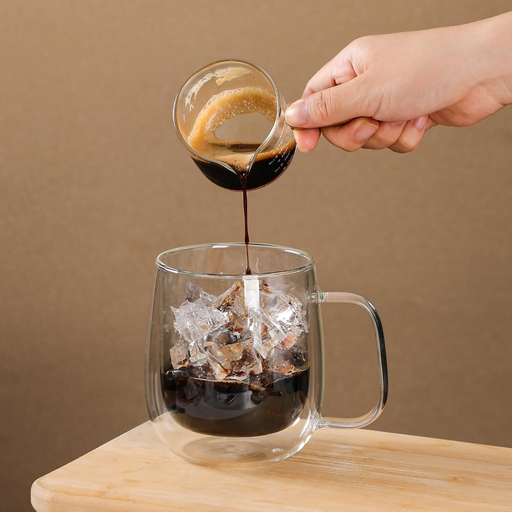
Why this product suits the profile: Two 350 ml mugs with integrated handles are designed for larger quantities of coffee and tea, offices, cafés or everyday use at home. According to the description, the clear design is also suitable for cold drinks.
The capacity and handle are clearly stated. This helps you avoid choosing a glass that looks suitable but is too small for large portions.
350 ml; set of two; handles; according to the product description, suitable for hot and cold drinks as well as dishwashers.
We have put together a complete, regularly updated list of products that fully meet these strict selection criteria and the safety regulations applicable in the EU.
Not necessarily. The material and the manufacturer’s instructions are key. Borosilicate glass should not be exposed directly to extreme temperature changes either. Extra care is needed with soda-lime glass, as boiling water can cause the glass to break, depending on the design.
Some models are specifically labelled dishwasher-safe or suitable for dishwashers. Where possible, use a glassware programme and avoid hard objects in the same compartment. With delicate or mouth-blown glasses, hand washing can help preserve their clarity for longer.
For espresso, 80 to 150 ml is usually enough. For cappuccino, tea or smaller coffee specialities, 200 to 280 ml is standard. If you serve lattes, large coffees or cold drinks, 320 to 400 ml gives you more room. The key consideration is not just the appearance, but the portion size you actually need.