
Lieferung heute & morgen

Qualitätsgarantie

Willkommens-Angebote freischalten: KOSTENLOSE Lieferung | Bis zu 80 % RABATT | Kostenlose 30-Tage-JoyPlus-Testphase
App herunterladen
Double-walled glasses combine visible drink layering with a functional insulating effect. Depending on their design, they are suitable for espresso, coffee, tea, cold brew or water. However, it is worth taking a closer look at the material, capacity and care instructions before buying. Marketing terms such as “heat-resistant” or “leak-proof” do not describe the same properties for every product.
An insulating layer of air is usually found between the two glass walls. This reduces heat transfer to the outer surface. The glass remains a fragile material, however. Even borosilicate glass can be damaged if dropped or subjected to a hard impact.
You should therefore look for specific information about the material, temperature changes and safety instructions. A description such as “heat-resistant glasses” alone does not prove that a vessel is equally suitable for boiling liquids, the freezer and the microwave.
An 80 ml espresso glass is designed for small coffee specialities. For a latte, tea or cold brew, 200 to 350 ml is often more suitable. Large 750 ml glasses are ideal for generous cold drinks, but require more space and are correspondingly heavier when full.
You should therefore compare the actual fill capacity with your usual serving size. The maximum stated capacity should not be confused with a comfortable drinking volume.
A travel mug with a lid is practical when you are out and about, but a splash guard does not necessarily prevent every leak. BODUM’s Travel Mug specifically advises that it should be kept upright and not stored horizontally in a bag.
Dishwasher-safe glasses also require care. Wooden lids should not be placed in the dishwasher with some sets, while the glass and drinking straw may be suitable for dishwasher cleaning. The manufacturer’s instructions on temperature, dishwasher rack placement and seals should be followed before purchase and before first use.
Borosilicate glass is used in many double-walled coffee glasses and espresso glasses. It is designed to withstand temperature changes, but should not be exposed to extreme changes immediately one after another. Filling a glass straight from the freezer with boiling water can cause stress, despite the material.
Practical buying criteria include:
7 to 8 cl is sufficient for espresso and ristretto. 200 to 280 ml is suitable for smaller coffees, servings of tea and juices. 300 to 350 ml offers more room for cappuccino, latte or cold brew.
The shape also affects how the glass is used. A handle makes serving hot drinks easier. A straight-sided drinking glass shows layers and colour particularly clearly. For commuters, on the other hand, a lid with a controlled drinking opening is more important than an open glass design.
Dishwasher-safe glasses reduce the cleaning required, but not every accessory is equally easy to care for. Wooden lids require particular attention to the care instructions: wood can warp or swell if it is soaked for too long. Silicone seals should be checked regularly to make sure they are correctly positioned and undamaged.
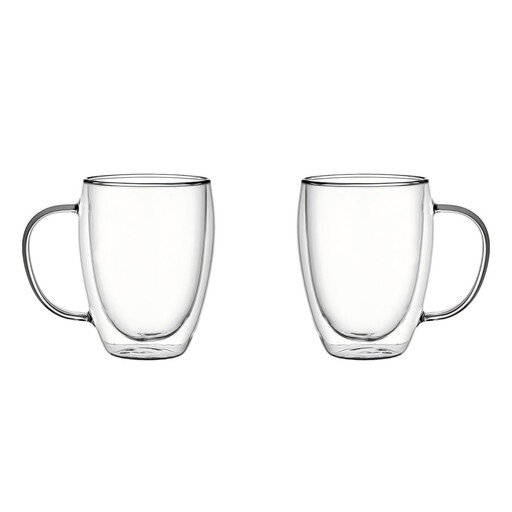
Why this product suits this profile: The two-piece set includes two double-walled drinking glasses, each with a stated capacity of 450 ml, making it suitable for households that want to serve several portions of drinks.
The specific capacity makes it easier to compare this set with smaller coffee or espresso glasses. Before buying, also check the care instructions in the product description.
Two-piece set and generous capacity of 450 ml per glass.
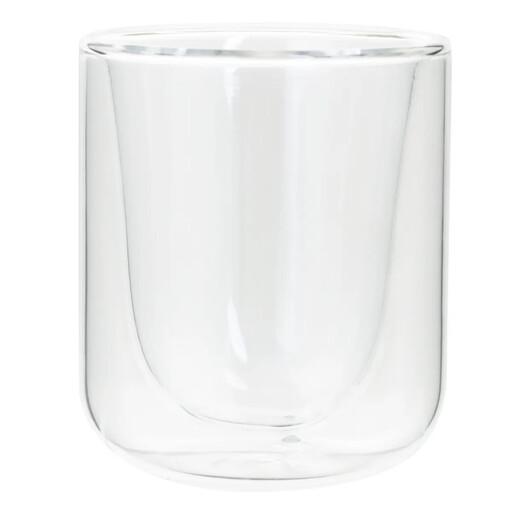
Why this product suits this profile: The transparent, double-walled borosilicate glass has an 8 cl capacity and is aimed at users who want to serve espresso or ristretto in a compact format.
The product details clearly state the material, capacity, microwave and dishwasher suitability, as well as excluding oven use.
80 ml capacity, borosilicate glass, transparent design, dishwasher- and microwave-safe according to the product details.
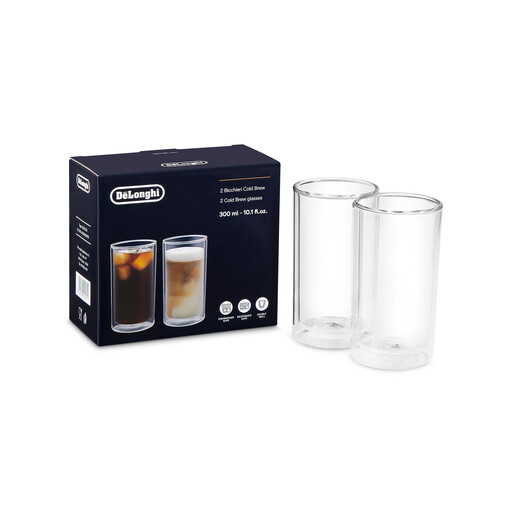
Why this product suits this profile: The set of two glasses, each holding up to 300 ml, is designed for cold brew drinkers and households that enjoy serving cold coffee drinks together.
The intended use for cold coffee drinks and the capacity are clearly stated. According to the product description, the glasses are dishwasher-safe.
Two glasses, a capacity of 300 ml per glass and stated dishwasher suitability.
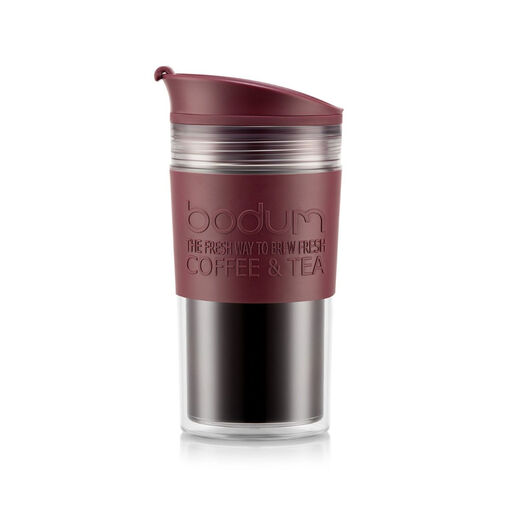
Why this product suits this profile: The 350 ml thermal mug is designed for transport, fits many car cup holders according to the product description and features a screw-top lid with a controlled drinking opening.
The safety instructions make it clear that the Travel Mug should be transported upright and is not completely leak-proof.
350 ml capacity, double-walled construction, BPA-free plastic, silicone band and dishwasher suitability according to the description.
We have put together a complete, regularly updated list of products that fully meet these strict selection criteria and the safety regulations applicable in the EU.
Many models are designed for coffee, tea or espresso. However, the manufacturer’s information on the material and temperature range is what matters. Borosilicate glass can withstand changes in temperature, but it is not unbreakable. Extreme and sudden temperature changes should be avoided.
The outer glass wall has less direct contact with the temperature of the drink. As a result, cold drinks can produce less condensation on the outside than they would in single-walled glasses. The result depends on factors including room temperature, humidity and the temperature of the drink.
For the office, car journeys and commuting, thermal mugs offer a lid and a design intended for transport. However, a travel mug should be kept upright in accordance with the manufacturer’s instructions, particularly when complete leak-proofing is not guaranteed. For a set table or for presenting espresso and cold brew, open double-walled glasses are generally more suitable.