
Lieferung heute & morgen

Qualitätsgarantie

Willkommens-Angebote freischalten: KOSTENLOSE Lieferung | Bis zu 80 % RABATT | Kostenlose 30-Tage-JoyPlus-Testphase
App herunterladen
Double-walled glasses with handles combine a clear glass design with a practical grip. Depending on the design, they are suitable for coffee, tea, latte, cappuccino, espresso or cold drinks. However, before buying, it is worth taking a close look at the material, capacity and care instructions. Not every model described as a “thermal glass” is intended for hot liquids, and an attractive appearance says little about how practical it is for everyday use.
“Suitable for hot and cold drinks” sounds clear, but not every listing provides precise technical details. What matters is whether the manufacturer specifies a double-walled construction, heat-resistant glass and clear usage instructions. An ordinary drinking glass can be damaged by a rapid change in temperature.
The change from very cold to very hot liquids is particularly critical. Even with temperature-resistant glass, boiling water should not be poured directly into a frozen glass.
An 8 cl glass espresso cup is suitable for espresso or ristretto, but is not suitable for a large milky coffee. For classic coffee specialities, 300 to 400 ml is often a sensible capacity. A 350 ml coffee mug provides enough room for coffee, milk foam and, where applicable, ice cubes.
If you are looking for glasses for an office, household or café, you should also check whether a glass set with two or more identical pieces would be a better fit than individual items.
Double-walled drinking glasses do not require complicated maintenance, but they can be sensitive to knocks and significant changes in temperature. The statement “dishwasher-safe” should appear directly in the product details. If this information is missing, hand-washing with a soft sponge is the safer option.
Information about microwave and oven use is also important: a glass may be approved for use in a microwave without being suitable for an oven. These uses should not automatically be treated as equivalent.
A double-walled coffee glass consists of two layers of glass with a gap between the inner and outer walls. This construction can reduce heat transfer to the outside and create the appearance that the contents are floating. The handle adds a comfortable grip and makes serving hot drinks easier.
Borosilicate glass is often used for thermal glasses. However, it should only be assumed to be the material when it is explicitly stated in the product details. For example, the Cléa 8-Cl model is specified as being made from double-walled borosilicate glass. For other products, you should rely solely on the respective manufacturer’s description.
For latte and cappuccino glasses, the opening is also important alongside the capacity. It should leave enough room for milk foam. For cold drinks, 300 ml to 400 ml is practical when ice cubes or larger portions are required.
A handle should be securely attached to the glass and provide enough room for a safe grip. The base should not be unnecessarily narrow, particularly if the glass will be moved frequently in an office or when serving a larger number of guests.
Clear care instructions are also important for everyday use. With dishwasher-safe models, the glass should be positioned so that it does not knock against other items. Harsh cleaning products and sudden temperature changes can affect the surface over time.
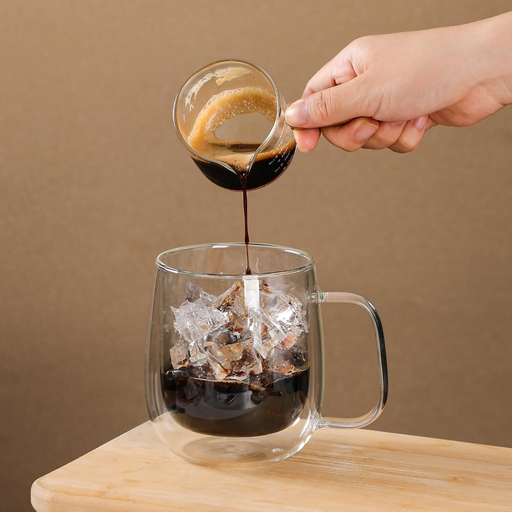
Why this product suits this profile: The 2-piece set with a 350 ml capacity is aimed at households or offices looking for two matching glass coffee mugs for everyday use. According to the product description, it is suitable for hot and cold drinks and has a handle.
The clearly stated capacity prevents the common mistake of confusing small espresso cups with full-sized coffee mugs. The product description also specifies the double-walled construction.
350 ml capacity, handle, double-walled design and 2-piece set for coffee, tea and cold drinks.
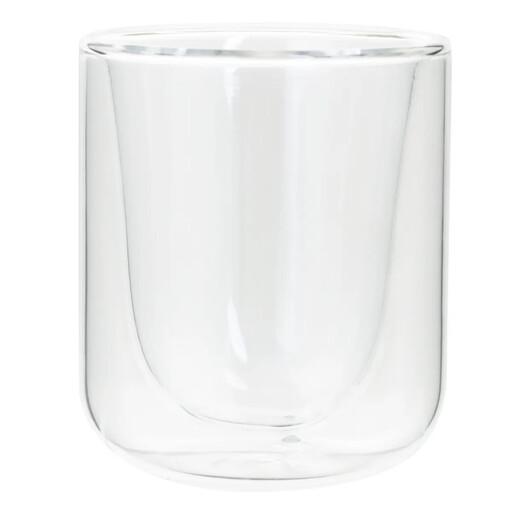
Why this product suits this profile: The right portion size matters to espresso lovers. This model offers 80 ml, double-walled borosilicate glass and stated suitability for dishwashers and microwaves.
The specific material information sets this glass apart from products with an unclear composition. The product warnings also advise careful handling and avoiding extreme temperature changes.
80 ml capacity, double-walled borosilicate glass, clear design and stated dishwasher and microwave suitability.
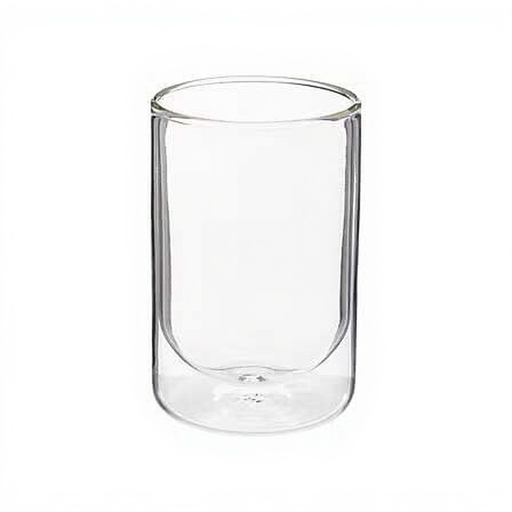
Why this product suits this profile: With a 400 ml capacity, this double-walled tumbler is suitable for larger coffees, tea, iced coffee, water and juice. The integrated handle is practical for households, offices and hosts.
The product description expressly mentions hot and cold drinks as well as avoiding sudden temperature changes. This makes it easier to understand the intended usage limits.
400 ml capacity, double-walled construction, handle and dishwasher-safe according to the product details; not intended for use in a microwave or oven.
Before first use, double-walled glasses should be washed with warm water and a mild cleaning product. When pouring in hot drinks, avoid filling a glass straight from the fridge with boiling water. Damaged, cracked or chipped glasses should not be used.
When cleaning:
We have put together a complete, regularly updated list of products that fully meet these strict selection criteria and the safety regulations applicable in the EU.
This depends on the specific manufacturer’s instructions. A double-walled construction is generally designed to provide insulating properties, but it does not replace an explicit temperature approval. Before buying, check the information about hot drinks, microwave use, dishwasher suitability and temperature changes.
For latte and cappuccino, 300 to 400 ml is often suitable, as there needs to be room for the coffee, milk and milk foam. For a classic espresso, 8 to 10 cl is usually enough. A 350 ml coffee mug is a versatile middle ground for many households and offices.
There is no fixed lifespan that can be given in general. It depends on the type of glass, construction quality, use and care. Handling the glasses carefully, avoiding extreme temperature changes and following the cleaning instructions can help extend their service life. If there are visible cracks or chips, the glass should be discarded for safety reasons.