
Lieferung heute & morgen

Qualitätsgarantie

Willkommens-Angebote freischalten: KOSTENLOSE Lieferung | Bis zu 80 % RABATT | Kostenlose 30-Tage-JoyPlus-Testphase
App herunterladen
Double-walled glasses have become a staple in many households. They keep hot drinks warmer for longer and cold drinks cooler, prevent condensation rings on tables, and look elegant while doing so. However, the market is crowded, and not every glass lives up to its promise. Before you make a purchasing decision, it's crucial to understand the typical weak points that often only become apparent after a few weeks of use.
This guide will help you recognise the key quality features and identify products designed for durability and functionality.
Many double-walled glasses look identical at first glance, but the differences are in the details. These three defects most frequently lead to disappointment:
To avoid a bad purchase, you should check three core aspects. These largely determine the longevity and user comfort of your new glasses.
The term borosilicate glass is a good starting point, but it is not a sole guarantee of quality. This type of glass is known for its high resistance to thermal shock and its low weight. However, the quality of the craftsmanship is what truly matters:
The durability of a thermo glass lives or dies by the quality of its seal.
Think carefully about what you will primarily use the glasses for. The shape and size are crucial for your enjoyment.
Based on the criteria mentioned, we have compiled a selection of products suitable for various use cases.
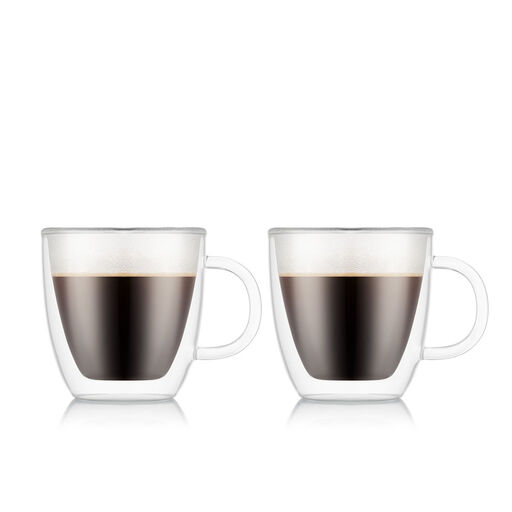
Why This Fits Their Persona: Ideal for lovers of single or double espressos. The 150 ml size is perfectly dimensioned to preserve the crema and keep the concentrated coffee's temperature stable without it cooling down too quickly.
Bodum products are known for their durable construction. The seal is designed to withstand washing and prevent water from getting inside.
Compact size, fits all common espresso machines. The design concentrates the coffee's aroma.
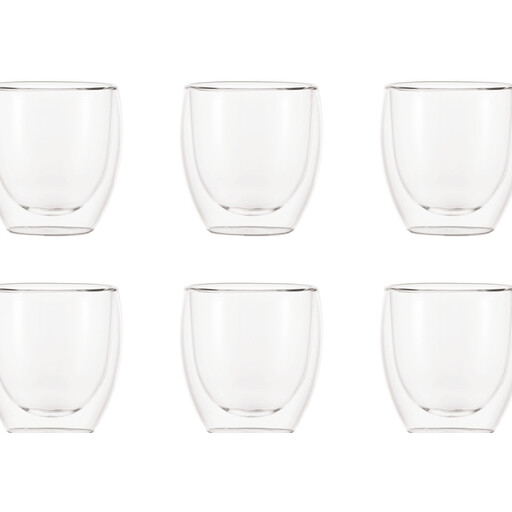
Why This Fits Their Persona: This thermo glass set is the perfect all-rounder. With a 250 ml capacity, it's suitable for coffee, tea, juice, or water. The 6-pack is practical for daily family use or for guests.
The PAVINA design is a classic, known for its balanced shape and robustness. The hydrophobic silicone membrane minimises the risk of water ingress.
Universal 250 ml volume. The set offers great value for money as a starter set or an expansion of your collection.
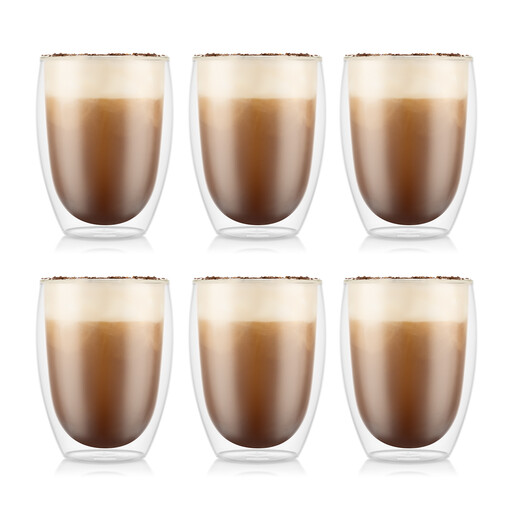
Why This Fits Their Persona: With a 350 ml capacity and an elegant, tall shape, these glasses are ideal for showcasing the three layers of a perfect latte macchiato. They are also excellent for iced tea, smoothies, or cocktails.
Despite their height, the proven PAVINA construction offers good stability. The material thickness is chosen so that the glass sits securely in your hand, even when full.
Generous volume for a wide range of hot and cold drinks. The classic, handleless shape is space-saving in the cupboard.
We have compiled a complete, up-to-date list of products that fully meet these strict selection criteria and German safety regulations.
1. Are double-walled glasses dishwasher-safe? Many manufacturers claim their glasses are dishwasher-safe. However, this heavily depends on the quality of the seal at the bottom. To maximise their lifespan, it is often recommended to wash the glasses by hand or clean them in the top rack of the dishwasher at a low temperature. Models with a high-quality silicone membrane are generally more resilient.
2. Why is condensation forming between the glass walls? If moisture or water collects in the space between the walls, it is a clear sign that the seal at the bottom of the glass is defective. Water has entered during washing. The glass has consequently lost its insulating function and is practically irreparable. This is a typical defect in poorly manufactured products.
3. What material are thermo glasses primarily made of? Most double-walled glasses are made from borosilicate glass. This material is significantly lighter than conventional soda-lime glass and is less sensitive to thermal shock. This means it can handle hot liquids being poured into it without cracking. Nevertheless, you should avoid extreme temperature changes (e.g., filling an ice-cold glass with boiling water).