
Lieferung heute & morgen

Qualitätsgarantie

Willkommens-Angebote freischalten: KOSTENLOSE Lieferung | Bis zu 80 % RABATT | Kostenlose 30-Tage-JoyPlus-Testphase
App herunterladen
Double-walled glasses combine a clear, elegant look with an insulating layer of air between the glass walls. This makes them suitable for coffee, espresso, tea and cold drinks. Before buying, however, it is worth taking a close look at capacity, materials and care instructions. Not every model marketed as a thermal glass is suitable for every drinking routine.
A 350 ml glass does not always offer 350 ml of practical filling capacity. Depending on the rim shape, base and recommended safety gap, some of the volume remains unused. For espresso, 70 to 100 ml is usually suitable, while a latte, cappuccino or tea often requires 250 to 400 ml.
If you are buying a thermal glass set for your home, you should also check whether all the glasses are the same size. Sets with 80 ml, 100 ml, 150 ml, 250 ml or 350 ml glasses serve different purposes.
Double-walled glasses are often made from borosilicate glass. This material is used for its resistance to temperature changes, but it can still break if knocked or exposed to severe thermal shock. The change from very cold to very hot liquids is particularly critical, as is placing the glass on a cold stone worktop.
You should therefore look for clear information about microwave use, dishwasher suitability and temperature changes. Damaged glasses with cracks or chips should no longer be used.
The double wall reduces heat exchange, but it does not replace a vacuum flask. Drinks will still cool down over time. The main practical benefit is that the outside surface becomes uncomfortably warm less quickly when holding hot drinks, while cold drinks may produce less condensation. The extent of this effect also depends on the amount of drink, room temperature and shape of the glass.
For insulated drinking glasses, glass and transparent plastic materials are possible options. Borosilicate glass is a popular choice for hot and cold drinks. For plastic models, the material specification should include details such as Tritan or PCTG, together with an indication that the product is BPA-free.
Buyers should also look for information about food contact. For example, the ESP CUP GLASS DW CLEA X2 is described as suitable for food contact and compliant with EU Regulation (EC) No 1935/2004. Such information is more useful than general advertising claims without technical details.
For an office or a household with several people, a coffee glass set with six glasses may be more practical than a two-pack. Individuals or couples, on the other hand, often need less storage space and choose a thermal glass set with two glasses.
“Dishwasher-safe” should always be stated in the specific product details. The ESP CUP GLASS DW CLEA X2 is described as dishwasher- and microwave-safe, although users are advised to avoid harsh cleaning products and severe temperature changes. In general, a gentle wash cycle is recommended for double-walled glasses. Models with a lid and seal, such as the COOKER KING Bobo, require thorough cleaning of the lid, silicone ring and straw.
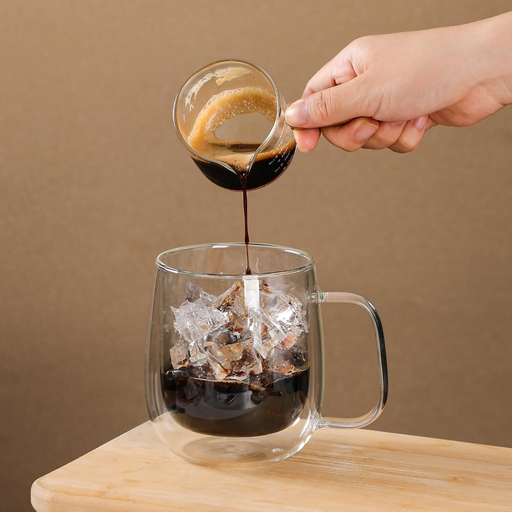
Why this product suits this profile: The two-pack with a 350 ml capacity is designed for coffee, tea and cold drinks. The handles also make it familiar and comfortable to use every day.
The stated capacity is clearly defined, while the set is not limited to small espresso portions.
Two glasses, 350 ml capacity, handles and, according to the product details, dishwasher suitability.
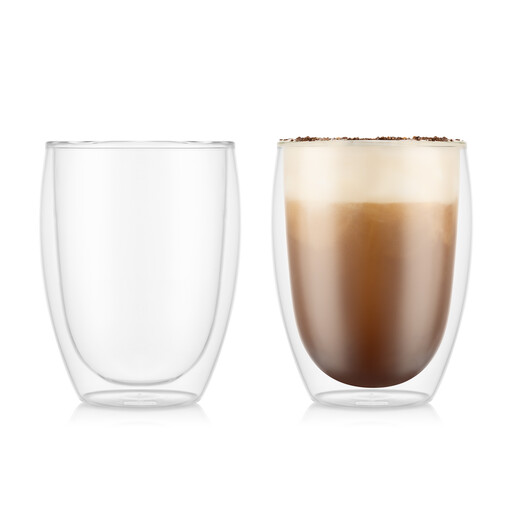
Why this product suits this profile: The size is suitable for larger portions of coffee and tea, as well as cold drinks. Its clear design works well in both the kitchen and office.
The 350 ml capacity is stated explicitly, preventing confusion with small espresso or tasting glasses.
Two-pack, double-walled construction and 350 ml capacity; the product name describes it as a thermal glass.
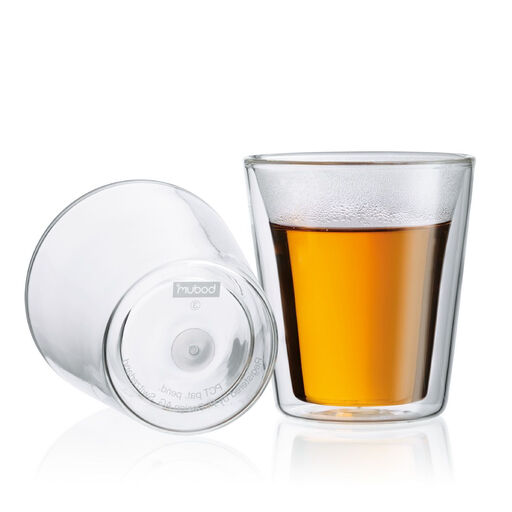
Why this product suits this profile: The six-pack is ideal for households, offices or entertaining guests when you need several smaller portions of coffee, tea or cold drinks.
The set size and capacity are clearly stated, making it easier to plan for the needs of several people.
Six double-walled glasses with a 200 ml capacity; the product details specify borosilicate glass and dishwasher suitability.
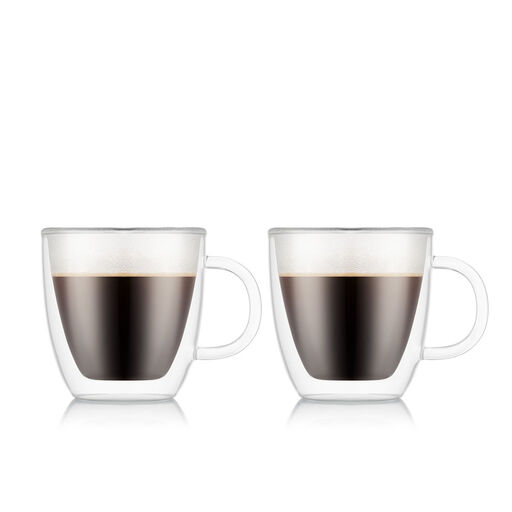
Why this product suits this profile: The 150 ml size is designed for smaller coffee portions and makes a compact addition to your espresso or coffee collection.
The clearly stated capacity prevents an espresso set from being mistakenly bought as a large latte glass set.
We have put together a complete, regularly updated list of products that fully meet these strict selection criteria and the safety regulations applicable in the EU.
Many models are designed for hot drinks such as coffee, tea and espresso. The specific manufacturer’s instructions regarding temperature range, microwave use and care are crucial. A glass should not be exposed directly to extreme temperature changes.
There is an insulating layer of air between the two glass walls. With cold drinks, this can reduce the temperature difference between the drink and the outer surface. The extent to which condensation is prevented depends, among other things, on the drink’s temperature and the humidity in the room.
Espresso is usually served in glasses of around 80 to 150 ml. Coffee, tea and smaller milk-based drinks often fit into 200 to 280 ml glasses. For lattes, cappuccinos or larger cold drinks, 350 to 400 ml is practical. If you serve a range of drinks, you can combine a set with several sizes or matching individual sets.