
Lieferung heute & morgen

Qualitätsgarantie

Willkommens-Angebote freischalten: KOSTENLOSE Lieferung | Bis zu 80 % RABATT | Kostenlose 30-Tage-JoyPlus-Testphase
App herunterladen
Double-walled thermal glasses combine a clear glass appearance with an insulating layer of air. This usually keeps the outside more comfortable to hold when serving hot drinks, while cold drinks produce less condensation on the table. That makes them an appealing choice for coffee, tea, cold brew, beer and desserts.
Even so, not every option is automatically suitable for every household. Unclear capacity details, missing care instructions or exaggerated claims about materials can often lead to disappointing purchases. The following criteria will help you compare double-walled glasses objectively.
A 250 ml glass is suitable for espresso-based drinks, smaller coffee specialities or desserts, but offers less space for large café lattes. For cold brew or iced tea, 300 to 450 ml may be more practical. It is also important to check whether the stated capacity refers to the usable volume or simply the maximum capacity.
Borosilicate glass is considered more resistant to temperature changes than many conventional types of glass. However, a distinction must be made between a drinking glass and a glass container designed for use in the oven. Double-walled drinking glasses are not automatically suitable for the oven or hob. Even heat-resistant glass can be damaged by a sudden temperature change caused by thermal shock.
The term “dishwasher-safe” does not always clarify whether the lid, seals and glass are all covered. With double-walled coffee glasses, you should follow the manufacturer’s instructions. For glass food storage containers, you should also check the guidance on lid placement and cleaning the silicone seal.
For borosilicate glass products, the material specification is an important reference point. Borosilicate glass may be suitable for hot and cold drinks, but this does not replace specific approval from the manufacturer. Hot liquids should not be poured straight into an ice-cold glass. Likewise, a glass container that has been stored in the freezer should not come into immediate contact with boiling water.
With glass containers, it is particularly important to check whether the temperature specification applies only to the glass and explicitly without the lid. According to the product details, the EMSA Clip & Close model N10412 with a 3-litre capacity is suitable for temperatures of up to 420 °C without the lid and down to -40 °C in the freezer. According to the product description, the LocknLock Boroseal container LLG428G is oven-safe up to 400 °C without the lid and suitable for freezer temperatures down to -20 °C.
For everyday coffee, 200 to 350 ml is often sufficient. If you want to serve large hot drinks, iced tea or water, it is better to allow for 400 ml or more. Small 80 or 100 ml glasses are suitable for espresso, liqueurs, whisky or small desserts.
For cold brew, the De'Longhi DLSC324 glasses are listed with a capacity of 220 ml, while the DLSC325 glasses hold 300 ml. Both sets contain two glasses and, according to the product details, are dishwasher-safe. For beer, double-walled beer glasses with a capacity of 350 ml may be suitable, provided the shape matches the drink and your preferred serving style.
With leakproof glass containers, you should look beyond the term “leakproof” and also check the type of closure and the seal. Four-sided closures and removable silicone seals make inspection and cleaning easier.
Stackable storage containers save space in the fridge. A reinforced rim or special stacking edge can help prevent containers of the same size from slipping. For meal prep, usable capacity, a clearly visible fill level and suitability for the freezer, microwave and oven are also important.
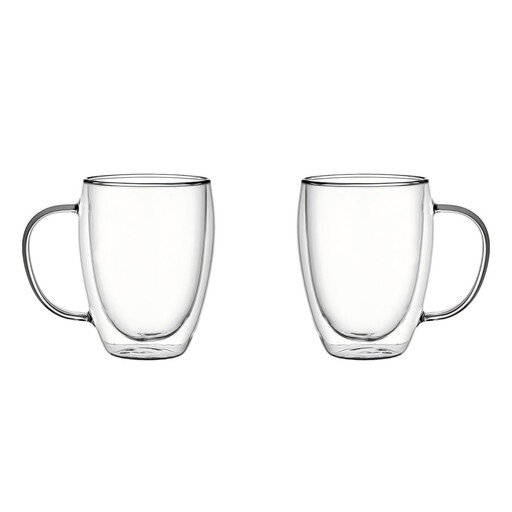
Why this product suits this profile: The 2-piece set with a 450 ml capacity offers plenty of room for coffee, tea, water or cold mixed drinks, making it suitable for households looking for a manageable starter set.
The clearly stated capacity reduces the risk of buying a glass that is too small for larger drinks. Before use, check the specific care and temperature instructions on the product page.
2-piece set; generous 450 ml capacity.
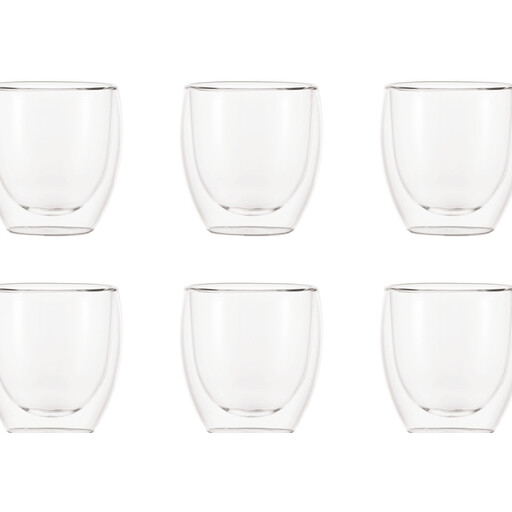
Why this product suits this profile: The 6-piece set is designed for a coordinated table setting and suits households that need several double-walled coffee glasses in the same size.
The fixed size makes it easier to choose than mixed sets with unclear capacities. Check the current care information on the product page before buying.
6 glasses; 250 ml per glass; double-walled thermal glass design.
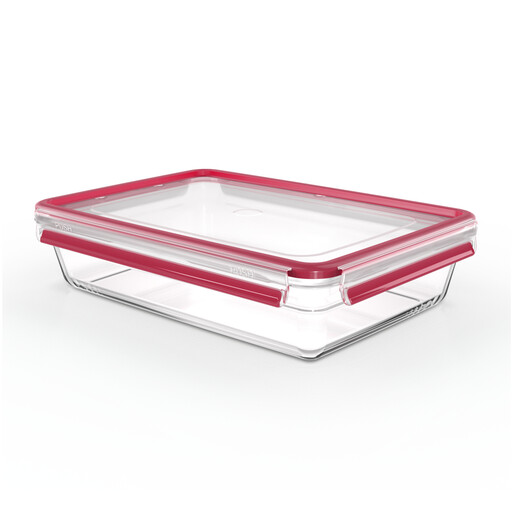
Why this product suits this profile: The large container is designed for meal prep, storing leftovers and preparing larger portions.
Its stated suitability for the oven, microwave, freezer and dishwasher makes it easier to check whether it meets your needs before buying. According to the product details, the lid must not be heated.
3 l capacity; according to the product details, up to 420 °C without the lid; suitable for freezer temperatures down to -40 °C; leakproof and stackable.
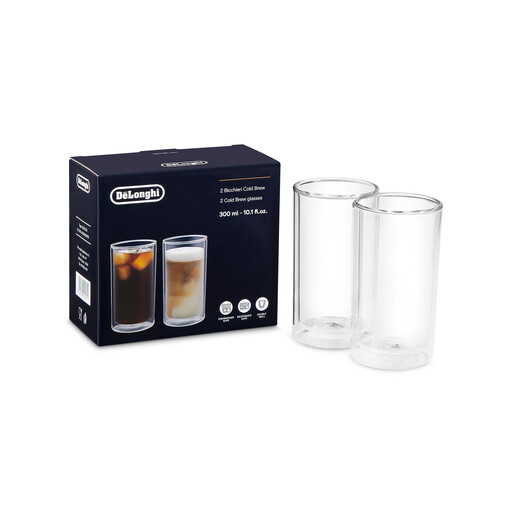
Why this product suits this profile: According to the product details, the two glasses hold up to 300 ml each and are designed for cold coffee drinks, making them suitable for cold brew, iced coffee or chilled tea.
The intended use and capacity are clearly stated. This makes it easier to check whether the glass is suitable for your preferred cold brew serving size.
2-piece set; 300 ml per glass; dishwasher-safe according to the product description.
If you are specifically looking for freezer-safe glasses, microwave-safe glass containers or other stackable storage containers, you can filter the selection by capacity, closure and temperature range.
We have put together a complete, regularly updated list of products that fully meet these strict selection criteria and the safety regulations applicable in the EU.
Many models are designed for both hot and cold drinks. However, the manufacturer’s information for the specific product is decisive. A glass should be allowed to adjust gradually to changes in temperature to prevent thermal shock.
Some models are specifically listed as dishwasher-safe. For sets with lids or seals, check whether every component is suitable for the dishwasher and whether the manufacturer recommends a particular position or a gentle programme.
Their lifespan depends on the material, workmanship, cleaning and handling. Drops, hard impacts and sudden temperature changes can damage any glass. If you notice visible cracks, chips or moisture between the glass walls, stop using the product.