
Lieferung heute & morgen

Qualitätsgarantie

Willkommens-Angebote freischalten: KOSTENLOSE Lieferung | Bis zu 80 % RABATT | Kostenlose 30-Tage-JoyPlus-Testphase
App herunterladen
Double-walled thermo glasses combine a clear, elegant look with an insulating layer of air between two glass walls. This means the outside often remains more comfortable to hold when serving hot drinks. With cold beverages, the construction can also help reduce condensation. These glasses are therefore versatile for households, coffee enthusiasts and tea drinkers alike.
Before buying, however, it is worth taking a closer look at capacity, material, cleaning requirements and the manufacturer's specifications. An appealing product description alone says little about whether a glass is suited to your everyday needs.
Double-walled glasses can slow down heat transfer, but they are not completely sealed insulated containers. The drink's temperature still depends on its volume, starting temperature, room temperature and how long it is left to stand. Claims such as “keeps drinks hot for hours” should therefore only be taken seriously when specific, verifiable testing conditions are provided.
Thermo glasses made from borosilicate glass are often marketed for their resistance to temperature changes. Even so, this type of glass can still be damaged by impacts, being dropped or extreme temperature fluctuations. For example, avoid placing a very hot glass directly on a wet or very cold surface.
Also check whether the manufacturer specifically provides information about microwave, dishwasher or general use only. These features should not be assumed automatically.
A glass with a nominal capacity of 350 ml is usually not filled right to the rim. For cappuccino, latte or tea, it is also important to allow enough room for foam, ice cubes or milk. Small double-walled espresso glasses holding around 70 to 80 ml are suitable for espresso or ristretto, but not for a large milk coffee.
Borosilicate glass is a common material choice for many insulated drinking glasses. It is relatively lightweight and suitable for hot and cold drinks, provided the manufacturer's instructions are followed. Be cautious with products that do not clearly specify the material, particularly when heat resistance is promoted as their main advantage.
Look for the following information:
A double-walled construction can make the outer glass wall feel less hot or less cold. It does not replace careful handling of glass.
Different sizes make sense for everyday use:
A handle can make hot drinks easier to handle. Handleless models often have a more compact appearance and, depending on their shape, may be easier to store in cupboards. Check the external dimensions as well, particularly for tall glasses and limited clearance beneath bean-to-cup coffee machines.
“Dishwasher-safe” is a useful specification, but it should always be confirmed for the specific product. With transparent glass, aggressive detergents, high temperatures and frequent dishwasher cycles can contribute to clouding over time. When washing by hand, use a soft sponge and avoid steel wool or abrasive cleaning products.
Double-walled glasses should be checked for cracks, chips or unusual changes before every use. Damaged glasses should no longer be used.
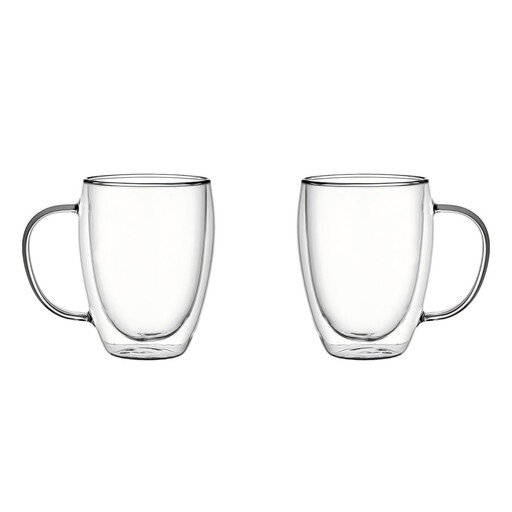
Why This Fits Their Persona: This 2-piece set with a 450 ml capacity is designed for households seeking generous servings of coffee, tea or cold drinks while starting out with a manageable set size.
The clearly stated capacity makes it easier to compare this set with smaller 200 or 250 ml glasses. Before buying, check the available material and care information.
2-piece set; generous 450 ml capacity; designed for hot and cold drinks.
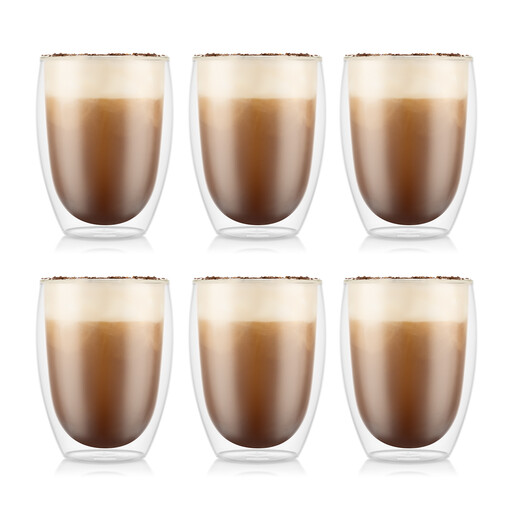
Why This Fits Their Persona: The 6-piece set is ideal for households that value a coordinated look on the dining table and regularly entertain guests.
The set size is clearly stated, making it easier to assess your needs instead of choosing a small 2-piece set for a larger household.
6 glasses; 350 ml capacity; double-walled PAVINA design according to the product description.
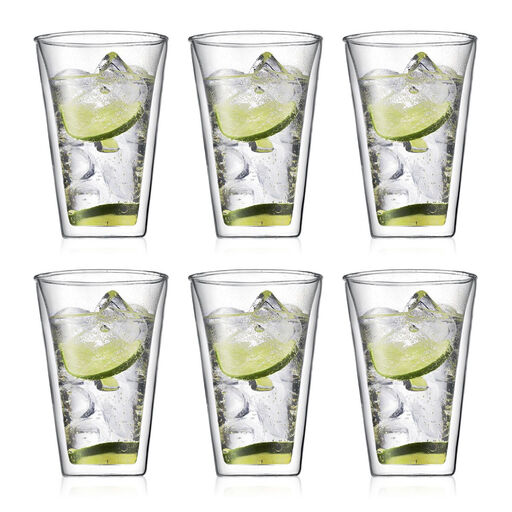
Why This Fits Their Persona: For generous drinks in everyday life, family breakfasts or iced coffee and tea with ice cubes, the 0.4-litre format offers greater flexibility.
The capacity is designed for generous servings. Buyers should nevertheless check the available clearance and cleaning instructions before placing an order.
6-piece set; 400 ml per glass; described as suitable for hot and cold drinks.
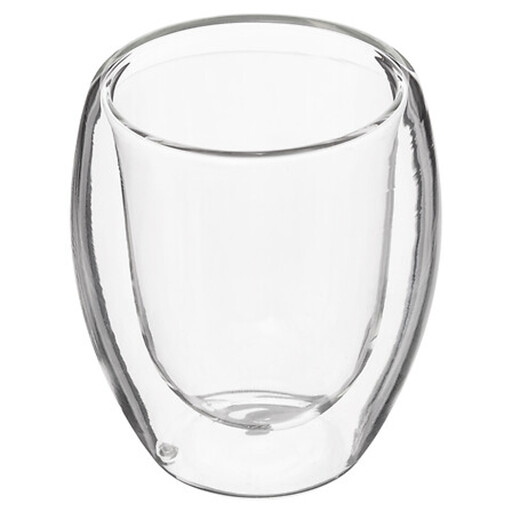
Why This Fits Their Persona: With a capacity of 7 cl or 80 ml, this set is tailored to espresso, ristretto and other small coffee specialities.
The compact capacity helps prevent an espresso glass from being mistakenly purchased as a cappuccino or latte glass. According to the product specifications, it is microwave-safe but not suitable for use in an oven.
Borosilicate glass; 7 cl capacity; dishwasher- and microwave-safe according to the product specifications; transparent design.
If you prefer smaller servings, compare the BODUM CANTEEN 6-piece set with a 0.2 l capacity or the BODUM PAVINA 2-piece set with a 250 ml capacity. Models with handles are also available in 250 ml and 350 ml sizes for milk coffee and tea. The key consideration is whether you need a simple glass, a handle or a more generous serving capacity.
When searching for double-walled coffee glasses, double-walled espresso glasses or heat-resistant glasses, always read the full product specifications. For example, the term “Bodum thermo glasses” refers to a brand, but by itself says nothing about the size, set contents or care instructions of the specific model.
Compare a current selection of double-walled cappuccino glasses by size, set contents, material and features.
Some models are explicitly labelled dishwasher-safe, while others are not. Check the information provided on the relevant product page. To maintain the clearest possible surface, hand-washing with a mild detergent may be advisable.
Glass can break when exposed to impacts or severe, sudden temperature changes. Do not pour a boiling-hot drink into a very cold glass, and do not place a hot glass directly onto a cold, wet surface. Damaged glasses should no longer be used.
For cappuccino, 250 to 350 ml is often practical, depending on the amount of coffee, milk and milk foam. An espresso glass holding 70 or 80 ml is generally too small for this purpose. Also check whether the handle and the height of the glass are compatible with your coffee machine.