
Lieferung heute & morgen

Qualitätsgarantie

Willkommens-Angebote freischalten: KOSTENLOSE Lieferung | Bis zu 80 % RABATT | Kostenlose 30-Tage-JoyPlus-Testphase
App herunterladen
Double-walled glasses showcase visible layers of your drink while an insulating layer of air between the two glass walls helps regulate the temperature. This means the outside can feel more comfortable to hold when serving hot drinks, while cold drinks are less likely to leave condensation on your table or desk. This design is ideal for coffee, tea, espresso, cold brew and many other drinks.
Even so, it is worth taking a close look at the product details. Marketing terms such as “thermal glass” or “heat-resistant” reveal little on their own about everyday practicality, care requirements or the right serving size.
Even borosilicate glass can break if dropped, knocked against the sink or exposed to a sudden, significant change in temperature. The term borosilicate glass mainly describes the material’s properties and its greater resistance to temperature changes. It does not replace careful handling.
Check whether the manufacturer provides guidance on thermal shock, microwave, oven and dishwasher use. Moving frozen or very cold glasses directly to boiling-hot drinks is particularly problematic.
A small espresso glass with a capacity of 7 or 8 cl is not suitable for a large cappuccino. Conversely, a 400 ml glass can be impractical for a single espresso. For everyday use, 250 to 350 ml is a versatile capacity for coffee, tea and milk-based drinks. Cold brew, on the other hand, is often served in 220 or 300 ml glasses.
Also check whether the stated size refers to the maximum capacity or the recommended filling quantity.
Some double-walled thermal glasses are dishwasher-safe, while for others this only applies to the glass itself and not to the lid, filter or other components. Harsh cleaning products and very hot dishwasher programmes can affect the clarity of the glass over time.
Do not continue using products with visible damage, cracks or chips. Due to their construction, the spaces between the walls of double-walled glasses are not designed to be cleaned afterwards.
Borosilicate glass is used for many insulated drinking glasses because it is clear and can generally tolerate temperature changes better than ordinary glass. However, the manufacturer’s specific instructions always apply. “Suitable for hot and cold drinks” does not automatically mean that the glass can be used on the hob, in the oven or in the freezer.
When choosing borosilicate glass glasses, the following details are relevant:
For espresso, compact double-walled espresso glasses with a capacity of around 7 to 8 cl are a sensible choice. The transparent design can show off the crema and colour. For latte macchiato, cappuccino or larger milky coffee servings, 250 to 350 ml is usually more suitable.
Double-walled coffee glasses with handles offer a familiar grip. Handles are particularly practical when the glass is regularly filled with hot drinks. For cold brew, iced coffee and water, cold-brew glasses or slim tumblers without handles are also worth considering.
A single glass is useful if you want to add to an existing collection or try out a particular shape first. A glass set containing two, six or more glasses is more economical or practically convenient for couples, families, offices and cafés. As well as the price per item, check the storage space required, whether the glasses are stackable and how many you actually need.
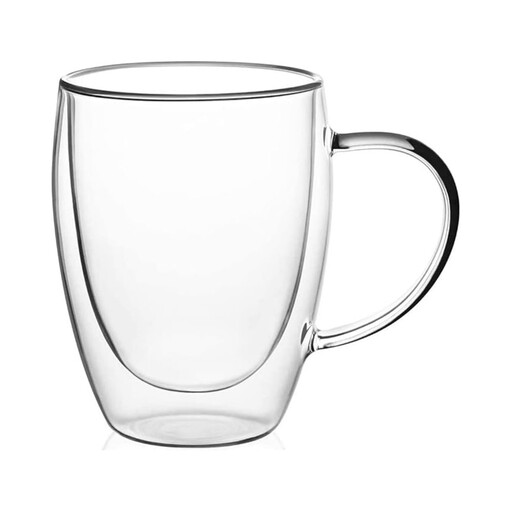
Why this product suits this profile: The 2-piece set with a 350 ml capacity is designed for households that want to serve coffee, lattes or cappuccinos in a practical everyday size. The handle makes it easier to hold when serving hot drinks.
The clearly stated capacity and handle help you avoid choosing a shape that is too small or awkward to use.
2-piece set, 350 ml capacity and suitability for hot and cold drinks according to the product description.
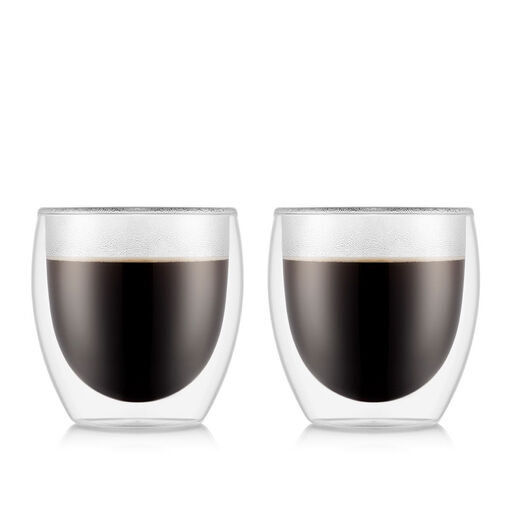
Why this product suits this profile: Its compact size is suitable for coffee, tea and smaller milk-based drinks. The double-walled design is well suited to users who prefer a clear, minimalist glass shape.
The 250 ml capacity makes it easier to avoid oversized cups for standard coffee servings.
Pack of two double-walled thermal glasses with a 250 ml capacity according to the product name.
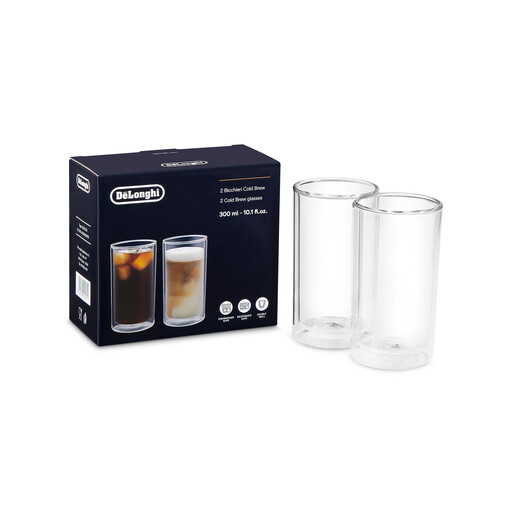
Why this product suits this profile: The 2-piece set is designed for cold coffee drinks and is suitable for cold brew and other chilled beverages.
The specific intended use helps you avoid confusing a hot-drinks glass with one that has an unsuitable serving size for cold brew.
Two glasses, 300 ml capacity and dishwasher suitability according to the product description.
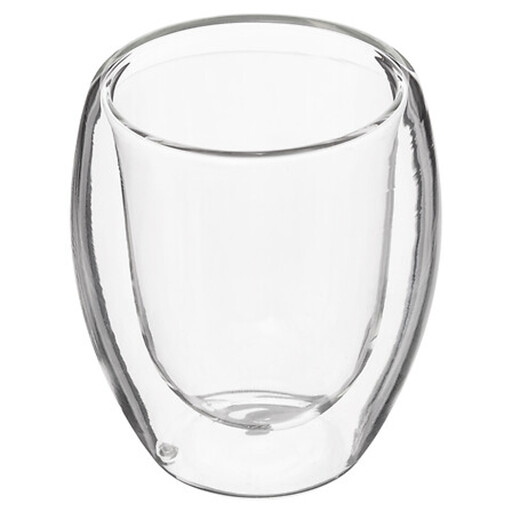
Why this product suits this profile: With 7 cl per cup, this set is designed for espresso, ristretto and small coffee specialities. The transparent design lets you see the crema.
The small, clearly stated capacity helps prevent you from buying vessels that are too large for espresso.
2-piece set made from double-walled borosilicate glass; dishwasher- and microwave-safe according to the product description.
We have put together a complete, regularly updated list of products that fully meet these strict selection criteria and the safety regulations applicable in the EU.
To help double-walled glasses stay clear and functional for as long as possible, follow these simple rules:
A double-walled design can slow down the exchange of heat and cold, but it is not a substitute for a vacuum flask. If you want to transport drinks for longer periods or keep them hot for an especially long time, you should also look for a suitable insulated container.
Many models are designed for coffee, tea or espresso. However, the manufacturer’s instructions are what matter. Borosilicate glass may be more resistant to temperature changes, but it is not unbreakable. Direct hob heat and sudden, significant temperature changes should be avoided unless they are expressly permitted.
Double-walled coffee glasses have two glass walls with a gap between them. This design can make the outside more comfortable to hold when serving hot drinks and reduce condensation with cold drinks. An ordinary glass does not have this insulating construction. Actual heat retention depends on factors including the amount of drink, starting temperature, room temperature and shape.
There is no standard service life. It depends on the material, workmanship, cleaning routine and handling. Frequent temperature changes, impacts and harsh dishwasher programmes can shorten their usable life. Check the glasses for cracks or chips before every use and replace any damaged items.