
Lieferung heute & morgen

Qualitätsgarantie

Willkommens-Angebote freischalten: KOSTENLOSE Lieferung | Bis zu 80 % RABATT | Kostenlose 30-Tage-JoyPlus-Testphase
App herunterladen
Dr. Martens black boots combine a distinctive look with practical details for everyday wear, leisure and urban outfits. Yet the wide range of models can quickly lead to the wrong purchase. Fit, leather type and the differences between the 1460, 1460 Mono Black and 101 Black are particularly easy to overlook.
This buying guide explains which features to consider before you buy and which model may suit different needs.
The term ‘leather’ doesn’t automatically tell you how it will feel or how it will soften with wear. Virginia leather is described as soft with a light grain, while classic Smooth Leather can feel firmer at first. Nappa leather is also known for its soft, supple finish.
So, if you’re looking for a particularly soft feel, don’t just focus on the colour. Check the material details in the product description too.
Classic 8-eye boots such as the 1460 come higher up the ankle and offer a more adjustable fit thanks to the extra lacing. The Dr. Martens 101 Black, by contrast, has six eyelets and a slightly more compact look.
The number of eyelets isn’t a measure of quality. However, it does affect the silhouette, how easy the boots are to put on and how they work with different trousers.
The product details for the models featured describe the AirWair sole as oil- and fat-resistant, with abrasion resistance and slip resistance. These are technical product features, but they don’t mean the boots are suitable for every working environment or weather condition.
For building sites, specialist work footwear or consistently wet conditions, check your employer’s requirements and the full safety information.
Use leather care products suited to the material. Start by removing dirt with a slightly damp cloth, then leave the uppers to dry at room temperature. These models aren’t designed for direct heat, washing machines or tumble dryers.
The size charts provided list EU sizes from 36 to 50, along with foot lengths and widths. Use them as a guide, but remember they can’t replace checking how the boots fit your individual foot shape.
Before you buy, we recommend that you:
Boots that are too big can slip at the heel. If your toes are already touching the front, you can’t rely on leather boots to ‘stretch’ enough to make a model that’s too small fit comfortably.
On the models described, visible welt stitching, ridged sides and the AirWair sole are all part of the signature construction. The Dr. Martens 101 Black is specifically described as having a Goodyear welt. The welt construction and sole are important product features, but they shouldn’t be taken as a blanket guarantee of a particular lifespan.
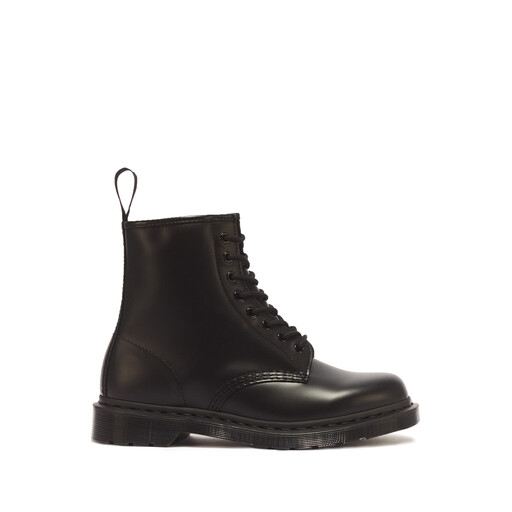
Why it suits this profile: The 1460 Mono Black has the classic 8-eye silhouette, with an all-black design across the uppers, sole, stitching, eyelets and laces. It works well with pared-back streetwear and pairs easily with jeans, cargo trousers or dark clothing.
The product details specifically identify the leather as Smooth Leather. That means you can set realistic expectations about its firmer feel at first and allow for a breaking-in period.
All-black design, 8-eye lacing and an AirWair sole described in the product details as oil- and fat-resistant, with abrasion resistance and slip resistance.
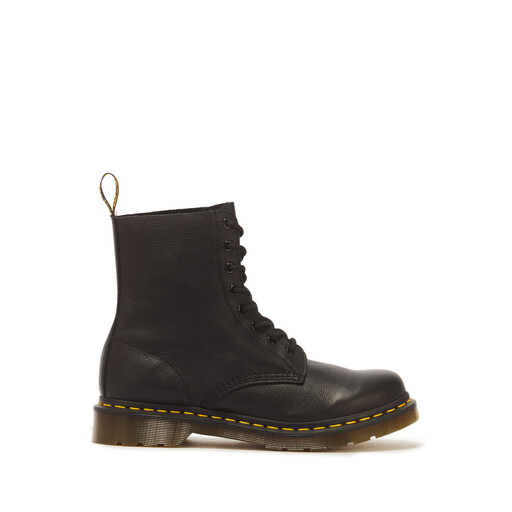
Why it suits this profile: The 1460 Pascal Black combines the classic 8-eye shape with Virginia leather and a narrower, tapered footbed. It’s a good option if you’re looking for a softer leather feel and a more defined fit.
The specific details about the leather and footbed help you avoid mistaking a softer option for the firmer Smooth Leather.
Virginia leather, yellow welt stitching, a ridged AirWair sole and adjustable 8-eye lacing.
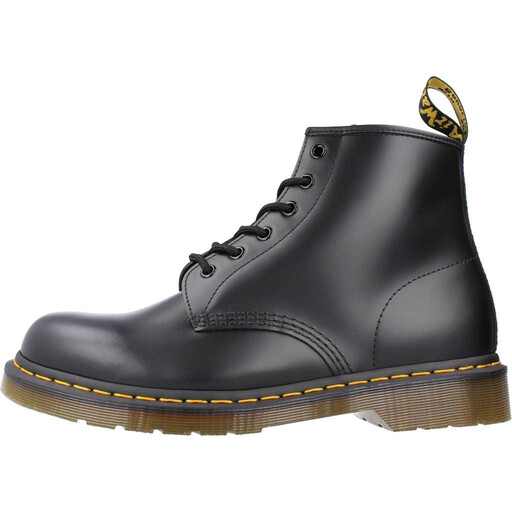
Why it suits this profile: The 101 Black has six eyelets and a more compact ankle-boot silhouette. It could be a good choice for commuting, everyday wear and urban outfits if you’d prefer a lower shaft than the 1460.
The six eyelets make the difference from the classic 1460 clear, so you can check that the shaft height is right for you before you buy.
Smooth Leather, Goodyear welt, 6-eye lacing and an AirWair sole, according to the product description.
We’ve put together a complete, regularly updated list of products that meet these strict selection criteria and fully comply with the safety regulations in force in the EU.
Black leather boots keep their finish looking more even for longer if you remove dirt regularly. For Smooth Leather and Nappa leather, the product details recommend neutral or colour-matched shoe polish, followed by brushing. Wonder Balsam is recommended for caring for the Pascal Virginia Leather.
After getting wet, leave the boots to dry at room temperature. Radiators, hairdryers and direct sunlight can put unnecessary strain on the leather. For everyday wear in Germany, it’s also worth checking the sole and welt regularly for debris, heavy wear and any areas coming loose.
No. Both models have the 1460’s distinctive 8-eye shape, but they differ in their leather and design. The 1460 Mono Black is all black and uses Smooth Leather. The 1460 Pascal Black is described as having softer Virginia leather and yellow welt stitching.
There’s no one-size-fits-all recommendation, as foot shape and how sizes feel can vary. The Pascal is described as having a narrower, tapered footbed. If you have wider feet, take particular care to check the size chart and stated foot width. The key is to make sure your toes aren’t cramped and your heels don’t slip excessively when you walk.
It wouldn’t be realistic to guarantee a specific lifespan. It depends on factors including how often you wear them, the surfaces you walk on, moisture, care, fit and how hard you wear them. Choosing the right size, cleaning them regularly and using care products suited to the material can help prevent premature wear.