
Lieferung heute & morgen

Qualitätsgarantie

Willkommens-Angebote freischalten: KOSTENLOSE Lieferung | Bis zu 80 % RABATT | Kostenlose 30-Tage-JoyPlus-Testphase
App herunterladen
A dragon toy for children can be designed for building, role-play or collecting. The product images often appear more telling than the technical specifications. If you decide based only on size, colour or a well-known brand, you can easily overlook important details. Three typical buying mistakes occur particularly often with dragon toys:
The manufacturer's age recommendation is the first thing to check. A dragon toy from age 4 may be aimed at children who are already comfortable with figures, accessories and simple snap-together connections. However, if the set contains swords, shields, projectiles, helmets or small accessory parts, the choking risk for younger children remains relevant.
With the PLAYMOBIL dragon knight sets, small parts are explicitly mentioned as a possible choking hazard. According to the product information, the models are intended from age 4; for younger children and during assembly, adult supervision is recommended. With LEGO models that have age ratings from 6, 7, 8, 9, 12 or 14 years, the complexity of the build should be taken into account.
A poseable dragon is particularly suitable for scenarios where children position figures and act out stories. Pay attention to the specific details:
With the Schleich BAYALA Night Sky Dragon 70762, movable, transparent wings and a magnetic area for a matching figure are mentioned. This is different from a LEGO NINJAGO dragon with numerous movable parts or a PLAYMOBIL model with a manual firing function.
The piece count helps you estimate the build time and difficulty level. The dimensions, on the other hand, show whether the finished model will fit on a shelf, a desk or into a play world.
Examples from the selection:
For small children's bedrooms, a compact dragon building set is often easier to store. Large models, on the other hand, need a fixed display surface and should be protected from being knocked over.
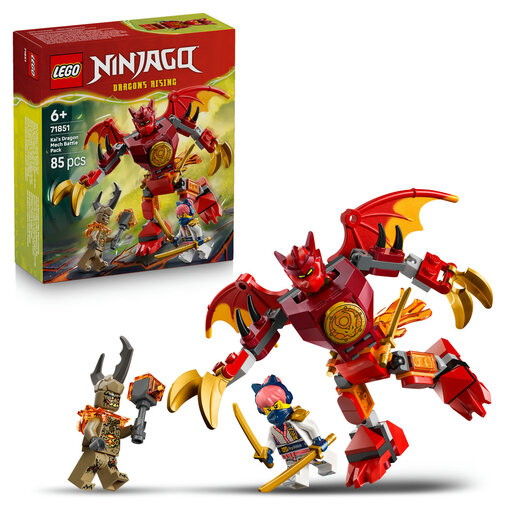
Why this product fits the profile: The set is compact with 85 pieces and is recommended for children from age 6. It combines a dragon mech with three minifigures and serves as a manageable introduction to LEGO NINJAGO.
The piece count, age rating and included figures are clearly stated. This makes it easier to assess the scope before buying.
Poseable legs, body and claws; three minifigures for immediate role-play scenarios.

Why this product fits the profile: The 3-in-1 concept offers a repeatable building decision for children and fantasy fans from age 9. The finished model can be played with or displayed.
The alternative uses are specifically defined: dragon, sea serpent or phoenix. It remains important that only one model can be built at a time.
715 pieces; poseable limbs and wings; three build variants from the same bricks.
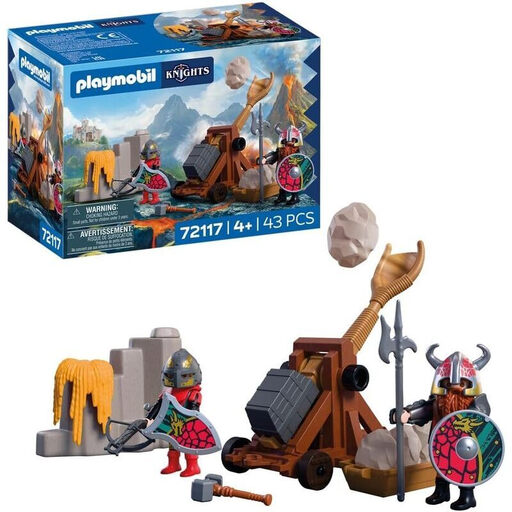
Why this product fits the profile: This medieval knight toy is aimed at children from age 4 according to the product information and contains two figures, a mechanical stone catapult and a rock wall.
The firing function is mechanical and the seven stones are explicitly listed. Because of the projectiles, you must not aim at faces or eyes.
43 pieces; two Dragon Knight figures; accessories for siege and defence scenarios.
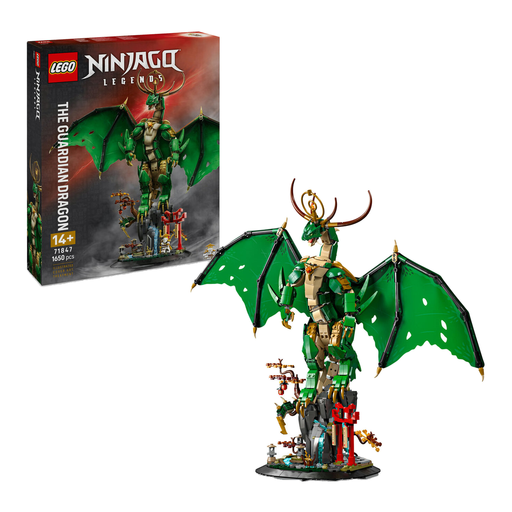
Why this product fits the profile: According to the product information, the model is intended for fans from age 14 and combines a poseable dragon with a designed base, Master Wu minifigure and poster.
Age, piece count and model size are specifically stated. This makes it clear that the focus is on building and display.
1,650 pieces; 48 cm tall figure; poseable heads, arms and scales.
We have put together a complete, regularly updated list of products that fully meet these strict selection criteria and the safety regulations in force in the EU.
PLAYMOBIL dragon knight sets and certain Schleich figures are intended from age 4 according to the available product information. As they may contain small accessory parts, parents should observe the warning notices and supervise younger children. LEGO sets with many building pieces in this selection generally start at higher age levels.
Durability depends on the material, joint construction and how it is handled. With LEGO and PLAYMOBIL, loose or damaged parts should be checked regularly. Schleich figures with wings or magnetic elements should not be dropped and should be protected from heat. Mechanical functions such as catapults or projectiles should only be used as intended.
Most of the models presented do not require batteries. Therefore, no ongoing energy costs arise. With a LEGO NINJAGO set, only an optional digital building guide can be used via the LEGO Builder app; the actual toy works independently of this. What is decisive for the total cost is rather the purchase price, supplementary sets and, if necessary, replacement parts.