
Lieferung heute & morgen

Qualitätsgarantie

Willkommens-Angebote freischalten: KOSTENLOSE Lieferung | Bis zu 80 % RABATT | Kostenlose 30-Tage-JoyPlus-Testphase
App herunterladen
When your drain is blocked, you need a solution that’s readily available and suited to the problem. However, not every product is suitable for every drain. A chemical drain unblocker can be dangerous if used incorrectly, while a plunger that’s too small may not create a sufficient seal. If you’re replacing a faulty basin plug, choosing the wrong size can also lead to leaks.
So the most important buying decisions aren’t just about cleaning performance. The type of drain, material compatibility, dosage, safety information and correct measurements all matter.
A highly alkaline drain unblocker isn’t automatically right for every situation. Products may not be suitable for certain materials, surfaces or uses. For example, the Drano Power Gel Cleaner carries a warning that it shouldn’t be used in toilets or on sensitive materials such as aluminium, enamel or chrome.
Before buying, check:
A gel poured directly into the drain needs to be used in a specific quantity and left to work for a set time. The Drano Power Gel Cleaner instructions specify 500 ml and a waiting time of 5 to 30 minutes. According to its product information, Rorax Rohrfrei Bio Power Gel calls for a 250 ml dose, warm water and a waiting time of five hours – or overnight for stubborn blockages.
Using more product doesn’t automatically give you a better result. Follow the instructions on the label carefully.
Drain unblockers must not be mixed with each other, bleach or other household chemicals. This can cause dangerous reactions and release irritating or toxic fumes. If you don’t know what’s already in the pipe, a mechanical tool such as a plunger or drain suction cup is often a more controlled first step.
Where there’s a serious risk of chemical burns, wear gloves and eye protection, keep children away, store the container upright and tightly closed, and follow the label instructions.
A chemical drain unblocker may be designed for organic build-up such as hair, soap residue or grease. A mechanical drain cleaner or suction cup, on the other hand, works without chemical active ingredients. This can be particularly useful if the blockage is close to the drain or you’re not sure what’s causing it.
Before using a plunger on a basin, seal the overflow with a damp cloth. This helps build up more pressure. In a shower or bath, the rubber cup needs to sit as tightly as possible against the surface. A diameter of around 14 cm may suit a range of household drains, but it should match the opening in question.
For chemical products, hazard warnings matter more than marketing claims. According to its product label, Drano Power Gel Cleaner causes severe skin and eye damage and is very toxic to aquatic life. It must not be mixed with other chemicals. Rorax Rohrfrei Bio Power Gel contains sodium mercaptoacetate according to its product information and may cause allergic reactions.
“Bio” doesn’t automatically mean a product can be used without protective measures. A bio drain unblocker must also be used in line with its dosage and safety instructions.
If the plug in your basin is faulty, you may not need a drain unblocker at all. When choosing a replacement Click-Clack basin waste, consider the following:
A basin waste with an overflow isn’t suitable for a basin without an overflow opening. Avoid abrasive cleaners and hard sponges on chrome-plated surfaces.
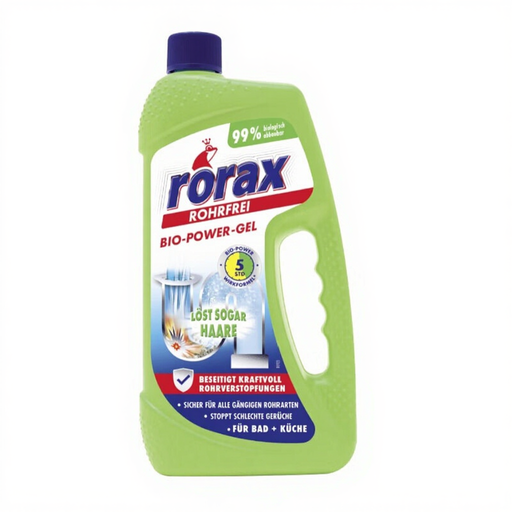
Why it suits this use case: This gel is designed for regular household use and, according to the product information, is suitable for standard drains. The 250 ml dosage is stated on the bottle.
Clear dosage and contact-time instructions reduce the risk of using too much product or rinsing it away too soon.
1-litre bottle; according to the product information, it contains no chlorine chemicals and has a formula designed to tackle hair, grease and odours.
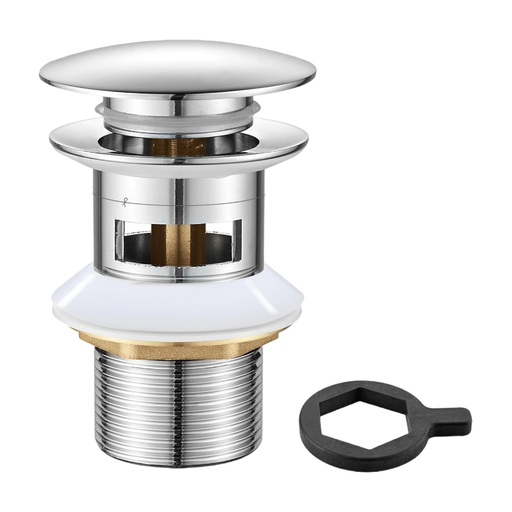
Why it suits this use case: This basin waste is designed for basins with an overflow and openings measuring 41 to 50 mm. The Click-Clack mechanism opens and closes when pressed.
The details about the overflow and opening size help you avoid choosing a basin waste that won’t fit a basin without an overflow.
Brass body with a chrome-plated finish; silicone seals and G1¼″ fitting, according to the product description.
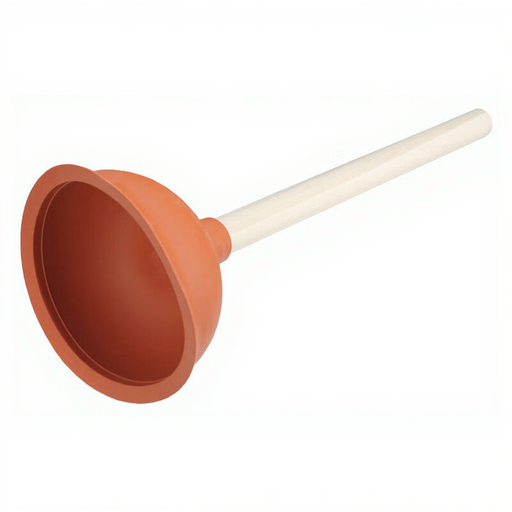
Why it suits this use case: This mechanical drain cleaner is suitable for basins, baths and showers when you want to avoid chemical products or use one alongside them.
It doesn’t use chemical active ingredients, helping you avoid the risk of mixing different drain unblockers.
Soft rubber cup measuring around 14 cm in diameter; wooden handle for manual pushing and pulling.
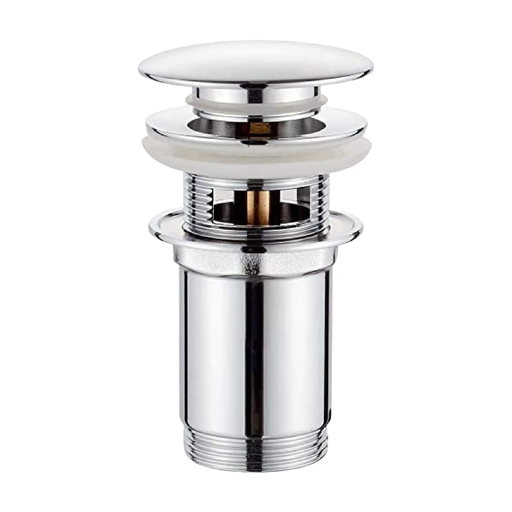
Why it suits this use case: This basin waste is designed for basins with a pre-drilled opening and an overflow. The stated opening size is 41 mm.
Its label states that it’s designed for basins with an overflow, helping you avoid confusing it with models for basins without one.
Brass with a chrome finish; Click mechanism and sealing rings, according to the product description.
We’ve put together a complete, regularly updated list of products that meet these strict selection criteria and fully comply with the safety regulations in force in the EU.
First, remove any visible hair and build-up. Then try using a plunger or suction cup. If you use a chemical product, follow the dosage, contact time and material guidance. Never mix different unblockers. If the water remains stagnant or starts coming out somewhere else, get the cause checked by a professional.
It depends on the product. Chemical unblockers should be kept in their original container, upright, in a cool, dry place and out of reach of children. The label provides the relevant storage and disposal instructions. Don’t use containers that are damaged, leaking or have illegible labels.
No. A bio drain unblocker can still irritate your skin or eyes and must be kept out of children’s reach. The term describes certain ingredients or biodegradability properties, but it doesn’t replace the safety information. Always check the product label, dosage and contact time before use.