
Lieferung heute & morgen

Qualitätsgarantie

Willkommens-Angebote freischalten: KOSTENLOSE Lieferung | Bis zu 80 % RABATT | Kostenlose 30-Tage-JoyPlus-Testphase
App herunterladen
A cluttered drawer wastes time and makes it harder to find cutlery, cosmetics, jewellery or office supplies. The right drawer organiser can create separate spaces, but it won’t automatically solve every practical problem. The key things to consider are the drawer’s internal dimensions, the layout and whether you can adapt the organiser to suit what you actually need to store.
Many drawer boxes look compact in product photos, but take up more room than expected in practice. Even a few millimetres can stop a drawer from closing fully. Before you buy, measure the drawer’s internal width, depth and available height.
A cutlery organiser with fixed compartments may suit standard cutlery, but not kitchen utensils of different sizes. With jewellery, cosmetics or stationery, unused gaps can quickly appear. Adjustable dividers or an integrated divider system offer more flexibility.
Plastic organisers vary in their finish, sturdiness and ease of cleaning. If the material or care instructions aren’t clear, it can be difficult to tell whether a product is suitable for the bathroom, dressing table or kitchen drawer. For products intended for tableware, also check whether they’re only designed for storing items. Don’t store food loose in them unless they’re specifically stated to be suitable for this.
Don’t just measure the outside of your chest of drawers or kitchen unit. What matters is the drawer’s internal dimensions, including any runners. You should also leave enough room between the organiser and the bottom of the drawer to put it in and take it out easily.
A handy checklist:
A drawer insert with several compartments is especially versatile if the dividers can be moved. For cutlery, the compartments should be long enough for knives, forks and spoons. Smaller sections are more useful for cosmetics and jewellery, so individual items don’t get mixed together.
Check the product description carefully: “with dividers” doesn’t always mean they’re adjustable. For a drawer organiser with dividers, it should be clear whether the dividers can be removed or moved, or are fixed in place.
Plastic is lightweight and can usually be cleaned with a damp cloth. Smooth surfaces are practical for bathroom and cosmetics drawers, as they’re easier to wipe clean. Cutlery organisers should be cleaned regularly and dried thoroughly.
If you’ll be taking storage boxes out of drawers often, look for rounded edges, a manageable weight and clear care instructions. Only rely on claims about heat resistance or suitability for direct food contact if the seller explicitly states them.
The models below cater to different needs. The product information available focuses mainly on layout, material and intended use. Check the dimensions and other details on the relevant product page before you buy.
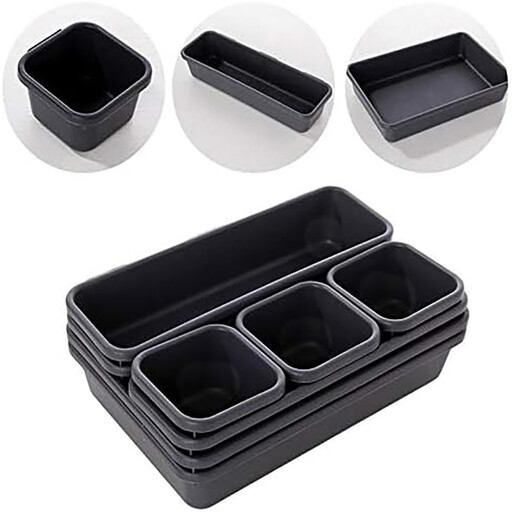
Why this product suits this profile: This model is designed for households looking to organise tableware in a plastic organiser with an integrated divider system. Its black finish blends discreetly into many drawers.
The integrated divider system and adjustable dividers offer more flexibility than fixed compartments. You should still check your drawer’s dimensions before ordering.
Plastic construction, an integrated divider system and a design intended for tableware.
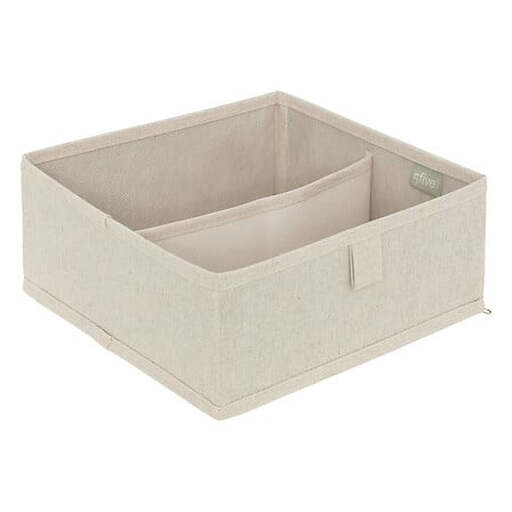
Why this product suits this profile: This compact storage solution has two separate compartments and is suitable for accessories, jewellery, cosmetics, stationery and small office items.
The two clearly separated compartments prevent everything from ending up in one open space. However, there’s less scope to adapt it for items of different sizes than with a system that has adjustable dividers.
Two separate compartments, plastic construction and, according to the product description, cleaning with a damp cloth.
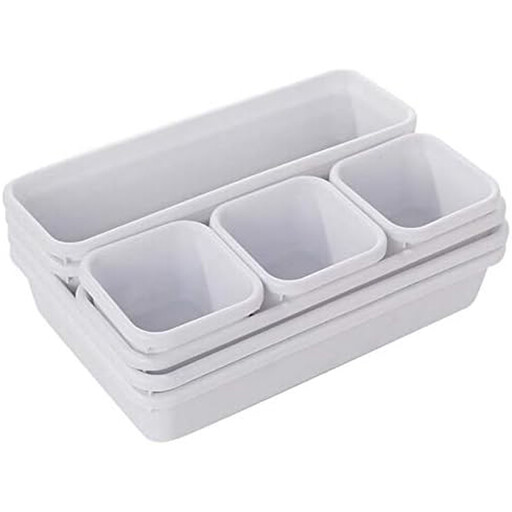
Why this product suits this profile: The white design, with its integrated and adjustable divider system, is a good choice if you want to rearrange tableware or smaller household items to suit your needs.
The adjustable layout helps you avoid being limited to standard fixed compartments. Before use, check that your drawer has enough internal height.
Plastic construction, integrated dividers and a design intended for storing tableware.
We’ve put together a complete, regularly updated list of products that meet these strict selection criteria and fully comply with the safety regulations in force in the EU.
Start by sorting the contents by how often you use them and by size. Keep frequently used items at the front or in the easiest-to-reach area. Less frequently used utensils can go further back.
For a drawer organiser with adjustable dividers, follow these steps:
Clean plastic organisers according to the product description. A damp cloth is enough for many models. Avoid harsh cleaning products, high temperatures and naked flames unless the manufacturer’s care instructions say otherwise.
Measure the drawer’s internal width, depth and available height. Take the runners, stops and drawer front into account. The organiser shouldn’t get stuck or prevent the drawer from closing fully.
It depends on what you need the organiser for. Fixed compartments provide a simple layout, while adjustable dividers are more flexible for items of different sizes. An adaptable system can be useful for things you store in varying combinations, such as cosmetics, jewellery or kitchen utensils.
Its lifespan depends on the thickness of the material, how much weight it carries, how often it’s used and how well it’s cared for. Without specific information from the manufacturer, it wouldn’t be appropriate to give a general estimate. Regular overloading, high temperatures and improper cleaning can shorten its lifespan.