
Lieferung heute & morgen

Qualitätsgarantie

Willkommens-Angebote freischalten: KOSTENLOSE Lieferung | Bis zu 80 % RABATT | Kostenlose 30-Tage-JoyPlus-Testphase
App herunterladen
By Joybuy Product Recommendation OfficerDate: August 28, 2026
A messy drawer is more than just an eyesore. It costs you time searching for the right item and can lead to damage, whether it's a scratch on your jewellery or a bent fork. A suitable drawer organiser promises a solution, but the market is flooded with products whose real-world usefulness often falls short of their marketing promises.
Many buyers only realise after their purchase that the new organiser doesn't fit, the material is unsuitable, or key features are missing. This guide will show you which critical features to look for to make an informed decision and avoid buyer's remorse.
Before we dive into the solutions, it's important to understand the most common problems. These three issues often lead to a newly purchased organiser being left unused or needing a quick replacement.
To avoid these pitfalls, focus on three crucial, objective criteria. These will help you find a suitable and durable organisation system.
The material determines the durability and suitability for its intended use.
The choice between a modular system and a fixed insert depends entirely on your application.
Depending on the intended use, specific design elements are crucial:
Here are some product recommendations tailored to specific user profiles and the criteria mentioned above.
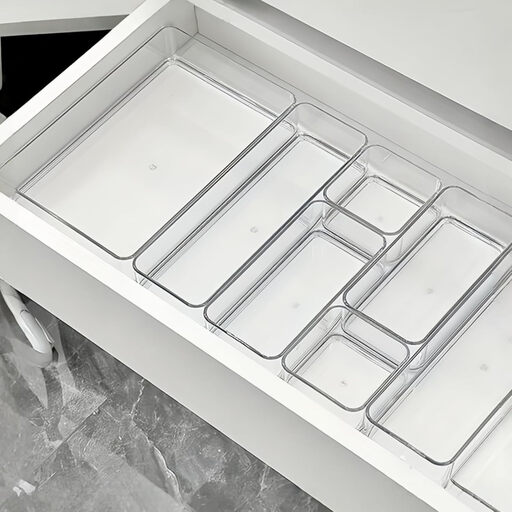
Why It Fits the Profile: Ideal for those who need an adaptable solution for various drawers—be it for makeup in the bathroom, office supplies on the desk, or small items in the kitchen. The different sizes can be freely combined.
This set solves the problem of rigid compartments and a poor fit. Its modularity allows you to make optimal use of the available space in almost any drawer, without wasting any dead space.
High flexibility with 25 individual pieces in 4 sizes. The transparent material provides an instant overview of the contents.
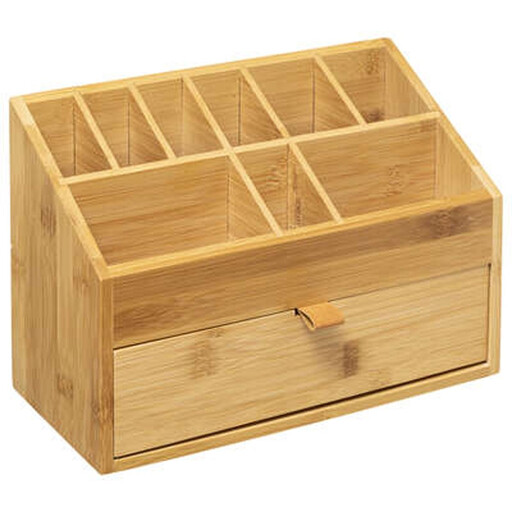
Why It Fits the Profile: For anyone who values appealing design. This organiser combines the natural look of bamboo with a thoughtful compartment layout, making it a perfect stylish desk organiser.
This product counters the pitfall of unsuitable materials. The combination of robust MDF and bamboo offers a durable and visually appealing alternative to cheap-looking plastic organisers.
High-quality material combination (bamboo, MDF, PU) and a thoughtful design with 10 compartments and a small drawer for enhanced organisation.
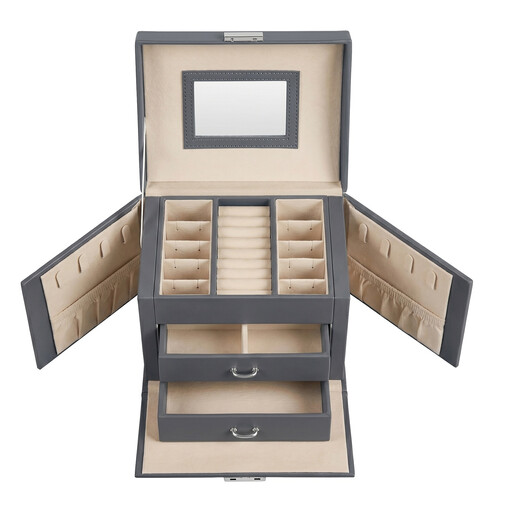
Why It Fits the Profile: Specifically designed for secure and organised jewellery storage. With a lock, carrying handle, and integrated mirror, it's a practical solution for both home and travel.
It addresses the pitfall of overlooked functionality. Instead of a generic box, it offers special hooks to prevent tangled necklaces, a soft velvet lining to protect against scratches, and a lock for security.
Compact, lockable, and travel-friendly. The thoughtful interior layout protects jewellery and keeps it organised.
We have compiled a complete, up-to-date list of products that fully meet these strict selection criteria and all relevant safety standards.
Measure the internal dimensions of the drawer: width, depth, and height. Subtract a few millimetres from each measurement to ensure the organiser fits comfortably. The height is especially important if you are considering stackable systems or want to be able to close the drawer.
There is no one-size-fits-all answer; it depends on the intended use. Modular systems offer maximum flexibility for drawers with changing or mixed contents. Fixed inserts are unbeatable for efficiently organising standardised items like cutlery, as every piece has its designated spot.