
Lieferung heute & morgen

Qualitätsgarantie

Willkommens-Angebote freischalten: KOSTENLOSE Lieferung | Bis zu 80 % RABATT | Kostenlose 30-Tage-JoyPlus-Testphase
App herunterladen
A torn trash bag spilling its contents on the way to the bin is a common frustration. Choosing the right liner can mean the difference between clean disposal and an unnecessary cleanup. In particular, drawstring trash bags offer a convenient and hygienic solution.
This guide is designed to help you find the perfect trash bags for your needs. We'll explore key features like capacity, material thickness, and special properties to help you make an informed decision.
Before making a decision, there are a few fundamental criteria to consider. These will help you select a product that reliably serves its purpose.
The size of the trash bag should match the capacity of your bin. A bag that's too small can tear easily, while one that's too large wastes material and can slip inside the can.
As a rule of thumb, the bag's capacity should be slightly larger than the bin's to ensure a secure overhang for tying it closed.
The material determines the bag's durability. Most trash bags are made of polyethylene (PE). The film thickness, often specified in micrometres (?m or my), is an indicator of its sturdiness.
An integrated drawstring is more than just a convenience feature. It allows for a quick and tight seal, preventing your hands from coming into contact with the waste. Furthermore, the cinched band serves as a sturdy handle, making transport to the main bin much easier and more secure.
Here, we present a selection of products that cover a range of needs—from small household bags to large liners for bulky waste.
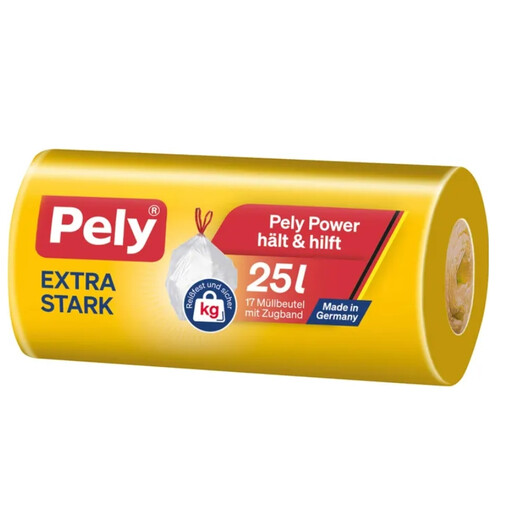
Why it stands out: This model from Pely combines a practical size with robust construction. The extra-strong quality film and integrated safety base offer high reliability for everyday use.
Pros:
Who it's for: Ideal for standard households looking for a reliable 25L trash bag for daily use in the bathroom or kitchen.
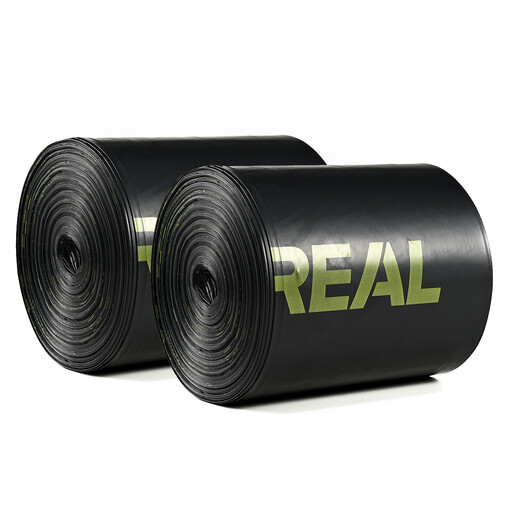
Why it stands out: Although this model doesn't have a drawstring, it's a noteworthy option for eco-conscious waste separation. Certifications from T?V AUSTRIA and BPP confirm its compostability for both home and industrial composting.
Pros:
Who it's for: For eco-conscious households seeking a certified solution for their organic waste bin or home compost.
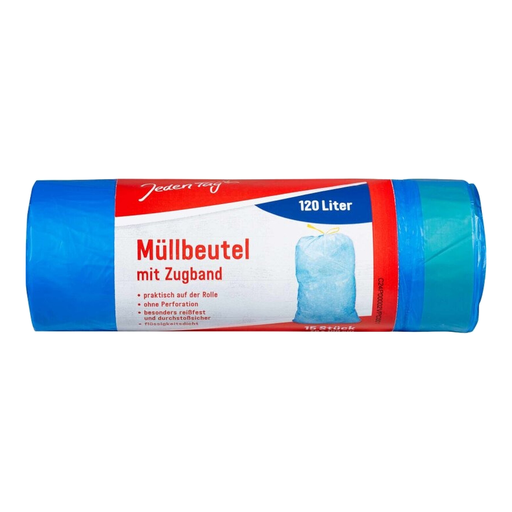
Why it stands out: With its large 120L capacity, this bin liner is designed for situations where large amounts of waste are generated. The drawstring makes handling the heavy bag easier.
Pros:
Who it's for: Homeowners with gardens, small businesses, or for projects like decluttering that require an extra-strong bin liner.
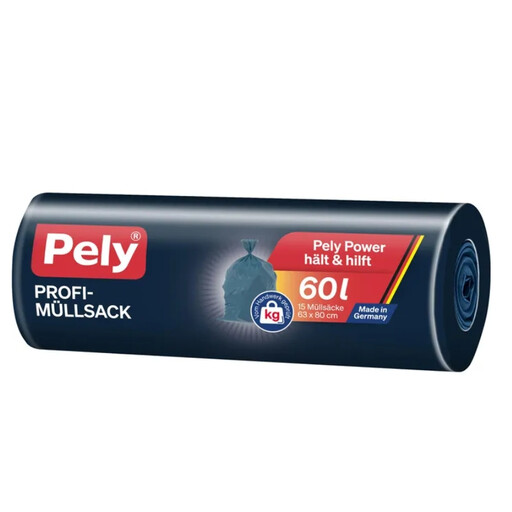
Why it stands out: This professional-grade model from Pely for 60L needs is distinguished by its exceptionally high material thickness of 60 my. It's designed to withstand even heavy or sharp-edged kitchen waste.
Pros:
Who it's for: Households and offices that need an especially tear-resistant trash bag for their standard kitchen bin and value maximum reliability.
If our selection doesn't include the perfect trash bag for your specific needs, you can find a wider range of solutions in our main category. There, you can compare different sizes, materials, and brands.
Discover more bags for heavy-duty waste disposal.
Tear-resistant trash bags are typically made from a thicker and more flexible polyethylene film (LDPE). The material thickness, often specified in micrometres (?m), is a crucial factor here. A higher ?m value generally means greater resistance to tears and punctures from sharp-edged or heavy waste.
No, compostable trash bags are specifically designed for collecting organic waste for the green bin or home compost. They should not be used for general waste, which is typically sent for incineration. In that context, their biodegradability offers no advantage and can even disrupt the recycling process. Additionally, always check the guidelines of your local waste management provider.
A simple method is to choose a bag with a capacity slightly larger than your bin's volume. For a more precise fit, you can measure the circumference of the bin. The width of the flat-lying trash bag should be about half the bin's circumference. The height of the bag should be the height of the bin plus approximately 15-20 cm for the overhang and for tying it closed.