
Lieferung heute & morgen

Qualitätsgarantie

Willkommens-Angebote freischalten: KOSTENLOSE Lieferung | Bis zu 80 % RABATT | Kostenlose 30-Tage-JoyPlus-Testphase
App herunterladen
A new dresser is supposed to bring order, but the search for the right model can quickly become overwhelming. Many buyers only discover after assembly that their new furniture wobbles, the drawers stick, or the storage space is disappointingly small. As your Joybuy Product Recommendation Officer, I'll help you navigate these common pitfalls and find a storage solution that truly meets your needs for both function and design.
Before we dive into the selection criteria, let's look at the problems that often only become apparent after the purchase. If you know what they are, you can actively avoid them.
To avoid a bad purchase, you should check three core aspects before making a decision. These features separate durable, functional furniture from short-lived compromises.
The longevity of a dresser starts with its material. While solid wood has a high-end feel, modern engineered woods like MDF (Medium-Density Fibreboard) and particleboard offer excellent value. Pay attention to the material thickness. A sturdy back panel, ideally screwed in rather than just nailed, is essential for overall stability. A solid bedroom dresser should also have sufficiently strong drawer bottoms to easily support the weight of clothing.
The drawer mechanism is a critical quality indicator. Simple plastic roller slides are prone to wear and tear. Metal telescoping slides are significantly more robust and convenient. They ensure smooth and quiet opening and closing, even when fully loaded. Some models also offer a soft-close mechanism, which allows the drawers to close gently and silently.
Don't just compare the external dimensions (width x height x depth); if available, check the internal drawer dimensions. A good dresser with drawers uses the available space efficiently. Consider what you want to store: shallow drawers are sufficient for socks and accessories, but for sweaters and trousers, you'll need greater depth and height. Whether as a modern sideboard in the living room or a white sideboard in the hallway—functionality depends directly on the usable interior space.
Here are some recommendations tailored to different needs and living situations, all of which take the aforementioned quality features into account.
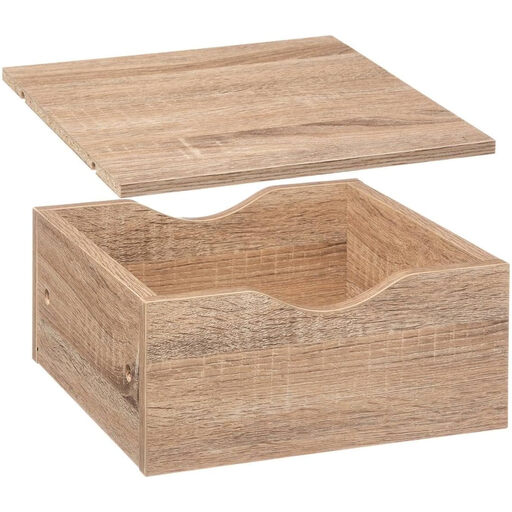
Why This Fits Their Persona: Ideal for anyone seeking a flexible solution for small nooks, shelving systems, or desktops. Perfect for organising small items without needing a large piece of furniture.
This module bypasses the "hidden" storage trap. Its compact and open design makes it immediately clear how much space is available. It doesn't promise more than it can deliver.
Modular Design: Can be combined with other elements from the series. FSC-Certified Material: Made from MDF and particleboard from responsible forestry.
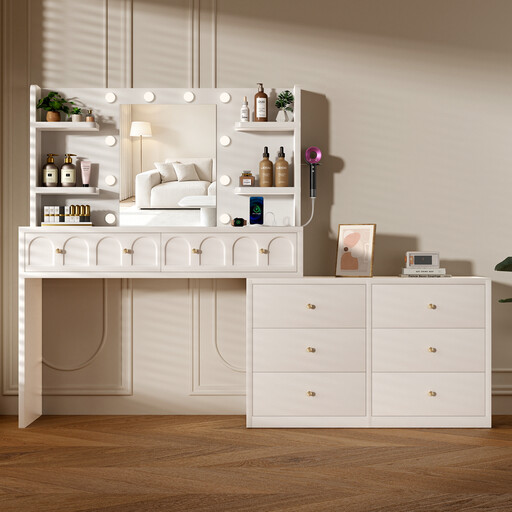
Why This Fits Their Persona: Perfect for beauty enthusiasts who want a vanity with maximum, well-organised storage and integrated tech. It combines a dresser with a full-fledged workstation.
This specialty piece avoids the instability trap with its 2-in-1 design, which can be set up in an L-shape for self-stabilisation. The numerous small and large drawers offer targeted, not undefined, storage.
Integrated Charging Station: With 2 power outlets and 2 USB ports. Massive Storage: 8 drawers and 5 open compartments for perfect organisation.
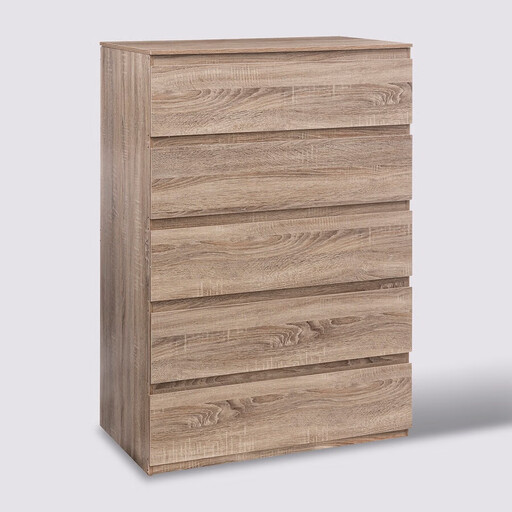
Why This Fits Their Persona: The classic choice for anyone needing maximum, straightforward storage for clothes in the bedroom. A tall, narrow design that offers a lot of space on a small footprint.
This model directly addresses the pitfall of sticking drawers: according to the manufacturer, the drawer slides are made of steel. The high maximum load capacity of 100 kg also indicates a very stable overall construction.
High Load Capacity: The frame is designed to hold up to 100 kg. Robust Mechanism: Steel drawer slides for a long lifespan.
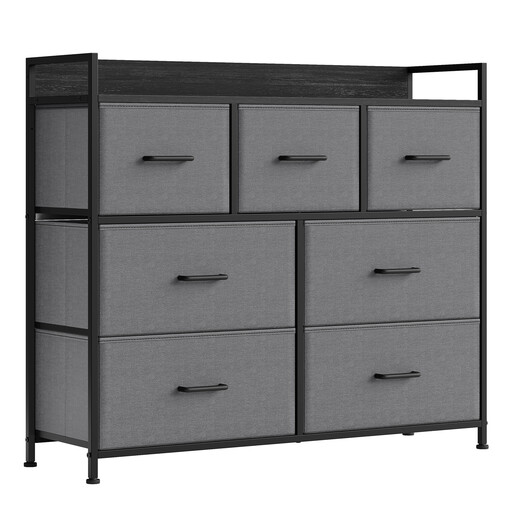
Why This Fits Their Persona: Suitable for renters and fans of the modern industrial look. The combination of a metal frame and fabric drawers is lightweight, easy to transport, and quick to assemble.
The instability trap is actively addressed here with a solid steel frame and an included anti-tip kit for wall mounting. Adjustable feet compensate for uneven floors and ensure a firm stand.
Safety Included: An anti-tip kit for wall mounting is included in the delivery. Easy Assembly: Thanks to clear instructions and labelled parts, assembly is straightforward.
We've curated a comprehensive, up-to-date list of products that meet these strict selection criteria.
Do I have to anchor a dresser to the wall? Yes, it is strongly recommended, especially for taller dressers. Tipping can be a serious hazard, particularly in households with children. For this reason, many manufacturers, like with the JOYFURNOS model, include an anti-tip kit. Anchoring it to the wall ensures maximum stability and safety.
How much weight can a typical dresser hold? The load capacity varies greatly depending on the construction and material. A particleboard dresser with a simple back panel often supports less weight than a model with a solid frame and a reinforced back panel. Pay attention to the manufacturer's specifications. The 5five Dolo dresser, for example, specifies a maximum load capacity of 100 kg, which is an indicator of a very robust construction.
What is the difference between MDF and particleboard? Both are engineered wood products, but they differ in their density and structure. MDF (Medium-Density Fibreboard) consists of finely shredded wood fibres pressed into a smooth, dense panel. It is stable and takes paint well. Particleboard is made from larger wood chips and is generally lighter and less expensive, but also less resistant to bending than MDF. For load-bearing parts, thicker particleboard or MDF is preferable.