
Lieferung heute & morgen

Qualitätsgarantie

Willkommens-Angebote freischalten: KOSTENLOSE Lieferung | Bis zu 80 % RABATT | Kostenlose 30-Tage-JoyPlus-Testphase
App herunterladen
A dresser is more than just a simple storage cabinet; it's a central piece of furniture that creates order and defines a room's style. However, the selection process can be more complicated than it first appears. Many buyers only discover after assembly that their new piece of furniture wobbles, the drawers stick, or the material is unsuitable for its intended purpose. This guide will help you recognise the most common pitfalls and make an informed decision.
Before you decide on a model, you should be aware of the typical weaknesses that often only become apparent during daily use.
To avoid a bad purchase, focus on a few crucial technical features. These determine the durability, functionality, and safety of your new dresser.
The material is the foundation for both stability and appearance. A dresser with drawers made of solid wood is robust and long-lasting, while models made of MDF or particleboard are a more budget-friendly alternative. An increasingly popular option is the fabric dresser, which combines a lightweight metal frame with foldable fabric drawers. Pay close attention to the quality of the steel frame and whether adjustable feet are included to compensate for uneven floors. Regardless of the material, an included anti-tip kit for wall mounting is an indispensable safety feature.
Don't just measure the available space in the room; also check the internal dimensions of the drawers. A deep chest of drawers offers significantly more usable storage space. The drawer slide mechanism is also important: full-extension slides allow convenient access to the entire contents. Also, check the specified maximum load capacity per drawer to ensure it is designed for your needs—whether for light socks or heavy books.
Some dressers offer more than just storage. A changing table dresser with a removable top is a prime example of a piece of furniture that grows with your child. After the nappy-changing phase, the top can be removed, and you have a fully functional dresser for a child's or teenager's room. This type of multifunctionality represents significant added value and often justifies a slightly higher purchase price.
Instead of making a one-size-fits-all recommendation, we have identified products that meet specific needs and purposefully avoid the pitfalls mentioned earlier.
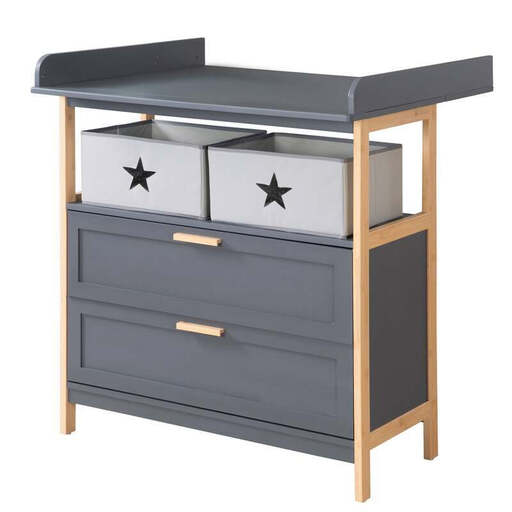
Why it's a great fit: Ideal for parents looking for a long-lasting solution. The dresser first serves as a safe changing station and can later be used as a regular storage cabinet in a child's room.
The solid wood frame and included wall mount provide essential stability (avoiding instability). The 2-in-1 function prevents the furniture from becoming obsolete after the nappy-changing phase (avoiding poor material choice for long-term use).
The ergonomic changing height of 92 cm is easy on the back. The removable top makes the dresser a sustainable investment.
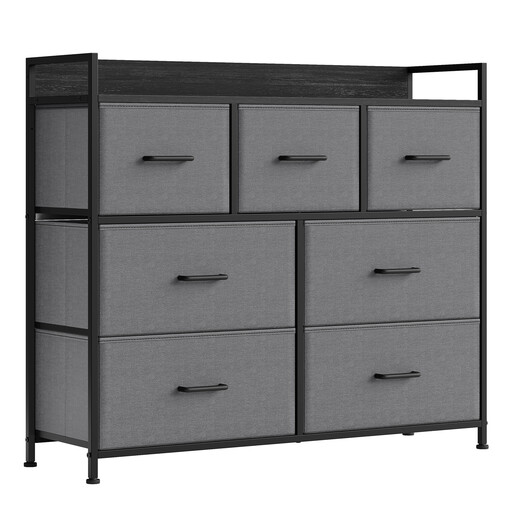
Why it's a great fit: A lightweight and flexible storage solution, perfect for a first apartment, a teenager's room, or as an addition to a dressing area. The modern, neutral design complements many interior styles.
The steel frame with adjustable feet and the included anti-tip kit directly address stability issues (avoiding instability). The seven separate drawers allow for organised storage (avoiding impractical storage space).
Offers a high storage volume with a very low weight. Assembly is straightforward thanks to clearly labelled parts.
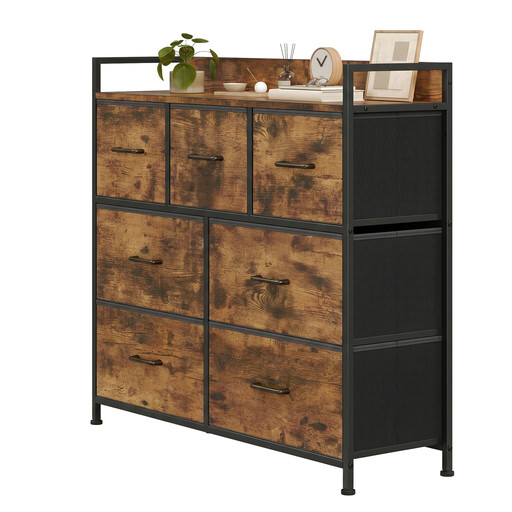
Why it's a great fit: For anyone who appreciates the flexibility of a fabric dresser but doesn't want to compromise on a warm, homely aesthetic. The combination of a rustic wood-look top and a black metal frame is a real eye-catcher.
This model offers an attractive look without the high cost and weight of solid wood (avoiding poor material choice). The sturdy steel frame and included anti-tip kit ensure the necessary stability.
The combination of a tabletop with a maximum static load capacity of 50 kg and lightweight fabric drawers makes it versatile enough to even be used as a TV stand.
If you're looking for a lightweight and highly flexible solution for your bedroom or hallway, a fabric dresser might be the right choice. We've compiled a selection of models that meet our criteria for stability and functionality.
Most dressers come with an anti-tip kit. This usually consists of one or two brackets and a strap. One bracket is attached to the top or back of the dresser, the other to the wall. The strap connects both parts. For wall mounting, use wall plugs and screws that are suitable for your wall type (e.g., drywall, brick). This installation is essential, especially in households with children, to prevent the furniture from tipping over.
The main difference lies in the material and construction. A wooden dresser (made of solid wood or engineered wood like MDF) is generally heavier, more robust, and considered a long-lasting piece of furniture. A fabric dresser has a lightweight metal frame and drawers made of a sturdy, often foldable fabric. It is easier to transport and assemble, making it a flexible solution for temporary or frequently changing furnishing needs.
Fabric drawers are generally not suitable for the washing machine. To clean them, it is usually sufficient to wipe them with a slightly damp cloth. For more stubborn stains, a mild soap solution can be used. Let the drawers air dry completely before putting them back. Avoid aggressive cleaning agents, as they could damage the material or colour.