
Lieferung heute & morgen

Qualitätsgarantie

Willkommens-Angebote freischalten: KOSTENLOSE Lieferung | Bis zu 80 % RABATT | Kostenlose 30-Tage-JoyPlus-Testphase
App herunterladen
The search for the right storage furniture can quickly become overwhelming. Whether it's for the living room, hallway, or bedroom, the market offers a plethora of options. But not every dresser or sideboard lives up to what the product images promise. Often, quality defects only become apparent after a few months of use. This guide will help you identify common pitfalls and make an informed decision based on objective criteria.
Before making a purchase, you should familiarise yourself with the typical weak points that often only become visible after assembly or during daily use.
To avoid a poor purchase, focus on the following technical features. These define the durability and practicality of your new storage furniture.
The choice of material is fundamental to stability and lifespan.
The quality of the moving parts determines everyday user comfort.
An often underestimated but critical point is stability.
Here are some models tailored to specific needs and room situations that meet the quality criteria mentioned above.
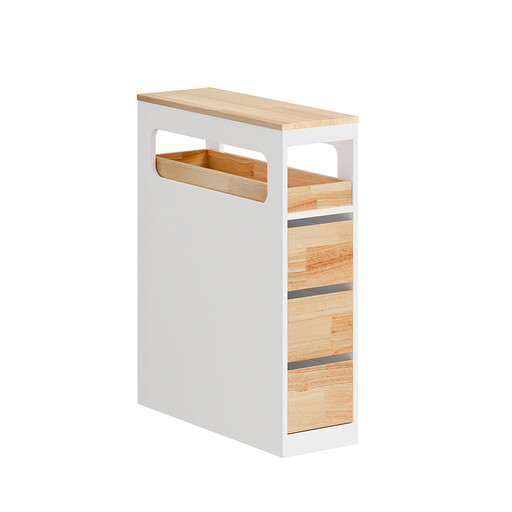
Why This Fits Their Persona: Ideal for city apartment dwellers or households looking for a space-saving solution for narrow bathrooms, niches, or a small hallway dresser. Its mobility allows for flexible use and easy cleaning.
The E1-class MDF material and lacquer finish are designed for damp environments, preventing swelling. The compact dimensions of 65x23x82 cm make efficient use of space without wasting storage.
Flexibly positionable thanks to 4 castors (2 of which are lockable). With 3 drawers and an open compartment, it offers a well-thought-out layout for small spaces.
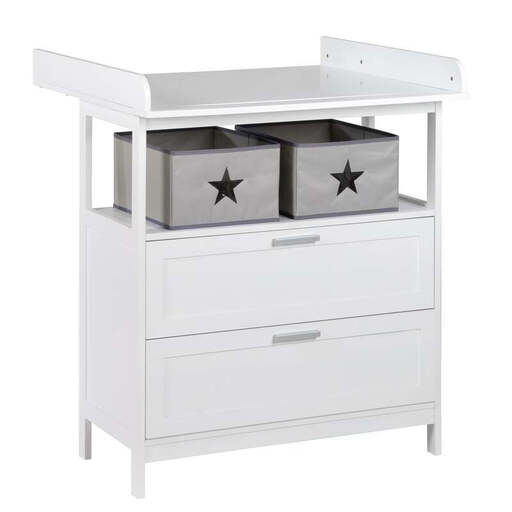
Why This Fits Their Persona: Designed for parents seeking a safe, functional, and durable solution for the nursery. The back-friendly changing height and its later use as a standard dresser offer practical added value.
Safety is actively addressed with the included wall bracket (anti-tip device). The design allows it to be repurposed as a durable children's room dresser after the nappy-changing phase, without visible screw holes.
The changing top is removable, extending its lifespan. The 92 cm changing height is ergonomic. The water-based paint is tested and safe for children.
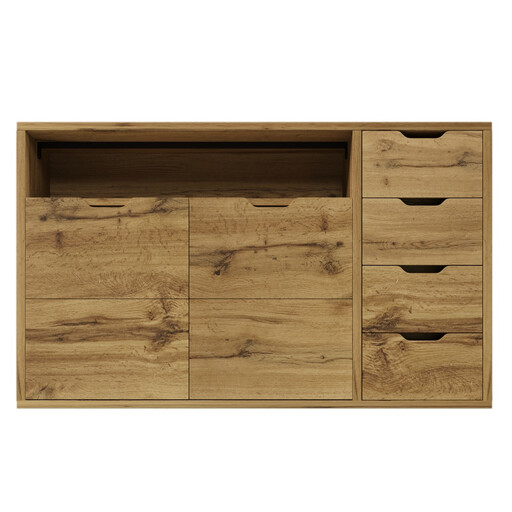
Why This Fits Their Persona: Perfect for homeowners or renters looking for generous yet stylish storage for the living or dining room. The combination of open and closed storage in a modern oak-effect sideboard meets high standards of design and function.
This model is equipped with high-quality hardware: soft-close hinges on the doors and smooth-running drawer slides prevent typical wear and tear. The included anti-tip device ensures the necessary stability.
The shelves are height-adjustable, allowing for flexible adaptation to items of different sizes. The combination of 4 drawers, 2 doors, and an open compartment offers a versatile storage solution.
We have compiled a complete, up-to-date list of products that fully meet these strict selection criteria and German safety regulations.
What is the difference between a dresser and a sideboard? A dresser is traditionally taller than it is wide and consists mainly of drawers. It is often used in the bedroom or as a children's room dresser. A sideboard is wider than it is tall and usually offers a combination of doors and drawers. It is frequently used as a modern buffet in the dining or living room.
How important is an anti-tip device for storage furniture? An anti-tip device is an essential safety feature, especially in households with children. Tall or heavy pieces of furniture like a drawer cabinet or a changing table can tip over if improperly loaded or climbed on. Securely anchoring it to the wall is a simple but effective measure to prevent serious accidents.
Can I use any material in the bathroom? No. The high humidity in a bathroom places special demands on materials. Untreated particleboard or MDF without a protective seal are unsuitable, as they absorb moisture and swell. For a narrow bathroom cabinet, you should specifically look for furniture whose surfaces are explicitly described as moisture-resistant.