Small lunch portions
If you want to prepare apricots in small pieces rather than as a purée for individual lunch boxes, being able to control the chopping and choosing an appliance with a suitable working capacity are important considerations.


For small lunch box portions, a compact chopper with a momentary switch or pulse function is a natural choice. A food processor is a better fit if you also want to slice or grate other ingredients. Compare the usable working capacity, not just the bowl volume, and check the instructions for your exact model to see whether it can handle chewy dried fruit. Information about fresh fruit doesn’t automatically mean it will deliver the right results with dried apricots.
If you want to prepare apricots in small pieces rather than as a purée for individual lunch boxes, being able to control the chopping and choosing an appliance with a suitable working capacity are important considerations.
If you often prepare food during the week, look beyond chopping to parts that are easy to reach and can be cleaned according to the instructions.
If you’re preparing several lunches or want to use one appliance to slice and grate other ingredients too, consider its working capacity and accessories.
A good fit if: you mainly want to chop small portions and control the process in short bursts. Bosch lists a momentary switch for the MMR08A1; KitchenAid lists a pulse function for the 5KFC3516.
Worth bearing in mind: these appliances offer fewer slicing and grating functions, and the bowl volume doesn’t tell you how many sticky apricots you can process at once.
A good fit if: you regularly want to chop, slice or grate other ingredients as well as apricots. Kenwood lists a chopping blade, slicing and grating discs, and a working capacity of 0.75 l for dry ingredients for the MultiPro Go FDP23.140GY, with a bowl volume of 1.3 l.
Worth bearing in mind: extra discs and attachments take up space and need cleaning too. The stated capacity isn’t a specific maximum quantity for apricots.
A good fit if: you’re preparing several portions and would prefer a larger bowl. Rommelsbacher lists a 1.5-l glass bowl for the MZ 500, while Philips lists a 2-l glass bowl for the HR1503/00.
Worth bearing in mind: a larger bowl takes up more storage space and isn’t automatically suitable for very small quantities. For the MZ 500, you’ll also need to follow the operating times specified by the manufacturer.
| What matters | What to look for when buying | Who should pay particular attention? |
|---|---|---|
| Piece size for small portions | Check for a momentary switch or pulse function and a chopping blade, and read the model instructions for guidance on chewy foods. | If I want to prepare small quantities of apricots in pieces, being able to control the process matters more than a general wattage figure. Around 39% of consumers put piece size first. |
| Cleaning effort | Check whether each individual part can be removed and is dishwasher-safe, using the instructions as your guide. | If I prepare food regularly during the week, I want to be able to reach any leftovers easily and clean the parts as directed. Around 31% of consumers prioritise ease of cleaning. |
| Quantity for several lunches | Compare the working capacity, ingredient guidance and operating times for the exact model version. | If I’m preparing several portions, the amount I can actually use matters more to me than the nominal bowl volume alone. Around 15% of consumers focus on preparing several portions. |
| Preparing other ingredients | Check whether the version you want includes the slicing or grating discs you need; use the blade intended for chopping apricots. | If I want to use one appliance to slice or grate other ingredients too, the accessories need to suit those tasks. Around 15% of consumers prioritise extra functions. |
The nominal bowl volume doesn’t automatically tell you how many apricots you can process in one go. For example, Kenwood distinguishes between a 1.3-l bowl volume and a 0.75-l working capacity for dry ingredients for the MultiPro Go FDP23.140GY.
Compare the working capacity and the ingredient guidance in the instructions with the portion size you have in mind.
A general chopping function or motor rating alone doesn’t tell you how the appliance will handle chewy dried apricots.
Check the guidance on ingredients, working quantities and operating time for the specific model instead of assuming the wattage will give you a particular piece size.
Chopping blades and slicing or grating discs do different jobs. Extra attachments also mean more parts to store and clean.
Only give extra functions more weight if you really do want to slice or grate the relevant ingredients.
The MMR08A1 universal chopper is aimed at buyers looking for a compact appliance with a momentary switch rather than lots of attachments.
The MultiPro Go FDP23.140GY combines chopping with other slicing and grating tasks.
The 5KFC3516 is a mini chopper for smaller quantities; the 5KFC0516EBM also comes with a whisk attachment.
The MZ 500 is a chopper with a larger glass bowl, better suited to several batches or portions.
The HR1503/00 is a chopper with a large glass bowl for buyers considering processing several batches.
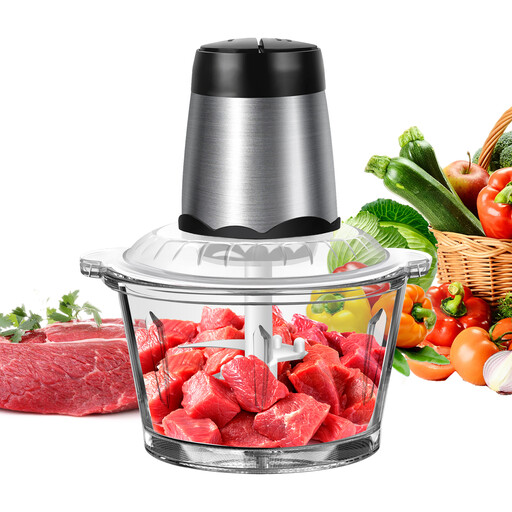
The following Joybuy products include compact and larger electric choppers for preparing anything from small to several portions. When choosing, look at the stated working capacity, available pulse or speed settings, and guidance on processing dried ingredients.
 No image available
The stated pulse function is a useful feature if you want to control the chopping in short bursts. Check the instructions for the working capacity when processing dried apricots.
2-l glass bowl, stainless steel blades, two speeds and removable dishwasher-safe parts.
 No image available
If you prepare different portion sizes, the stated bowl sizes give you options. Check the instructions to find out what quantity is suitable for each ingredient.
Three stackable stainless steel bowls with capacities of 1.8 l, 2.2 l and 2.5 l, plus two speeds with pulse control. Pulse operation is limited to up to 30 seconds per cycle.
 No image available
The two stated bowl sizes are useful if you prepare both small and larger portions. Bear in mind that the bowl and lid are not heat-resistant or microwave-safe.
Two glass bowls with capacities of 0.6 l and 2 l, two sets of blades and two speeds.
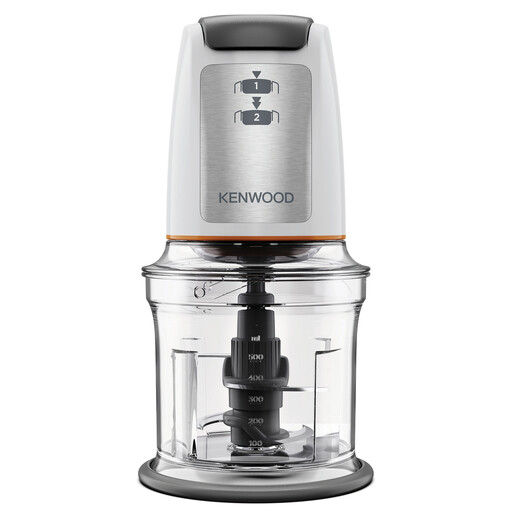 No image available
The stated bowl size is worth considering for compact prep. Check the instructions to find out which working capacity and ingredients are recommended.
0.5-l bowl, two speed settings and 500 W.
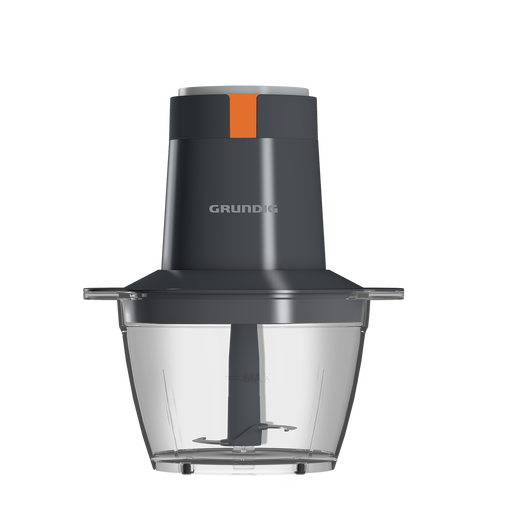 No image available
For small portions, the compact bowl and stated short pulses are worth considering. Check the ingredient guidance for dried apricots.
0.5-l glass bowl, removable stainless steel blades and two speeds. Check the instructions to see whether the lid is dishwasher-safe.
Not if you want to prepare them dry and in pieces for a lunch box without first checking your appliance’s instructions. For an apricot and almond spread, the Consumer Advice Centre recommends chopping and soaking the apricots; this isn’t general guidance for dry lunch box ingredients.
Clean the parts that come into contact with food according to the model instructions, and check whether each part is dishwasher-safe. The Federal Centre for Nutrition points out that microorganisms can pass from one food to another via the same kitchen appliance.
Regulation (EC) No 1935/2004 also covers food processing equipment and sets requirements for materials intended to come into contact with food. EUR-Lex explains the general framework; this alone isn’t enough to establish whether an individual product listing complies.
Your statutory rights if goods are faulty are separate from any voluntary guarantee. The Consumer Advice Centre explains that online purchases generally come with a right to cancel, usually within 14 days of receiving the goods. The specific terms and any exceptions should be checked.
Check the ingredients and allergen information for the apricots you’re using. A chopper won’t remove sulphites. The Consumer Advice Centre explains the labelling requirements for sulphur dioxide and sulphites above the relevant concentration threshold. The Federal Institute for Risk Assessment describes possible reactions in sensitive people.