Students who need to avoid a specific substance
If you need to avoid a particular allergen, sulphur dioxide or sulphites, check the labelling on each pack. A general “free from” claim is no substitute for checking.


If you need to avoid a particular substance when choosing food for a student meal, don’t pick dried fruit based solely on a general “free from” claim: what matters is the information on the specific pack. “Unsulphured” means no added sulphur dioxide; it doesn’t mean free from all allergens. For larger packs, you should also check whether you can use the contents in line with the storage instructions.
If you need to avoid a particular allergen, sulphur dioxide or sulphites, check the labelling on each pack. A general “free from” claim is no substitute for checking.
A larger pack can be handy for simple meals, breakfast or baking. The key is whether you can store and use it after opening in line with the storage instructions.
A small amount of freeze-dried fruit can add the texture you’re after to porridge, yoghurt or desserts. Soft dried fruit won’t do the same job.
First, check the labelling for the substance you need to avoid. Then weigh up the ingredients, pack size and how you plan to use it.
| What matters | What to check | Who it matters most to |
|---|---|---|
| Allergens and sulphites | Check the ingredients list and highlighted allergens against the substance you need to avoid; also read any precautionary allergen information. | If I need to avoid a particular substance, I need clear information about the specific pack rather than a general “free from” claim. Around 36% of consumers put this check first. |
| Pack size and how quickly you’ll use it | Choose a quantity that suits how much you plan to use and the storage instructions after opening. | I want to stock up for several simple meals without leaving some of an opened pack unused. This is a priority for around 29% of consumers. |
| Ingredients and sugar | Check the ingredients list and the “of which sugars” figure per 100 g; don’t assume “no added sugar” means “sugar-free”. | If I want to avoid added sweetening ingredients, the claim on the front isn’t enough; the total sugar content also matters to me. Around 21% of consumers make this a priority. |
| Texture and how you’ll use it | Choose between soft dried fruit as an ingredient and freeze-dried fruit for a crunchy topping. | I’m looking for a crunchy addition to porridge or yoghurt, and only need a small amount. This texture is the main consideration for around 14% of consumers. |
Seeberger describes its unsulphured dried fruit as products without added sulphur dioxide. This says nothing about other allergens or possible traces.
For every pack, check the ingredients list, allergen labelling and any precautionary allergen information for the substance you need to avoid.
Dried fruit contains naturally occurring sugars. The German consumer advice centre points out that a food can contain sugar even when “sugar” isn’t listed as a separate ingredient.
As well as checking the ingredients list, read the “of which sugars” figure per 100 g rather than relying on the front of the pack.
ALDI SÜD notes that its dried plums may come from different suppliers and that nutritional information can vary. So if you need to avoid a specific substance, the labelling on the pack you’re actually buying is what counts.
Check the ingredients and allergen information again, even if you’ve bought a product with the same name before.
Seeberger’s range includes classic, unsulphured and freeze-dried fruit. The name of the specific variety matters more when choosing than a general claim about the brand.
REWE stocks dried fruit from a range of brands, including its own-label products. Browsing the category can help you compare product types and pack information.
EDEKA24 lists a range of dried fruit, including currants, dates and mango strips. When choosing based on ingredients, check the information for each individual product.
The product page for FARMER NATURALS dried plums shows a larger pack size. You’ll need to check the labelling on the specific pack to see whether it meets your requirements for ingredients.
This selection includes sultanas, dried plums and jujubes in a range of pack sizes, for stocking up or using as an ingredient. A product name alone can’t confirm whether something is suitable for a specific allergy; check the information on the relevant pack.
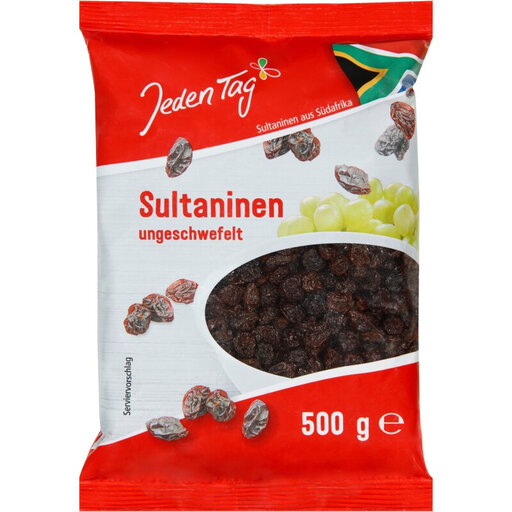 Image unavailable
This 500 g pack could be a good choice if you’re planning to use sultanas in several meals. Before buying, check the ingredients and allergen information against your requirements, and follow the storage instructions once opened.
 Image unavailable
This 500 g pack could suit you if you’d like to use jujubes as dried fruit. “No-Wash” is part of the product name; check the information on the specific pack for guidance on use, ingredients and allergens.
 Image unavailable
These pitted dried prunes are an option if you’re looking for a 500 g pack for different uses. Watch out for any remaining stones when eating or preparing them, and check the ingredients and allergen information on the pack.
 Image unavailable
The 30 individual packs could be handy if you’d like to take out the red dates one portion at a time. The fruit contains stones, so bear this in mind when eating or using it as an ingredient. Check the pack labelling for any substances relevant to you.
 Image unavailable
This 280 g pitted version could be a good choice if you prefer a smaller pack of red dates. You can only tell whether the ingredients and allergen information meet your requirements by checking the details on the specific pack.
No. What matters is the labelling for the substance you need to avoid. The German Food Federation explains that the 14 regulated allergens must be listed when used as ingredients; also read any precautionary allergen information about possible traces.
No. Seeberger describes “unsulphured” on its relevant dried fruit as meaning no added sulphur dioxide. This label doesn’t tell you about other allergens or possible traces, so check the individual pack.
No. Dried fruit contains naturally occurring sugars. If you want to avoid added sweetening ingredients, check the ingredients list; the “of which sugars” figure per 100 g shows the product’s stated sugar content.
Follow the storage instructions on the specific pack and plan when you’ll use the contents. For example, Seeberger mango listed by REWE is said to need protection from heat and moisture; don’t assume this product-specific advice applies to other dried fruit.