People avoiding a specific allergen
If you need to avoid a particular ingredient, check the current information on the pack against your individual requirements. General allergen labelling alone does not mean that a specific product is safe for you.


If you have a food allergy, the current ingredient and allergen information on the specific pack is what matters – not just the type of fruit or whether it is labelled ‘unsulphured’. If you’re also choosing dried fruit to help meet a fitness protein target, assess its nutritional values separately: the fruit products described by REWE and EDEKA contain 1.5 to 2.7 g of protein per 100 g. Dried fruit can provide the fruit component; any additional source of protein must also be suitable for your individual allergy needs.
If you need to avoid a particular ingredient, check the current information on the pack against your individual requirements. General allergen labelling alone does not mean that a specific product is safe for you.
Whether dried fruit has been treated with sulphur dioxide matters if you need to avoid sulphites. Even if a product is labelled unsulphured, check the other ingredients and allergen information too.
You want to enjoy dried fruit as a snack while keeping an eye on its protein content. Check the value per 100 g on the specific pack; the fruit component does not automatically replace a separate source of protein.
First, work out which ingredients you personally need to avoid. Then compare sulphite information, protein values and the amount you actually plan to eat.
| Criterion | What to check | Who it matters to |
|---|---|---|
| Individual allergens | Compare the current ingredients list and highlighted allergens with the ingredients you need to avoid; check relevant ‘may contain’ warnings. | If I need to avoid a specific ingredient, I need clear information about the exact product before choosing it. For around 38% of consumers, checking for their individual allergens comes first. |
| Sulphur dioxide and sulphites | Look for ‘sulphured’ or ‘unsulphured’ on the pack, as well as any mention of sulphur dioxide or sulphites. | If I avoid sulphites, I don’t want to choose a sulphured mix by mistake. This is the main check for around 31% of consumers. |
| Protein | Compare protein per 100 g and check any additional source of protein separately for allergens. | For a snack around my workout, I want to know how much dried fruit actually contributes to my protein target. Around 16% of consumers put this question first. |
| Sugar and portion size | Compare sugar per 100 g with the portion you plan to eat; check the ingredients list for added ingredients. | If I eat dried fruit regularly as a snack, I want to use the nutritional information to judge how much I’m eating. This is the main concern for around 15% of consumers. |
The product information from REWE and EDEKA for the fruit products reviewed gives protein values of 1.5 to 2.7 g per 100 g. You can’t assume that the value for one fruit applies to all dried fruit.
Check the protein value on the specific pack. If protein is important to your choice, check a separate source of protein that suits your needs.
A short ingredients list or the absence of sulphur dioxide doesn’t tell you whether the product contains other ingredients or may contain traces that are relevant to you.
Check the current information on the pack every time you buy, and assess any risk of traces in line with your individual requirements.
The mixed fruit products described by REWE and EDEKA list sulphur dioxide or sulphites. A mix is not automatically suitable just because of the types of fruit it contains.
If you need to avoid sulphites, check the full information on the specific mix; also check an unsulphured alternative for any other ingredients that may be relevant to you.
With dried fruit, the amount you eat affects the nutritional values you consume. The information per 100 g does not automatically reflect your portion.
Compare sugar and other nutritional values per 100 g, then take into account how much you plan to eat.
Seeberger’s range includes dried fruit and fruit mixes.
For the dried fruit products reviewed, REWE lists ingredients and nutritional values on its product pages.
For the own-brand dried fruit products reviewed, EDEKA publishes information about ingredients, allergens and nutritional values.
These two dried fruit products may work as the fruit component of a snack if the current information on the pack meets your requirements. If you have a protein target, choose an additional source of protein separately and check it for allergens too.
 No image available
Designed as the fruit component of a snack, not as a replacement for a separately chosen source of protein. Before buying, check the ingredients and any warnings about possible traces on the current pack against your requirements.
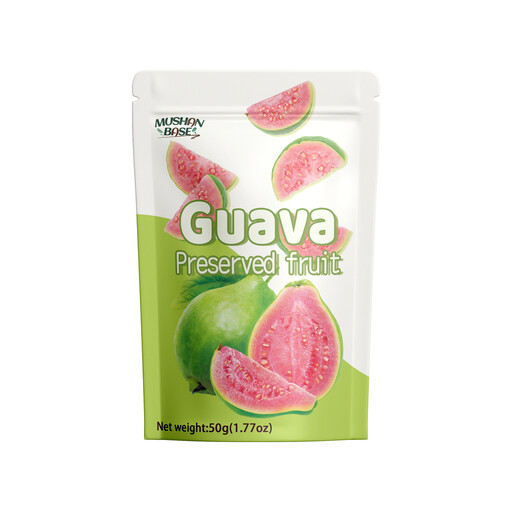 No image available
A fruit component in a 50 g pack, not a standalone source of protein. The product information lists sulphites: if you need to avoid them, don’t choose this guava. Before buying, also check the current information on the pack for anything else that may be relevant to you.
Check the ingredients list and highlighted allergen information on the current pack. The Federal Ministry of Agriculture, Food and Home Affairs explains the labelling requirements for the most common allergens; when choosing a product, what matters is whether it lists an ingredient that is relevant to you.
If you need to avoid these substances, don’t choose a product whose specific pack lists sulphur dioxide or sulphites. The fruit mixes described by REWE and EDEKA include this information; check the labelling for any other mix individually.
The fruit products reviewed are not an obvious choice as a sole source of protein: REWE and EDEKA list 1.5 to 2.7 g of protein per 100 g. Check the value for the product you plan to buy, and check any additional source of protein separately for allergens that affect you.
No. A ‘may contain’ warning alone does not tell you whether a product is suitable for your individual allergy needs. Check the ingredients and highlighted allergens too; if you have questions about how to manage possible traces, follow your individual medical advice.