Who should compare these products?

People who plan their portions

You want to eat a measured amount of dried fruit before training. As drying concentrates the sugars and energy, the figures per 100 g and for the portion you plan to eat are important. The North Rhine-Westphalia Consumer Advice Centre highlights this.

People who keep an eye on carbohydrates

You want to consider the carbohydrate content of your snack in relation to the exercise you have planned. The German Nutrition Society explains that carbohydrates are important for providing energy during sport; the right amount depends, among other things, on the duration and intensity of your activity.

People with ingredient or sulphite preferences

You look for a short ingredients list or need to avoid sulphur dioxide or sulphites. Product information from REWE and EDEKA shows that apricot products can differ in these ingredients; always check the labelling on the specific pack.

What should you look for when buying?

Start by considering the portion size, then compare the carbohydrates and ingredients in the products you’re considering.

What to consider What to check Who it matters to
Calories and portion size Compare kcal and sugar per 100 g and for the portion you plan to eat. If I only want a small amount before training, I want to be able to estimate its calorie content; around 43% of consumers prioritise portion control.
Carbohydrate content Check the carbohydrates per portion in relation to the exercise you have planned. For a longer or more intense workout, I want to know how many carbohydrates my snack contains; around 29% of consumers consider this their top priority.
Ingredients and tolerance Check the ingredients list and allergen information for sulphur dioxide or sulphites. If I need to avoid certain ingredients, the labelling matters more to me than a low kcal value; this is the top priority for around 28% of consumers.

Common buying mistakes

  • Assuming dried fruit is always low in calories

    Drying removes water, concentrating the sugars and energy into a smaller weight, as the North Rhine-Westphalia Consumer Advice Centre explains.

    Compare the kcal per 100 g and decide how much you actually want to eat.

  • Assuming ‘no added sugar’ means ‘sugar-free’

    Dried fruit can contain natural sugars even when no sugar has been added.

    As well as reading the ingredients list, check the ‘of which sugars’ nutritional value and consider it in relation to your portion.

  • Overlooking sulphur dioxide on the label

    Product information from REWE and EDEKA lists sulphur dioxide in some sulphured apricot products. If you need to avoid sulphur dioxide or sulphites, don’t rely on the type of fruit alone.

    Check the ingredients and allergen information on the specific pack. If you’re unsure about an individual intolerance, seek medical advice.

  • Assuming the information on the pack never changes

    ALDI SÜD notes that the nutritional values of its apricots can vary depending on the supplier.

    Before buying, check the current pack size, ingredients list and nutritional values.

Relevant brands and ranges

Seeberger

Seeberger offers a range of dried fruit, as well as soft fruit and freeze-dried fruit.

  • You can compare different types of fruit and pack sizes across the range.
  • Check the ingredients and nutritional values of each product individually.

REWE / ja!

REWE sells soft apricots, among other products, under its ja! own label.

  • REWE lists ja! Soft Apricots at 223 kcal per 100 g and 67 kcal per 30 g.
  • These soft apricots contain sulphur dioxide.

EDEKA / EDEKA Bio / EDEKA Herzstücke

EDEKA sells both organic soft apricots and sulphured apricots under its Herzstücke range.

  • According to EDEKA, its organic soft apricots contain dried apricots and water, and provide 239 kcal per 100 g.
  • The sulphured Herzstücke apricots contain sulphur dioxide and provide 263 kcal per 100 g; these figures don’t apply to other EDEKA products.

Lidl / Alesto

As well as nuts, Lidl’s Alesto range includes dried fruit.

  • The range can be a useful starting point when looking for different types of dried fruit.
  • Information about the ingredients or nutritional values of one variety doesn’t automatically apply to other Alesto products.

ALDI SÜD / NATURLIEBLINGE

ALDI SÜD sells apricots in 200-g packs under its NATURLIEBLINGE range, among other products.

  • ALDI SÜD’s product information lists its apricots at 260 kcal per 100 g.
  • ALDI SÜD notes that nutritional values can vary depending on the supplier, so check the current pack.

Dried fruit at Joybuy

The pack of prunes below is a portioned dried fruit option to take with you. Check the current nutritional information to see whether the whole pack fits the amount you plan to eat before training.
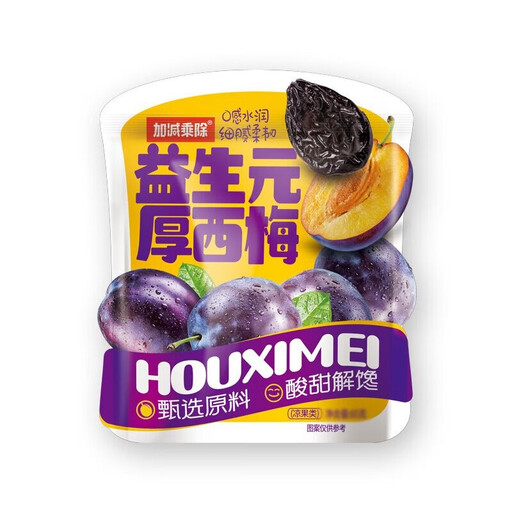
Jia Jian Cheng Chu Prebiotic Thickened Prunes, 65 g pack

Jia Jian Cheng Chu Prebiotic Thickened Prunes, 65 g

The 65 g pack could work as a ready-packed dried fruit snack if that amount suits your plans.

The product information lists fructose syrup as an ingredient. Check the ingredients list and the kcal and carbohydrate information for the pack on offer.

The product description gives 23 September 2026 as the best-before date. Check the date on the pack actually being offered before you buy.

View at Joybuy

Frequently asked questions

Is dried fruit always low in calories?

No. Removing the water concentrates the sugars and energy, as the North Rhine-Westphalia Consumer Advice Centre explains. Compare the kcal and sugar per 100 g and for the portion you plan to eat.

Which of the apricots mentioned have fewer kcal per 100 g?

For the specific products mentioned, REWE lists ja! Soft Apricots at 223 kcal per 100 g; EDEKA lists its organic soft apricots at 239 kcal and sulphured Herzstücke apricots at 263 kcal, while ALDI SÜD lists its apricots at 260 kcal. This compares the figures for these products, not all dried fruit. Check the nutritional values on the current pack.

How can I tell if dried fruit has been sulphured?

Check the ingredients list and allergen information for sulphur dioxide or sulphites. The product information for REWE’s ja! Soft Apricots and EDEKA’s sulphured Herzstücke apricots lists sulphur dioxide.

Does ‘no added sugar’ also mean sugar-free?

No. Dried fruit contains natural sugars, even when no sugar has been added. So, also check the ‘of which sugars’ figure in the nutrition table.

Do I need dried fruit before every workout?

No. Whether a carbohydrate-containing snack is right for you, and how much to have, depends on factors including the exercise you have planned, what you’ve eaten beforehand and your personal tolerance. The German Nutrition Society explains the importance of carbohydrates in providing energy for sport, but it doesn’t recommend a standard portion of dried fruit.