Dried fruit can make a sweet snack at the Christmas market, but it isn’t automatically low in calories just because it’s sold without added sugar. Compare the energy and sugar per 100 g, and decide how much you want to eat while you’re out. If you need to avoid certain ingredients or sulphites, check the details for the specific product too.
Which criteria matter to you?
Anyone keeping an eye on their calorie intake
If you fancy something sweet at the Christmas market but want to keep the amount in check, the kcal per 100 g and a portion measured out in advance can help. A whole pack isn’t automatically a suitable snack portion.
Anyone with specific ingredient requirements
If you want to avoid added sugar or added sulphites, check the ingredients and allergen information for the specific product. For loose produce at a market, you can ask for allergen information; Lebensmittelklarheit points out that it must also be available at markets.
Anyone who wants to portion out a snack while out and about
When you’re visiting the market, it helps to think about how easy the snack is to handle and how much you plan to eat. Check whether the pack is suitable for taking with you, or whether you’d rather portion some out beforehand. The suggested serving size can help guide you.
What should you look for when buying?
With dried fruit, start by comparing the nutritional values per 100 g, then think about how much you actually want to take with you. The ingredients and allergen information will help you decide independently whether a particular variety meets your needs.
| Criterion |
What to check |
Who it matters to |
| Energy and portion size |
Compare kcal per 100 g and decide how much you plan to snack on; use a serving-size figure only for the stated amount. |
If you want to take something sweet with you and limit how much you eat, focus on the energy in your own portion. This is the main reason for buying for around 40% of consumers. |
| Ingredients and sulphites |
Check the ingredients list and information about sulphur dioxide/sulphites; don’t assume that “no added sugar” means a low sugar content. |
If particular additives or sulphites are a deciding factor for me, I need clear information about the specific product. Around 30% of consumers put this ingredient-related question first. |
| Easy to eat on the go |
Check whether the pieces are ready to eat and whether you can take a planned amount separately. |
At the market, I want to enjoy my snack without lots of preparation and save the rest for later. For around 20% of consumers, ease of use takes priority. |
| Availability and pack information |
Check the nutritional values and ingredients on the pack actually being offered, particularly if suppliers may change. |
If you want to find a suitable pack in person, you can’t rely solely on product information you’ve seen before. This is the main reason for buying for around 10% of consumers. |
Common buying mistakes
-
Assuming “no added sugar” means “low in calories”
This describes a feature of the recipe, not its energy content. Even without added sugar, dried fruit contains naturally occurring sugars; EDEKA explains that these become concentrated as the water is removed.
Compare kcal and sugar per 100 g on the pack, and portion out how much you want to eat while you’re out.
-
Overlooking sulphites and other allergen information
The Herzstücke mixed dried fruit described by EDEKA contains sulphur dioxide/sulphites. Information about allergens that must be declared also has to be available for loose produce at markets, as Lebensmittelklarheit explains.
Check the label on packaged products. If sulphites matter to you, ask at the stall before buying loose dried fruit.
-
Treating the whole bag as one snack portion
For your calorie budget, it’s the amount you eat that counts, not just the value per 100 g. For example, REWE lists 73 kcal per 30 g for its ja! prunes.
Decide how much you’ll have before visiting the market and, if needed, put it in your own container.
-
Relying on old nutritional information without checking
ALDI SÜD notes that suppliers and nutritional values may vary for its FARMER NATURALS prunes. The values on a pack you’ve seen before may not apply to the one in front of you.
Each time you buy, check the energy, sugar, ingredients and allergen information on the specific pack.
Relevant brands and own-label ranges
Seeberger
Seeberger offers a range of dried fruit. For this comparison, the apple rings and pitted prunes labelled as having no added sugar are particularly relevant.
- Seeberger labels these particular apple rings and prunes as having no added sugar.
- This doesn’t replace a comparison of energy, sugar and your planned portion size.
EDEKA Herzstücke
The mixed dried fruit described combines several types of dried fruit, making it different from plain prunes.
- EDEKA lists 252 kcal, 46 g of sugar and 0.3 g of fat per 100 g for this mixed dried fruit.
- This particular product contains sulphur dioxide/sulphites. Always check the information on the pack being offered.
ja! bei REWE
The ja! prunes described are pitted, rehydrated and ready to eat.
- REWE lists 243 kcal per 100 g and 73 kcal per 30 g for this particular product.
- The product contains water and potassium sorbate; check the ingredients if you’re looking for a different composition.
FARMER NATURALS bei ALDI SÜD
ALDI SÜD describes this own-label range’s prunes as coming in a 500-g pack.
- For the product described, ALDI SÜD lists 221 kcal and 16 g of fibre per 100 g.
- ALDI SÜD notes that suppliers and nutritional values may vary. So check the specific pack.
Dried fruit at Joybuy
This selection includes prunes and two types of dates for a sweet snack on the go. If you’re keeping an eye on your calorie intake, the amount you actually eat is what matters for every pack; the pack size alone doesn’t tell you what a portion is.
 No image available
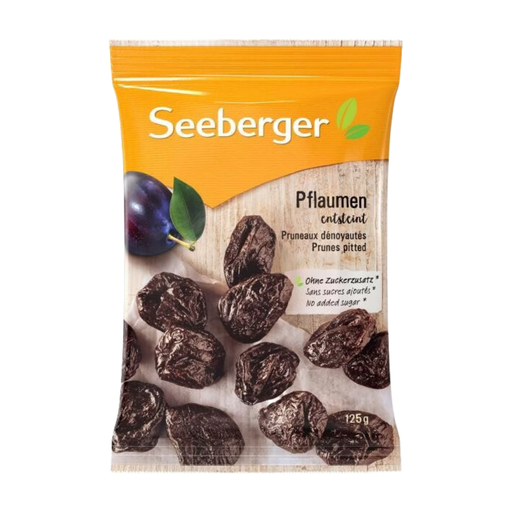
Seeberger soft dried prunes, pitted, 125 g
The 125-g pack is handy if you want to take prunes with you and portion out a smaller amount to eat.
View at Joybuy
 No image available
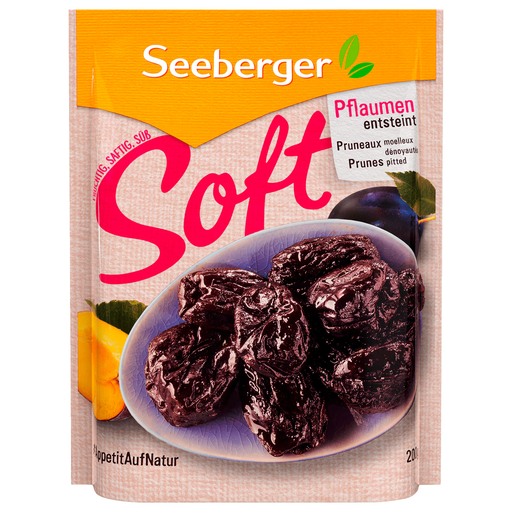
Seeberger soft dried prunes, pitted, 200 g
The 200-g pack is a good option if you’re looking for prunes to take with you and want to choose how much to have as a snack.
View at Joybuy
 No image available
Seeberger soft dried prunes, pitted, 500 g
With this 500-g pack, it makes sense to take your chosen snack portion separately when visiting the market. The contents of the pack aren’t a single serving.
View at Joybuy
 No image available
Seeberger Deglet Nour dates, pitted, 500 g
These pitted dates are an alternative if you’d like a different type of fruit instead of prunes. Compare the nutritional values per 100 g before choosing, and portion out the amount you want from the 500-g pack.
View at Joybuy
 No image available
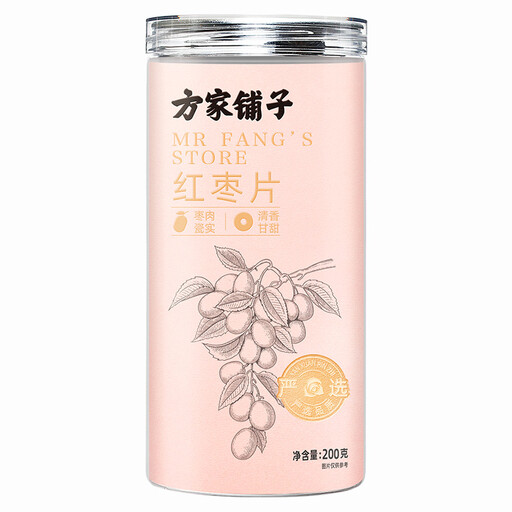
Fang Jia Puzi dried red date slices, 200 g
These sliced red dates could be a good choice if you’re looking for pieces to take with you. Check the sugar and allergen information for the specific 200-g pack, and decide on your portion size yourself.
View at Joybuy
Frequently asked questions
Is dried fruit with no added sugar automatically low in calories?
No. “No added sugar” refers to added sugar, not the total energy content or naturally occurring sugars. EDEKA explains that the sugars in dried fruit become concentrated as the water is removed. So compare the kcal per 100 g and plan how much you want to eat.
Which nutritional value is useful when comparing packs of different sizes?
Energy per 100 g gives you a like-for-like basis for comparing packs of different sizes. For your actual snack, the portion size matters too: REWE lists 73 kcal per 30 g for the ja! prunes described here.
Can I get allergen information for loose dried fruit at a Christmas market?
Yes. Information about allergens that must be declared also has to be available for loose produce at markets, as Lebensmittelklarheit explains. If sulphur dioxide/sulphites matter to you, ask specifically about the product being offered.
How should I store an opened pack for a later visit to the market?
Follow the storage instructions on the specific pack and keep the dried fruit away from moisture. The shelf life EDEKA gives for correctly stored sultanas can’t be applied universally to other varieties or opened packs.


