What should you look for when buying?
Start with the energy and sugar content per 100 g, along with the ingredients list. Then decide which texture is right for the biscuit tin and how you’ll store the contents after opening.
| What to look for |
What to check when buying |
Who it matters to |
| Energy and portion size |
Compare the kcal per 100 g on the packs and decide in advance how much to put in the tin. |
When I snack from a shared tin, I want to decide how much I’m having rather than unconsciously going back for more. Portion control is the main priority for around 42% of consumers. |
| Ingredients and labelling |
Read the ingredients list, sugar content per 100 g and, if needed, the allergen information. |
I want to know what else is in the product besides fruit, particularly if I need to watch out for sulphur dioxide or sulphites. This is the main concern for around 33% of consumers. |
| Texture and storage |
Choose between softer and freeze-dried fruit, and follow the storage advice after opening. |
I want the right texture for my breaks, and an opened pack needs to be easy to store properly in the office. This practical consideration comes first for around 25% of consumers. |
Brands to consider
The ranges listed here include different types of dried fruit. When comparing products, it’s the information on each individual pack that matters, not just the brand name.
Seeberger
Seeberger sells both traditionally dried and freeze-dried fruit, making it a good range to compare if you’re looking at softer and crunchier options.
- The Seeberger range includes unsulphured apricots and sweetened cranberries, among other products.
- Check each variety individually to see whether sugar has been added and what its nutritional values are.
EDEKA Herzstücke / GUT&GÜNSTIG
EDEKA lists dried fruit and mixed fruit with product-specific ingredient and nutritional information.
- For one dried mixed fruit product, EDEKA explicitly lists sulphur dioxide in the ingredients and allergen information.
- EDEKA notes that product information may differ from the packaging. Always check the details on the current pack when buying.
REWE Beste Wahl / REWE Bio
REWE’s own-brand range also includes freeze-dried strawberries and fruit crisps.
- The different product types let you compare texture, ingredients and pack size.
- The term ‘fruit crisps’ alone doesn’t tell you the energy content or whether sugar has been added, so check the individual pack.
Alesto
Lidl lists mango strips in its Alesto range as a dried fruit option.
- Lidl describes the mango strips as having no added sugar, while also noting that they contain naturally occurring sugar.
- This retailer information doesn’t automatically apply to other Alesto products, so compare their ingredients and nutritional values individually.
NATURLIEBLINGE – KLEINE SCHÄTZ
ALDI SÜD sells dried fruit under this name, including a 200 g pack of dates.
- The specific pack size can help when planning smaller portions for the office biscuit tin.
- For its dates, ALDI SÜD notes that nutritional information may vary between suppliers. Check the label on the pack in store.
Dried fruit at Joybuy
This selection includes traditionally dried fruit for the office biscuit tin. Pack size is key when portioning, while the information on each individual pack is what matters when comparing energy, sugar and ingredients.
 No image available
Seeberger dried apple rings, 80 g
The 80 g pack could be a good fit if you’re looking for a smaller pack for the office biscuit tin. Set aside a portion for the tin if you like, and check the sugar content and sulphite labelling on the current pack.
View at Joybuy
 No image available
Seeberger pitted Deglet Nour dates, 500 g
These pitted dates could work well for a tin that you refill with small portions. The pack contains 500 g; compare the nutritional information per 100 g and follow the storage advice after opening.
View at Joybuy
 No image available
Haoxiangni Grade A No-Wash Jujubes, 500 g
These jujubes are another dried fruit option if you’re filling the biscuit tin from a larger pack. The pack contains 500 g; check the ingredients, nutritional information and storage advice on the label.
View at Joybuy
 No image available
Changsi dried red dates, 500 g
These red dates could suit an office biscuit tin if you want to decide how much to put in yourself. The pack contains 500 g; compare the energy, sugar and ingredients on the label before buying.
View at Joybuy
 No image available
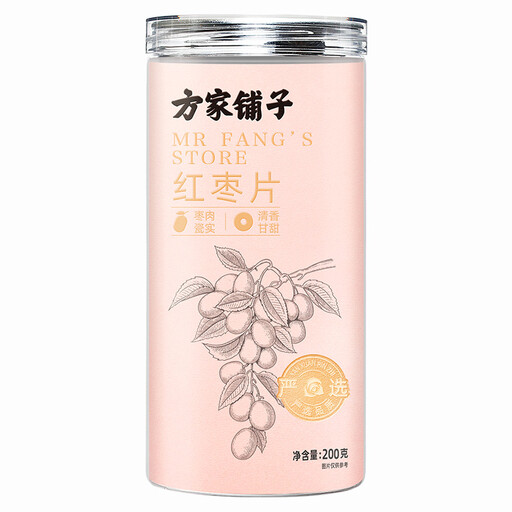
Fang Jia Puzi dried red date slices
The sliced format could be a good choice if you want to add individual pieces of fruit to the tin. To compare it with other dried fruit, check the sugar content per 100 g and, if needed, the allergen information on the pack.
View at Joybuy
Frequently asked questions
Is dried fruit automatically low in calories?
No. The term ‘dried fruit’ doesn’t mean it’s low in calories. REWE gives a range of 270 to 300 kcal per 100 g for dried fruit. For your biscuit tin, compare the energy content of specific products and how much you put in.
Does ‘no added sugar’ also mean it’s low in sugar?
No. The claim doesn’t mean that dried fruit contains little or no sugar. Naturally occurring sugars remain when fruit is dried, so also check the sugar content per 100 g in the nutritional information.
What should I look out for with sulphur dioxide and sulphites?
If you’re sensitive to these substances, check the ingredients list and allergen information on the specific pack. Under EU food information regulations, sulphur dioxide and sulphites must be labelled when present at concentrations above 10 mg/kg or 10 mg/l.
How should I store an opened pack at the office?
Store dried fruit in a cool, dry, dark place and follow the storage advice on the pack. If you only put some of it in the biscuit tin, also consider how to store the rest after opening.
Is freeze-dried fruit the lower-calorie choice?
Not necessarily. The Consumer Advice Centre points out that energy and sugar are concentrated per 100 g in freeze-dried fruit too. Choose it for a crunchy texture, and check the label and portion size against your calorie goals.


