Regular coffee-break snackers
If you eat dried fruit regularly at home or at work, a larger pack could suit how much you get through. Before buying, consider whether you’ll use it up within a timeframe that works for you.


For regular coffee breaks, a 500 g pack of sultanas or prunes could be a good choice if you’ll use it up in good time. Individually wrapped portions may suit you better if you want to take dried fruit with you or open just a small amount at a time. With either option, check the ingredients and nutritional information per 100 g, and look for sulphur dioxide and sulphites labelling where relevant.
If you eat dried fruit regularly at home or at work, a larger pack could suit how much you get through. Before buying, consider whether you’ll use it up within a timeframe that works for you.
If you care about what goes into your food, read the ingredients list and nutritional information on the specific pack. If relevant, pay particular attention to added ingredients and the labelling of sulphur dioxide and sulphites.
If you switch between sultanas, dates, prunes and mixes, choose a fruit that suits how you plan to enjoy it – on its own or, for example, in muesli.
Start by working out how much you’ll actually use. Then compare the ingredients and nutritional information. The type of fruit will also help determine whether the pack is right for your break.
| What to consider | What to check when buying | Who it matters to |
|---|---|---|
| Pack size and how much you use | Pack weight and storage instructions; whether you’ll use up the opened pack in good time. | If I have some at every coffee break, I want to be able to buy a larger pack rather than leave it sitting around. The right amount to stock up on would be the most important factor for around 46% of consumers. |
| Ingredients, sugar and sulphites | Ingredients list, sugar per 100 g, and labelling for sulphur dioxide or sulphites. | If I eat dried fruit regularly or watch out for certain ingredients, I want to know what’s in my portion. For around 36% of consumers, checking this would come first. |
| Type of fruit and how you’ll use it | Whether the variety and texture work for eating on its own or adding to muesli. | For my break, I want to choose a fruit I’ll genuinely enjoy on its own or use in something else. This would be the priority for around 18% of consumers. |
A 500 g pack only makes sense for regular snacking if you’ll use it up. Smaller packs or individually wrapped portions may be more practical for occasional breaks.
Choose a pack size that reflects how much you actually use, and follow the storage instructions on the pack.
Dried fruit can still contain plenty of naturally occurring fruit sugars, even without added sugar. The North Rhine-Westphalia Consumer Advice Centre puts the sugar content of dried fruit at 50 to 70 g per 100 g.
Check the sugar per 100 g and consider how much you actually eat during a coffee break.
If you need to watch out for sulphur dioxide or sulphites, the type of fruit alone isn’t enough to guide your choice.
Check the ingredients and allergen information on the specific pack rather than judging by the colour of the fruit or the brand name.
Lidl describes Solevita as a drinks brand, while Alesto is its brand for nuts and dried fruit.
Look for the type of fruit and pack size you want at Lidl, or browse the Alesto range.
Seeberger sells dried fruit such as dates, sultanas, figs and mixed varieties. The brand says several varieties are also available in 500 g packs.
ALDI SÜD sells products under the FARMER NATURALS brand, including sultanas and prunes in 500 g packs.
Lidl describes Alesto as its brand for nuts, dried fruit and snacks.
The REWE range includes dried fruit from various brands and own-label ranges, including larger packs.
EDEKA24 sells EDEKA own-brand products as well as dried fruit from other brands, including 500 g packs of organic raisins.
This selection includes dates, prunes and sultanas for coffee breaks or adding to muesli. Alongside 500 g packs, there’s also a pack of individually wrapped date portions. Choose according to the type of fruit, how much you’ll use and the information on the specific pack.
 No image available
The individually wrapped portions are handy if you want to open just one pack for each coffee break.
Total pack weight: 900 g in 30 packs of 30 g each. Be mindful of the stones when eating the whole fruit.
 No image available
This pack could suit you if you regularly eat dates during coffee breaks or use them as an ingredient.
Pack weight: 500 g; pitted Deglet Nour dates. Check the ingredients and nutritional information on the specific pack to help you choose.
 No image available
These red dates are an option if you’re looking for this type of fruit for regular breaks or to use in other ways.
Pack weight: 500 g. Before buying, check the ingredients list and sugar per 100 g on the pack.
 No image available
Prunes offer a different type of fruit if you don’t want to reach for dates or sultanas at every coffee break.
Pack weight: 500 g; pitted soft prunes. Check the ingredients list and watch out for any pieces of stone when eating pitted fruit.
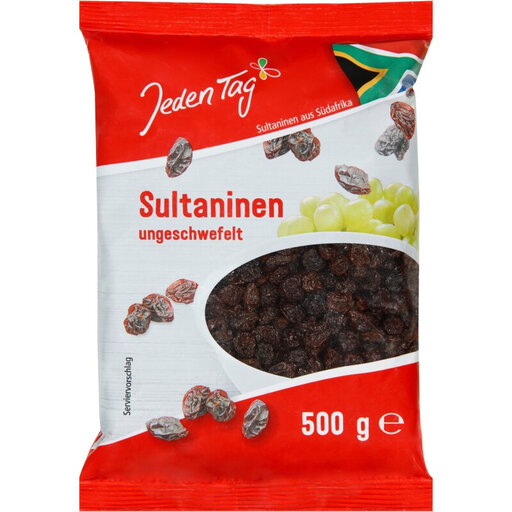 No image available
Sultanas are a good choice if you want to use the same fruit for coffee breaks as well as in muesli or yoghurt.
Pack weight: 500 g. Check the ingredients list and sugar per 100 g on the specific pack.
A large pack is a good choice if you eat or use the fruit regularly and will get through the quantity. Before deciding between a large pack and smaller portions, compare the pack sizes and storage instructions for the products you’re considering.
No. No added sugar doesn’t mean dried fruit is low in sugar. The North Rhine-Westphalia Consumer Advice Centre puts the sugar content of dried fruit at 50 to 70 g per 100 g; check the pack’s nutritional information for the fruit you’re buying.
Check the ingredients and allergen information on the specific packaging. If you need to watch out for sulphur dioxide or sulphites, don’t rely on the type of fruit or a general description of the brand alone.
Alesto is the Lidl brand to look for when buying dried fruit. Lidl describes Alesto as its brand for nuts, dried fruit and snacks, while Solevita is a drinks brand.