What to look for when shopping
Start by comparing the nutrition information and ingredients of the same type of product. Then decide which pack size suits your household’s usual consumption, and whether a crunchy option is intended as an occasional addition.
| Criterion |
What to check when buying |
Who it matters most to |
| Fat content |
Fat per 100 g and ingredients in comparable fruit snacks; assess a reduced-fat claim only when the comparison is clear. |
For snacks to share with several people, I want to know the actual fat content of the variety I’ve chosen. For around 36% of consumers, this fat comparison is the main consideration. |
| Pack size and storage |
Choose an amount based on how quickly you usually use it; follow the advice on sealing and storage. |
If several people eat dried fruit regularly, I want to be able to use up a larger pack before the quality deteriorates. Around 29% of consumers prioritise having the right amount in stock. |
| Sugar and other ingredients |
Check the sugar per 100 g, the ingredients list and any mention of sulphur dioxide or sulphites. |
For my family, I want to know whether sugar has been added to the fruit or whether it contains sulphur dioxide. For around 21% of consumers, this is the most important reason for choosing a product. |
| Crunchy texture |
Tell freeze-dried fruit apart from traditional dried fruit and choose a pack size that suits how you plan to use it. |
For muesli or yoghurt, I sometimes want a crunchy topping rather than a large supply of snacks. Around 14% of consumers put this use first. |
Dried fruit at Joybuy
This selection includes traditional dried fruit in 500 g and 1 kg packs. For a family stock-up, the ingredients, nutrition information per 100 g and storage instructions on each pack matter just as much as the quantity.
 Image unavailable
Changsi Dried Red Dates, 500 g
This 500 g pack may suit a household that uses red jujubes regularly. If you’re choosing a snack with fat content in mind, compare the fat and sugar per 100 g and follow the storage instructions.
View at Joybuy
 Image unavailable
Seeberger Deglet Nour Dates, Pitted, 500 g
These pitted dates could work as an ingredient for a household that can use up a 500 g pack. Check the fat and sugar per 100 g and the ingredients list rather than assuming the fruit name tells you about its nutritional value.
View at Joybuy
 Image unavailable
Haoxiangni Grade A No-Wash Jujubes, 500 g
This 500 g pack is an option if your household uses jujubes regularly. Check the nutrition information per 100 g and how the contents should be stored once opened.
View at Joybuy
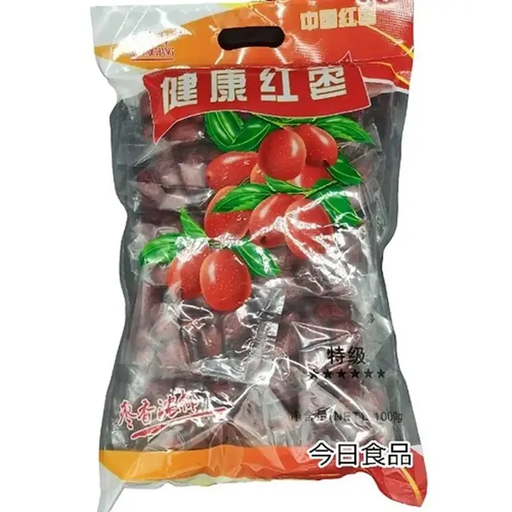 Image unavailable
Healthy Red Dates Medium Grain, 1 kg
This 1 kg pack is best suited to a household that can use it within the recommended storage period. Before choosing it, check the ingredients, fat and sugar per 100 g, and the instructions for storing the opened pack.
View at Joybuy
 Image unavailable
Seeberger Soft Dried Plums, Pitted, 500 g
These soft dried plums may suit a household looking to use a 500 g pack as a snack or ingredient. Check the ingredients and nutrition information, and be aware that small pieces of stone may remain.
View at Joybuy
Frequently asked questions
Is dried fruit automatically low in fat?
No, the fat content depends on the specific product. EDEKA lists 0.3 g of fat per 100 g for one dried mixed fruit product, while ALDI SÜD lists 0.5 g per 100 g for its documented dried plums. These figures don’t apply to all fruit snacks or recipes.
Does ‘no added sugar’ mean dried fruit is sugar-free?
No. Dried fruit contains naturally occurring fruit sugars, even when no sugar has been added. The North Rhine-Westphalia Consumer Advice Centre explains that, because dried fruit has a low water content, sugar levels of 50 to 70 per cent are common; so compare the information per 100 g on the relevant pack.
How can I tell whether dried fruit is free from sulphur dioxide?
Check the ingredients list and labelling on the specific pack. Seeberger describes its unsulphured varieties as fruit made without adding sulphur dioxide; don’t assume this applies to other varieties from the same brand.
How should I store a larger pack once it’s opened?
Store dried fruit in a dry, airtight container and follow the instructions on the pack. EDEKA recommends keeping dried plums in a cool place at 7 to 10 °C; bear in mind that instructions may differ for other fruit or packs.
Does the ‘reduced fat’ claim help me choose?
Only when it’s accompanied by a clear comparison and the actual fat content. Lebensmittelklarheit explains that a reduced-content claim is based on comparison with a similar product; when choosing between dried fruit, you should also check the fat per 100 g.


