Hosts keeping an eye on fat content
You want to choose dried fruit for a snack bowl and compare the fat content per 100 g, rather than treating plain fruit, nut and fruit mixes and coated varieties as if they were the same.


If low fat content is important for your Christmas party buffet, compare the nutritional information on the specific pack of dried fruit rather than looking for products labelled ‘reduced fat’. EDEKA lists 0 g of fat per 100 g for its GUT&GÜNSTIG prunes, while ALDI SÜD lists 0.5 g per 100 g for FARMER NATURALS prunes. Check the sugar content, ingredients and any sulphites too: a low fat content alone won’t tell you which fruit is right for your guests or how you plan to serve it.
You want to choose dried fruit for a snack bowl and compare the fat content per 100 g, rather than treating plain fruit, nut and fruit mixes and coated varieties as if they were the same.
You want to check whether pieces of fruit have been sweetened, so you read the ingredients list and the sugar content on the specific pack.
You check for sulphur dioxide and sulphites when choosing products, and keep the packaging information available for guests who need to check the ingredients themselves.
Start with the factor that matters most for your celebration, then check the other details on the same pack.
| What to check | What to look for when shopping | Who it matters to |
|---|---|---|
| Fat content | Compare fat per 100 g and check the ingredients in mixed products. | If fat content is my top priority for a snack bowl, I want to compare the information on the specific pack. Around 40% of consumers put this first. |
| Sugar and ingredients | Read the ingredients list and sugar content per 100 g; ‘no added sugar’ does not mean sugar-free. | For my buffet, I want to tell apart sweetened pieces of fruit from other varieties. For around 30% of consumers, this question about ingredients comes first. |
| Sulphites | Check the ingredients list and allergen information for sulphur dioxide or sulphites. | If any of my guests are known to be sensitive to sulphites, I need to choose products with clear labelling. Around 20% of consumers say this is their top priority. |
| Texture | Tell freeze-dried fruit apart from traditionally dried fruit, and consider how you plan to serve it. | For a crunchy dessert topping, I’m looking for a different texture from soft fruit for a snack bowl. Around 10% of consumers make intended use their main deciding factor. |
A low fat content doesn’t mean dried fruit is low in sugar or energy. The Federal Centre for Nutrition points out that drying concentrates the fruit sugar, making dried fruit energy-dense.
Compare fat, sugar and energy per 100 g. You can top up small bowls as needed.
A mix may contain other ingredients: EDEKA lists sunflower oil and sulphur dioxide, among other ingredients, in its Herzstücke mixed fruit. So you can’t simply apply the information for plain dried fruit to a mix.
Read the ingredients list first, then compare the nutritional information for the products you actually plan to serve.
Sulphur dioxide may be present in dried fruit. The German Federal Institute for Risk Assessment describes possible reactions in sensitive people.
Check the pack’s ingredients list and allergen information, and make the labelling accessible to any affected guests.
ALDI SÜD notes that its FARMER NATURALS prunes may come from different suppliers, so their nutritional information may vary.
Before buying, check the information on the pack you intend to take home.
The range includes both unsweetened and sweetened dried fruit, as well as unsulphured varieties.
Freeze-dried fruit can make a crunchy snack or dessert topping.
Prunes and mixed fruit have different ingredients lists to consider when choosing for a buffet.
Lidl sells dried fruit under the Alesto brand, along with nuts and other party snacks.
ALDI SÜD sells, among other products, prunes and dried pineapple under this brand.
This selection includes soft prunes and jujubes for snack bowls. For your buffet, compare pack size, ingredients and the nutritional information for the variety you choose.
 No image available
For a snack bowl of soft prunes; the pack contains 500 g. Check the fat, sugar and ingredients on the packaging before choosing. Even pitted fruit may contain fragments of stones.
 No image available
A 500 g pack of jujubes to add another dried fruit to your snack bowl. Compare the ingredients list, as well as fat and sugar per 100 g, with the other fruit you plan to serve.
 No image available
Pitted red jujubes for a smaller snack bowl; the pack contains 280 g. Check the nutritional information per 100 g and bear the pack’s sugar content in mind when serving.
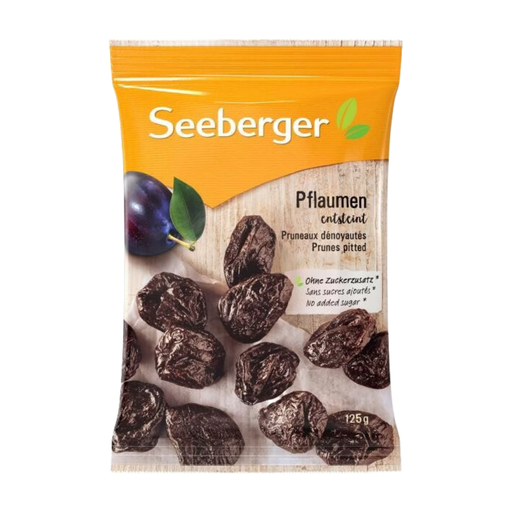 No image available
The 125 g pack is a good choice if you only want to serve a small bowl of soft prunes. Compare fat, sugar and ingredients on the pack; despite being pitted, the fruit may contain fragments of stones.
No. ‘Reduced fat’ isn’t a blanket description of dried fruit. Compare the fat content per 100 g on the specific pack: EDEKA lists 0 g for its GUT&GÜNSTIG prunes, while ALDI SÜD lists 0.5 g for FARMER NATURALS prunes.
It doesn’t mean the fruit is sugar-free. If you want to avoid added sugar, check the ingredients list as well as the sugar content per 100 g. The Federal Centre for Nutrition points out that drying concentrates the fruit sugar.
Dried fruit may contain sulphur dioxide, which can trigger reactions in sensitive people, as explained by the German Federal Institute for Risk Assessment. If a guest is known to be sensitive, check the current ingredients list and allergen labelling on every pack you plan to serve.
A claim like this doesn’t replace the nutritional information for the specific product. Compare fat per 100 g and check the sugar content and ingredients list too. In the EU, nutrition claims in food advertising are governed by Regulation (EC) No 1924/2006.