Dried fruit is easy to take along on a Father’s Day outing, but it isn’t automatically low in calories: REWE lists dried fruit at 270 to 300 kcal per 100 g. If you’re keeping an eye on calories, compare the nutritional information and plan your portion in advance. If a lower energy density is more important, fresh fruit is another option.
Who is this choice important for?
Calorie-conscious snackers on the go
You want to take something sweet on your Father’s Day outing and decide how much to bring beforehand. With dried fruit, it’s worth checking the pack size and energy per 100 g; REWE describes it as more energy-dense than fresh fruit.
Shoppers looking to avoid added sugar
You want to avoid added sugar, so you compare the ingredients lists of individual products. ‘No added sugar’ doesn’t tell you how much sugar the dried fruit naturally contains.
Shoppers who pay close attention to ingredients
You need to take sulphur dioxide or other ingredients and allergen information into account. Check the labelling on the specific pack rather than guessing what it contains from the type or colour of the fruit.
What should you look for when buying?
First decide whether a lower energy density or the convenience of taking dried fruit with you matters more. If you choose dried fruit, compare the values per 100 g and plan your portion. Check each variety individually for added sugar and ingredient information.
| Criteria |
What to check when buying |
Who it matters to |
| Energy and portion size |
Compare kcal per 100 g and decide in advance how much to take with you. Values per portion are only comparable when you also know the portion size they refer to. |
I don’t want to eat a large amount straight from the pack without noticing while I’m out. For around 36% of consumers, planning portions is the main priority. |
| Added sugar |
Check the ingredients list for added sugar and also compare ‘of which sugars’ in the nutritional information per 100 g. |
If I want to avoid added sugar, the fruit’s own sweetness is enough for me; I still want to know how much natural sugar it contains. Around 29% of consumers care about this above all. |
| Sulphur dioxide and ingredient information |
Read the ingredients list, allergen information and ‘may contain’ warnings on the specific pack, especially if you need to take sulphur dioxide into account. |
The exact labelling determines whether a particular pack is suitable for me. Roughly 21% of consumers put checking ingredients first. |
| Sharing with a group |
Check the pack size and closure, and consider dividing a larger pack into portions before your outing. |
I’m looking for a fruit snack that several people can easily share while we’re out. Around 14% of consumers prioritise convenience when taking it along. |
Common mistakes when choosing
-
Assuming ‘fruit’ means ‘low in calories’
Drying removes water. REWE lists dried fruit at 270 to 300 kcal per 100 g and describes it as considerably more energy-dense than fresh fruit in some cases.
Compare the energy information for the specific products and decide how much you want to take with you. If a lower energy density is your priority, consider fresh fruit.
-
Assuming ‘no added sugar’ means ‘low in sugar’
Dried fruit contains natural sugars even when no sugar has been added. Lidl makes this clear in its information about Alesto mango strips, which contain naturally occurring sugars.
Check both the ingredients list and the sugar information in the nutritional values per 100 g.
-
Overlooking ingredient information
Sulphur dioxide may be relevant when choosing some dried fruit, and other ingredients and ‘may contain’ warnings vary from product to product.
If you have a sensitivity, read the labelling on every pack rather than relying on the colour or type of fruit.
-
Assuming online information applies to every pack
ALDI SÜD notes that the nutritional values of its apricots may vary between suppliers. EDEKA also warns that online information may differ from the details on the pack.
When buying, compare the ingredients and nutritional values of the version actually on offer.
Brands and retailers to consider
Seeberger
Seeberger sells a range of dried fruit, including apple rings, apricots and dates.
- Seeberger says its apple rings contain no added sugar.
- This doesn’t automatically apply to other Seeberger products: the range also includes sweetened fruit.
REWE
REWE’s dried fruit and kernels category includes own-label products and other brands.
- Individual product pages make it easier to compare recipes before you buy.
- The category also includes sweetened banana chips and kernels, so not every listing is suitable for the same dried fruit comparison.
EDEKA / GUT&GÜNSTIG
EDEKA publishes ingredients and nutritional information for individual dried fruit products.
- For its sweetened GUT&GÜNSTIG cranberries, EDEKA lists 331 kcal and 67.1 g of sugar per 100 g; the ingredients list shows 39% sugar.
- Online information may differ from the details on the specific pack. Check the version on offer before buying.
Lidl / Alesto
Lidl’s Alesto brand includes dried fruit and other snack products.
- Lidl describes Alesto mango strips as having no added sugar, while also pointing out that they contain naturally occurring sugars.
- For a comparison of sugar and energy, check the nutritional table for the specific variety.
ALDI SÜD / NATURLIEBLINGE und FARMER NATURALS
ALDI SÜD lists nutritional values for individual dried fruit products from its own brands.
- For the apricots listed, ALDI SÜD gives 260 kcal per 100 g, and for the pineapple listed, 319 kcal per 100 g.
- ALDI SÜD says that different suppliers may provide the apricots, which can mean their nutritional values vary.
Dried fruit at Joybuy
This selection features dried fruit to take along on a Father’s Day outing. Pack sizes vary; to compare calories and sugar, check the information per 100 g on each pack and consider the portion you’re planning to have.
 Image unavailable
Seeberger apple rings, 80 g
For an outing when you want to portion out your dried apple rings in advance.
Check the nutritional values per 100 g for this pack, along with the ingredients and sulphur dioxide information.
View at Joybuy
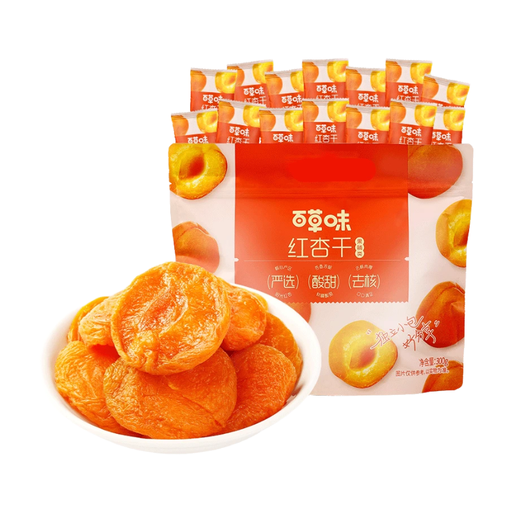 Image unavailable
Be&Cheery dried red apricots, 300 g
For a Father’s Day get-together when you want to divide a larger pack of dried apricots into portions before setting off.
Compare the energy and sugar information per 100 g, and check the sulphur dioxide labelling if needed.
View at Joybuy
 Image unavailable
Haoxiangni Grade 2 Fresh-Locked pitted red dates, Original Flavour, 280 g
For when you’re out and about and want to take pitted red dates with you, portioning out what you need from the pack in advance.
Check the nutritional values per 100 g and, if you have a sensitivity, the ingredients and allergen information on the specific pack.
View at Joybuy
Frequently asked questions
Is dried fruit a good choice for a calorie-conscious Father’s Day snack?
Yes, if you decide on your portion carefully; dried fruit isn’t automatically low in calories. REWE lists it at 270 to 300 kcal per 100 g, so the nutritional values for the specific fruit and the portion you plan to eat are what matter.
Does ‘no added sugar’ also mean low in sugar?
No. Dried fruit can contain natural sugars even when no sugar has been added; Lidl specifically points this out for its Alesto mango strips. Compare the ingredients list and the ‘of which sugars’ information in the nutritional values.
What should I look out for with sulphur dioxide?
If sulphur dioxide or sulphites are relevant to you, check the ingredients and allergen information on the specific pack of dried fruit. You can’t reliably tell what a fruit contains just by looking at it.
How should I store an opened pack of dried fruit?
Reseal the pack and follow the storage instructions for that product. If you’re taking it on an outing, it’s also a good idea to portion out the amount you want beforehand.


