If you prepare snacks regularly
If you regularly take dried fruit to your training sessions, you can keep a supply at home and decant a handy portion whenever you need one.


A large pack makes sense if you eat the same dried fruit regularly and prepare portions for your gym bag at home. If you want to take the pack with you as it is, or try a variety first, a smaller pack is more practical. Compare pack sizes and unit prices only for products you’d use in a similar way, and check the ingredients and pack instructions before stocking up.
If you regularly take dried fruit to your training sessions, you can keep a supply at home and decant a handy portion whenever you need one.
If you regularly get through a particular variety, it’s worth comparing pack weights and unit prices. The key is whether you’ll use the quantity you buy.
If you need or want to avoid certain ingredients or additives, check the ingredients list, allergen information and may-contain warnings on the specific pack before stocking up.
First decide whether you want to portion out the dried fruit at home or take the pack you buy with you as it is. Then check the specific variety, its labelling and how much you’re likely to use.
| What to consider | What to check when buying | Who it matters most to |
|---|---|---|
| Unit price and how much you use | Compare the pack weight and unit price per kg for varieties you’d use in a similar way. Check the best-before date and how often you expect to use the product. | If I eat the same variety regularly, I want to buy a supply that I’ll actually use up. Around 42% of consumers put this cost-and-usage consideration first. |
| Ingredients and labelling | Read the ingredients list, nutritional information per 100 g, and allergen and may-contain warnings on the specific pack. | The ingredients need to meet my requirements before I buy a larger quantity. For around 33% of consumers, ingredients and suitability come first. |
| Taking it with you and portioning | Check whether the pack contains individual portions or whether you’ll need to portion it out yourself. Follow the storage instructions once opened. | On training days, I need a portion that’s easy to pack, rather than a large, opened bag to take with me. This consideration comes first for around 25% of consumers. |
A larger quantity doesn’t, by itself, tell you anything about the cost per kilogram or whether you’ll use up the variety. Different fruits also vary in taste and nutritional values.
Compare the unit price of products you’d use in a similar way, and choose a quantity that suits how much you use.
Dried fruit without added sugar still contains naturally occurring sugars. The recipe information and the sugar value in the nutritional information answer different questions.
Check both the ingredients list and the sugar information per 100 g on the specific pack.
A large pack is often easier to store at home than to take with you. If you open it repeatedly, it’s important to follow the product’s storage instructions.
Before training, decant a portion into a clean, airtight container and follow the instructions on the pack.
Lidl describes Solevita as a drinks brand; Alesto is the range it lists for nuts and dried fruit.
Search for the type of fruit you want, or for Alesto, if you’d like to compare dried fruit from this range.
Seeberger offers dried fruit in a range of pack sizes. Its pitted dates, for example, are available in 125 g, 200 g and 500 g packs.
REWE stocks dried fruit in a range of varieties and brands, including REWE Bio sultanas in 200 g packs and REWE Beste Wahl mango strips in 100 g packs.
EDEKA24 lists its own dried fruit products, as well as larger packs from other brands. Compare varieties and brands separately.
ALDI SÜD stocks FARMER NATURALS prunes in a 500 g pack.
Alesto is Lidl’s range of nuts and dried fruit; Lidl also lists mango strips under this range.
This selection includes jujubes and red dates: one product with pre-packed individual portions, as well as 500 g packs you can portion out yourself. For each option, check whether the stones, ingredients and instructions for after opening suit how you plan to take it with you.
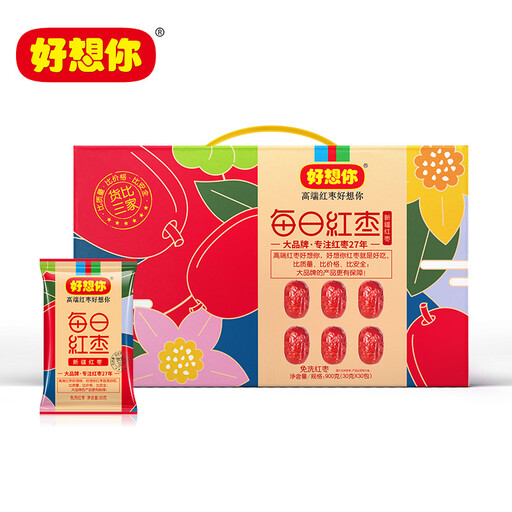 Image unavailable
The 30 individually packed portions are easy to pop into your gym bag without having to portion them out yourself.
The red dates contain stones, so take care when eating them on the go.
 Image unavailable
The 500 g bag is a good option to keep at home if you portion out snacks for your gym bag yourself.
The red dates are described as pitted. Check the labelling on the specific pack before buying.
 Image unavailable
You can portion out a serving from the 500 g pack to take with you.
The product description says the jujubes can be eaten without washing, but recommends consuming them immediately after opening. Keep this in mind if you plan to use the pack as a supply.
 Image unavailable
The 500 g pack could suit you if you buy red dates to keep at home and prepare portions to take with you.
Before portioning them out, check the instructions on the pack, particularly those relating to ingredients and storage.
 Image unavailable
The 500 g pack is handy for portioning out yourself if you want to prepare smaller servings for training days.
The jujubes are described as seedless. Check the ingredients and storage instructions on the specific pack.
Read the ingredients list on the specific pack. A claim such as ‘no added sugar’ doesn’t mean ‘sugar-free’, as fruit contains naturally occurring sugars. The nutritional information shows the sugar value per 100 g.
Check the ingredients list, allergen labelling and any may-contain warnings on the pack if particular ingredients are a concern for you. Don’t assume the information is the same for another variety or pack; ALDI SÜD, for example, notes that the nutritional information for its FARMER NATURALS prunes may vary by supplier.
Not necessarily. You can’t tell from the pack size alone whether a particular variety and portion will suit you immediately before training. The German Nutrition Society describes carbohydrates as an important part of fuelling sport; the duration and intensity of exercise are also relevant factors.
At home, decant a suitable amount into a clean, airtight container and leave the larger pack at home. Follow the storage and consumption instructions for the product after opening; they may be important when planning how much to keep in stock.