Choose dried fruit for your journey based on the specific ingredient you need to avoid, not just the brand or claims such as ‘natural’. Compare the ingredients and allergen information on the individual pack, including precautionary statements and details of sulphur dioxide or sulphites where relevant. If you want to avoid added sugar, check the ingredients and nutritional information too: fruit with no added sugar is not necessarily low in sugar. For international travel, you’ll also need to check the rules for carrying and importing food along your route.
Who should check the pack particularly carefully?
Travellers avoiding a specific allergen or sulphites
You need to check whether the ingredients and allergen information on a particular pack meet your requirements. If possible cross-contamination is also a concern, look out for any precautionary allergen statements. ‘Unsulphured’ only tells you about sulphuring; it doesn’t tell you whether other allergens are present. Lebensmittelklarheit explains how allergens and sulphites are labelled on food.
Travellers looking to avoid added sugar
Compare the ingredients in plain and sweetened fruit, and check the nutritional information for the amount of sugar too. For example, EDEKA lists cranberries that explicitly include sugar as an ingredient. Conversely, an ingredients list with no added sugar doesn’t tell you how much naturally occurring sugar the fruit contains.
Travellers packing a snack for the journey
You want to choose a pack that’s practical for your trip. Check the pack size and, if you don’t plan to eat it all at once, whether it can be resealed and how it should be stored. If you’re travelling across national borders, checking the destination’s import rules is another step to add to your list.
What should you look for when buying?
Start with any ingredients you need to avoid. Then you can sensibly compare ingredients, nutritional information and how practical the pack will be for your journey.
| Criteria |
What to check when buying |
Who it matters most to |
| Allergens and traces |
Check the ingredients and highlighted allergen information against the specific ingredient you need to avoid. Look for precautionary allergen statements too, if relevant. |
If I need to avoid a particular allergen, I need information about the individual pack, not a general statement about dried fruit. For around 31% of consumers, this would be the main thing to check. |
| Sulphur dioxide and sulphites |
If relevant, look for ‘unsulphured’ and still check the information about sulphur dioxide or sulphites. Lebensmittelklarheit lists both terms as examples of labelling. |
If I want to avoid sulphites, the name of the fruit isn’t enough, as processing can vary from product to product. Around 25% of consumers would check for sulphites first. |
| Added sugar and sugar content |
Check the ingredients for added sugar and compare the nutritional information for sugar per 100 g. Also consider how much you plan to eat. |
I’m looking for fruit with no sugar added as an extra ingredient, but I also want to know how much sugar is in the portion I choose. For around 25% of consumers, this comparison would be the priority. |
| Pack and travel route |
Check the pack size and storage instructions after opening, as well as the rules at your departure airport and on arrival at your destination. |
If I’ll be eating my snack after a wait or on a connecting flight, the pack needs to suit my travel plans. For around 19% of consumers, being able to take it along would be the most important selection criterion. |
Which assumptions can make choosing harder?
-
Assuming ‘unsulphured’ means ‘allergen-free’
The claim refers to sulphuring. It doesn’t rule out other ingredients, declared allergens or traces that may be relevant to you.
Decide which ingredient you need to avoid, then check the ingredients, allergen information and any precautionary statements on the specific pack.
-
Assuming ‘no added sugar’ means ‘low in sugar’
Dried fruit contains naturally occurring sugar, even when no sugar has been added. Sweetened varieties may also contain sugar as an ingredient, as shown by a cranberry product in EDEKA’s range.
Check the ingredients and the sugar content per 100 g separately, and factor in the portion size you plan to eat.
-
Judging the ingredients from the product image
An image or product category doesn’t tell you which ingredients and allergen information apply to the pack you’re actually buying.
When you buy, read the information on the pack or the full details for the specific product. If you need to avoid an ingredient completely, don’t base your decision on a general category name.
-
Assuming airport security rules are the same as import rules
The rules at your departure airport’s security checkpoint don’t determine whether you can bring a plant-based food into your destination. The German Federal Police provides information about taking food on a plane; the European Commission deals separately with rules for food in travellers’ luggage.
Before travelling, check the rules set by your departure airport and airline, and, for international trips, the import rules in your destination country.
Brands and ranges to help you choose
Ingredients and processing can vary considerably within a brand. Use the ranges below as a starting point, but check the specific product if you need to avoid a particular ingredient.
Seeberger
Seeberger offers a range of dried and freeze-dried fruit, including specific varieties such as unsulphured apricots.
- The ‘unsulphured’ label can help you narrow down your options if sulphuring is one of your selection criteria.
- A claim about one variety doesn’t automatically apply to other Seeberger products or their allergen and precautionary information.
EDEKA-Sortiment
EDEKA lists the ingredients for some dried fruit products, making it possible to compare different recipes.
- According to EDEKA, its listed freeze-dried raspberries contain only raspberries, while sugar is included in the ingredients for one cranberry product.
- One mixed fruit product listed by EDEKA contains sulphur dioxide. You can’t draw conclusions about the entire range from these individual products.
REWE-Sortiment
REWE lists dried fruit and freeze-dried fruit from various brands and in different forms.
- The range of product types gives you a starting point for comparing pack sizes and types of fruit.
- If you need to avoid an allergen, sulphites or added sugar, the information for the individual product matters—not its classification as dried fruit.
Alesto (Lidl)
Alongside other snacks, Lidl stocks dried fruit under its Alesto brand.
- The range gives you another option for comparing different dried fruit products using the information on their packs.
- The brand name alone doesn’t tell you whether a product is suitable if you need to avoid a particular allergen or sulphites.
Farmer Naturals (ALDI SÜD)
ALDI SÜD stocks exotic dried fruit under its Farmer Naturals brand, including a mango variety.
- The mango variety lets you narrow down the type of fruit you want before checking the rest of the pack information.
- For ingredient and allergen information, ALDI SÜD directs customers to the details on the specific product in store.
Dried fruit at Joybuy
This selection includes goji berries and two varieties of jujubes as dried fruit to take on the go. If you need to avoid allergens, sulphites or added sugar, check the latest information for the specific product and pack before making your choice.
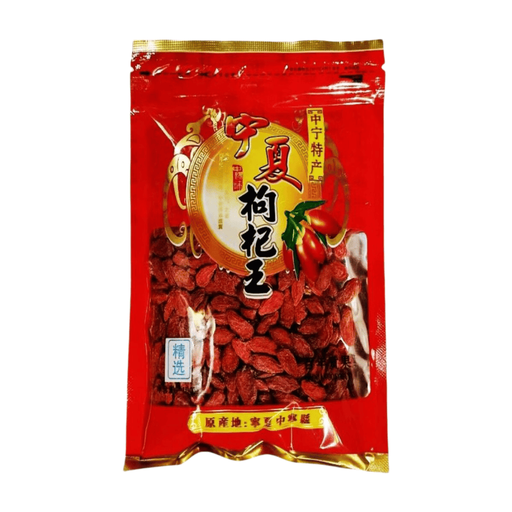 No image available
Ningxia Goji Berries, 100 g
A 100 g pack for travellers who want to take goji berries along as a dried fruit snack.
If you need to avoid sulphites or allergens, check the ingredients and allergen and precautionary information on the specific pack. If you’re travelling in stages, it’s also worth checking how the pack can be resealed once opened.
View at Joybuy
 No image available
Haoxiangni Grade 2 Fresh-Locked Pitted Red Dates Original Flavour, 280 g
A pitted jujube option for travellers who want to take this fruit along without the stones. The pack contains 280 g.
Before buying, compare the ingredients, sugar per 100 g and any allergen or precautionary information. If you open the pack, make sure you also plan how to store it for the rest of your journey.
View at Joybuy
 No image available
Haoxiangni Grade A No-Wash Jujubes, 500 g
A 500 g pack of jujubes for travellers planning to take a larger quantity of this dried fruit. ‘No-Wash’ is part of the product name.
Check that the pack size suits your journey and find out how to store the fruit after opening. Compare the ingredients, nutritional information and allergen or precautionary statements for the specific product.
View at Joybuy
Frequently asked questions
Is unsulphured dried fruit automatically allergen-free?
No. ‘Unsulphured’ refers to sulphuring and doesn’t rule out other allergens or possible traces. Check the ingredients, allergen information and any precautionary statements relevant to you on the specific pack.
Is dried fruit with no added sugar also low in sugar?
No. Not having added sugar doesn’t mean the product has a low sugar content. Dried fruit contains natural sugar, so check both the ingredients and the nutritional information for sugar per 100 g, as well as the portion you plan to eat.
Can I take dried fruit in my hand luggage?
Whether you can take a particular product with you for your entire journey depends on your route. Check the rules set by your departure airport and airline. For international travel, you’ll also need to check your destination’s import rules for plant-based foods. The rules for liquids at security don’t replace these checks.
How should I store an opened pack while travelling?
Follow the storage instructions for the pack you’ve chosen and reseal it as directed after opening. For the freeze-dried red berries listed by REWE, the advice is to seal the bag well and store it in a dry place away from light. Other products may have different instructions.


