Calorie-conscious fruit snackers
You want to enjoy fruit as a sweet snack. Compare the kcal per 100 g and think about how much you actually plan to eat: a small pack doesn’t automatically mean a small portion.


In a high-protein diet, dried fruit is better treated as a portioned fruit accompaniment than as a source of protein. The specific ALDI SÜD and REWE products featured here contain 2.0 to 2.8 g of protein per 100 g. For a calorie-conscious snack, compare the energy values per 100 g with the portion you plan to eat. “No added sugar” does not mean sugar-free or automatically low in calories.
You want to enjoy fruit as a sweet snack. Compare the kcal per 100 g and think about how much you actually plan to eat: a small pack doesn’t automatically mean a small portion.
You want to add dried fruit to quark, skyr or another protein-rich food. To meet your protein target, look at the protein content of the whole combination, not just the fruity flavour of the topping.
You want to avoid added sweetening ingredients or sulphites. Check the ingredients list and labelling on the specific pack. “No added sugar” doesn’t tell you the total sugar content.
First compare nutrition information on the same basis, then consider your planned portion and finally check the ingredients of the specific product.
| Criterion | What to check | Who it matters to |
|---|---|---|
| Energy and portion size | Compare kcal per 100 g and portion out the amount you want before you start snacking. | If I want to plan in something sweet, the amount I actually eat needs to fit my plan. Around 31% of consumers put calorie control first. |
| Protein content | Check protein and energy per 100 g; pair dried fruit with a separate source of protein if needed. | For my protein-focused snack, I want to know whether the fruit contributes protein or mainly adds flavour. This is a priority for around 31% of consumers. |
| Sugar and ingredients | Check “of which sugars” per 100 g and read the ingredients list; don’t assume “no added sugar” means “sugar-free”. | I want to spot added sweetening ingredients while also keeping the total sugar content in mind. Around 25% of consumers prioritise this. |
| Sulphites | If you want to avoid sulphites, check the ingredients and allergen labelling on every pack. | If I need to avoid sulphites, the labelling on the specific product determines my choice. This is the most important consideration for around 13% of consumers. |
Dried fruit can still contain sugar, even if no sugar has been added. REWE lists Seeberger unsweetened mango as containing 54 g of sugar and 326 kcal per 100 g.
As well as checking the claim on the front of the pack, look at the ingredients list and the “of which sugars” and energy values in the nutrition table.
The specific products featured from ALDI SÜD and REWE contain 2.0 to 2.8 g of protein per 100 g. Their fruity flavour doesn’t mean they’re high in protein.
If protein is important in your snack, check the protein content of any additional ingredient you choose.
Seeberger’s range includes unsulphured options alongside other dried fruit. The name of a product line is no substitute for checking the individual pack.
If you want to avoid sulphites, check the ingredients and allergen labelling on the product you choose.
According to Verbraucherzentrale, freeze-dried fruit has a higher sugar and energy content per 100 g because the water has been removed. So its light texture doesn’t mean it’s low in kcal.
Compare the values per 100 g and decide how much to use as a topping.
Seeberger offers classic, unsulphured and freeze-dried fruit.
REWE’s dried fruit category includes own-brand and branded products.
ALDI SÜD offers dried fruit under product lines such as FARMER NATURALS and NATURLIEBLINGE – KLEINE SCHÄTZ.
EDEKA provides information about dried prunes and how to store dried fruit.
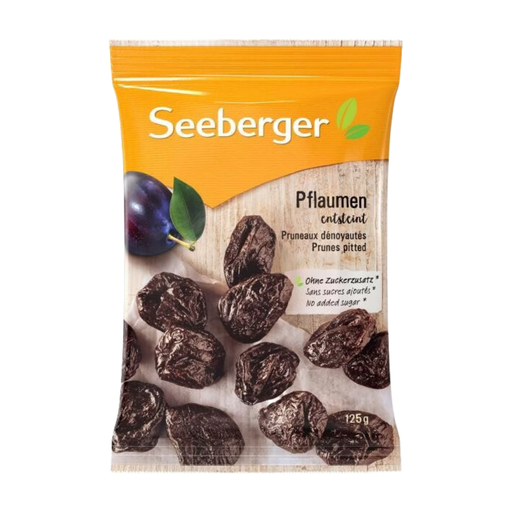
These dried prunes could work as a fruit snack or a small addition to a protein-rich food. Plan how much you’ll eat separately from the pack size.
 No image available
Pitted dried prunes for a portioned fruit snack or as an addition to a protein-rich food.
Pack size: 125 g. The pack size is not a serving suggestion.
No. The type of fruit or pack size alone doesn’t tell you whether it’s low in energy. The Bundeszentrum für Ernährung describes dried fruit as high in energy, so compare the kcal per 100 g and take your portion into account.
No. Dried fruit can still contain naturally occurring sugars. REWE lists Seeberger unsweetened mango as containing 54 g of sugar per 100 g; check the nutrition table for other products.
The products featured here suggest not: ALDI SÜD and REWE list them as containing 2.0 to 2.8 g of protein per 100 g. If you’re putting together a protein-focused snack, compare the protein content of the other ingredients separately.
If you need to avoid sulphites, check the ingredients and allergen labelling on the specific pack. The term “unsulphured” can help guide your choice, but it’s no substitute for checking the pack.
For dried prunes, EDEKA recommends storage in a cool, dry place away from light, in a sealed container. Also follow the storage instructions on your pack.