What should you look for when buying?
When choosing dried fruit for a hike, compare the fat content and ingredients of each product first. Then consider the snack type, packaging and any personal dietary requirements.
| Criteria |
What to check |
Who it matters to |
| Fat content |
Compare the “fat” value per 100 g and check whether oil has been added to fruit chips. |
If I’m mainly looking for lower-fat fruit for a hike, the words “fruit snack” aren’t enough. This fat comparison is a priority for around 36% of consumers. |
| Ingredients |
Check the ingredients list for oil, added sugar and any declared preservatives. |
When products have similar names, I want to know what they contain besides fruit. Checking the ingredients is the main concern for around 29% of consumers. |
| Snack type |
Check the texture you want, along with the storage and resealing instructions on the pack. |
For a snack on the go, I prefer dry, crunchy fruit and want to be able to manage the opened pack easily. Around 21% of consumers prioritise this practical snack format. |
| Suitability |
Check the ingredients and allergen information for sulphur dioxide, sulphites and any relevant “may contain” warnings. |
If I need to avoid certain ingredients or traces of allergens, I check the information again before every hike. This check takes priority for around 14% of consumers. |
Brands to help you choose
Examples from these brands show how much recipes can vary across a dried fruit range. Always check the packaging for the specific product you choose.
Seeberger
Seeberger’s range includes classic dried fruit, banana chips and freeze-dried fruit. The way a product is processed doesn’t remove the need to check its nutritional information.
- The brand specifically describes its unsulphured apricots as unsulphured.
- According to REWE, the Seeberger banana chips it lists contain coconut oil and have 29 g of fat per 100 g. This information doesn’t apply to other Seeberger products.
EDEKA Herzstücke
The product examples range from dried mixed fruit and banana chips to freeze-dried raspberries.
- EDEKA lists raspberries as the only ingredient in its freeze-dried raspberries, with 2.1 g of fat per 100 g.
- The dried fruit mix lists sulphur dioxide, while the banana chips contain coconut oil and have 27.8 g of fat per 100 g according to EDEKA.
REWE Beste Wahl
A freeze-dried fruit mix offers a specific example of how to compare fat, sugar and ingredients.
- REWE lists 2.8 g of fat per 100 g for its mix of strawberries, bananas and blueberries.
- REWE lists 69 g of sugar per 100 g for the same mix. The pack should be stored in a dry place and sealed tightly after opening.
Dried fruit for hiking at Joybuy
This selection includes dried dates and prunes for anyone who’d prefer to pack classic dried fruit instead of fruit chips containing oil. Compare the nutrition information and how easy each pack is to manage for your hike.
 Image unavailable
Haoxiangni Grade 2 Fresh-Locked pitted red dates, Original Flavour, 280 g
Pitted red dates are worth considering if you’re looking for dried fruit to take on a hike without any preparation.
Pack size: 280 g. Compare the fat and sugar per 100 g on the pack and check how you can reseal it after opening.
View at Joybuy
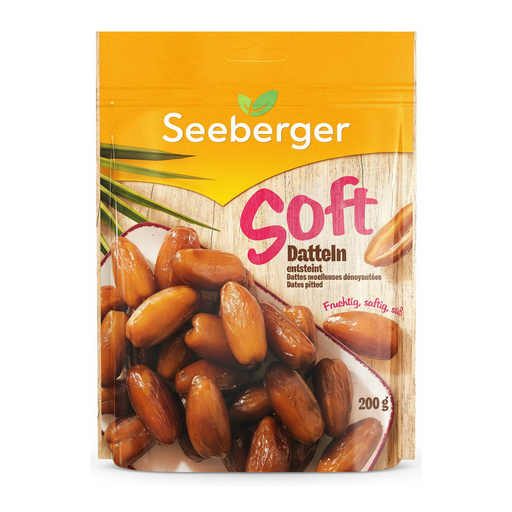 Image unavailable
Seeberger Soft Deglet Nour dates, 200 g
These dates make a handy dried fruit snack if you prefer a smaller pack for taking on the go.
Pack size: 200 g. Check the fat and sugar per 100 g, as well as the resealing instructions, if you plan to open the pack several times during your hike.
View at Joybuy
 Image unavailable
Seeberger pitted soft dried prunes, 500 g
These prunes are worth considering if you’d like to take a suitable amount from a larger pack before your hike.
Pack size: 500 g. Before packing, check the ingredients and any information about possible remnants of stones. Also plan how you’ll carry the amount you need.
View at Joybuy
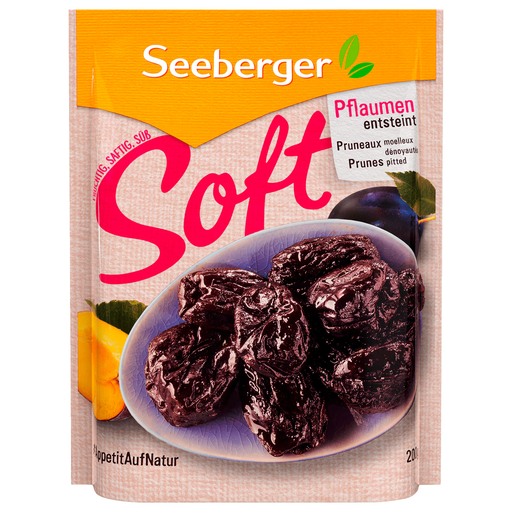 Image unavailable
Seeberger soft pitted dried prunes, 200 g
The 200 g pack is worth comparing if you’re looking for a smaller pack of prunes to take on your hike.
As well as checking the fat and sugar content, look at the ingredients and the instructions for sealing and storing the pack after opening.
View at Joybuy
Frequently asked questions
How can I spot dried fruit with less fat?
Compare the fat content per 100 g, then check the ingredients for added oil. The product name alone isn’t enough: EDEKA lists 0 g of fat per 100 g for its dried prunes, compared with 27.8 g for fried banana chips made with coconut oil.
Are freeze-dried fruit a good alternative to plain dried fruit?
Yes, if you prefer crunchy fruit for your hike and the nutrition information for the specific product suits you. EDEKA lists 2.1 g of fat per 100 g for its freeze-dried raspberries. The Verbraucherzentrale also notes that removing the water concentrates the sugar and calories per 100 g.
Is dried fruit with no added sugar sugar-free?
No, fruit still contains natural sugar. So even if a pack says “no added sugar”, check the “of which sugars” value in the nutrition table.
When should I check for sulphites in dried fruit?
If you have a known sensitivity, it’s particularly important to check the ingredients and allergen information for each product. The German Federal Institute for Risk Assessment describes possible reactions in some people, and EDEKA lists sulphur dioxide in one dried fruit mix.
How should I store opened dried fruit for my next hike?
Follow the storage instructions on the specific pack. For its freeze-dried fruit mix, REWE recommends storing it in a dry place, keeping it away from heat and sealing it tightly after opening.


