If fruit is your priority on a hike, dried fruit is an option to consider. If protein is your main buying criterion, compare the nutritional information for specific nut and fruit mixes instead, or plan a separate snack. A mix is no substitute for considering your overall diet around exercise and recovery.
Who is this choice relevant to?
Hikers keeping an eye on their protein intake
If you’re choosing snacks for a long hike or afterwards, the protein per 100 g makes it easier to compare specific products. The German Nutrition Society considers protein intake for sport in relation to the type and intensity of exercise.
Hikers with limited space in their rucksack
When packing provisions for the trail, pack size and portioning are important considerations. If you’re looking for something fruity, you can consider dried fruit and nut and fruit mixes separately.
People checking ingredients and allergens
If peanuts, tree nuts or possible traces are a concern for you, check the labelling on the specific pack. The ingredients list and nutritional information can also help you distinguish between added sugar and total sugars.
What should you look for when buying?
Plain dried fruit, nut and fruit mixes and a separately chosen snack all serve different purposes on a hike. If you want to compare protein content, don’t assume the nutritional value from the product category alone.
Plain dried fruit
A good fit if: you’d like to take some fruit along for a break on your hike.
Worth bearing in mind: the nutritional information is the only way to tell whether the pack is suitable for a protein-focused snack.
Nut and fruit mixes
A good fit if: you want to combine fruit and nuts in one snack and compare the protein content of different recipes.
Worth bearing in mind: nuts and, where included, peanuts are important to check for allergens. Sugar and fat levels also vary between mixes.
Dried fruit with a separate snack
A good fit if: you want to choose your fruit portion and a snack for your protein plan independently.
Worth bearing in mind: you can’t assess an individual snack in isolation from the rest of your diet and the demands of your activity.
| Criteria |
What to check when buying |
Who is it important for? |
| Protein |
Compare the protein per 100 g and the ingredients in the specific mix. |
When choosing a hiking snack with exercise and recovery in mind, I need a clear protein value rather than a marketing claim. For around 50 % of consumers, this is their top priority. |
| Carrying and portioning |
Check the pack size and whether it can be divided into portions. |
On the trail, I want a snack that’s easy to pack and simple to eat during breaks. Around 30 % of consumers put this first. |
| Ingredients and allergens |
Read the ingredients list, allergen information and sugar per 100 g. |
If nuts or peanuts are a problem for me, the labelling on the specific product needs to guide my choice. Sugar content may also be a deciding factor. For around 20 % of consumers, this check is their main concern. |
Common buying mistakes
-
Assuming dried fruit is automatically a high-protein snack
Describing dried fruit as a fruity option for the trail doesn’t tell you anything about the protein content of a particular pack. In nut and fruit mixes, this value depends on the recipe.
If you’re buying with protein in mind, compare the protein per 100 g rather than relying on the product name alone.
-
Assuming ‘no added sugar’ means low in sugar
Dried fruit naturally contains sugar. So even with no added sugar, the nutritional table may still show a sugar value.
Read both the ingredients list and the ‘of which sugars’ figure per 100 g.
-
Guessing allergens from the name of a mix
Trail mix and other nut and fruit mixes can contain different tree nuts and peanuts; warnings about possible traces may also be relevant.
If you have allergies, use the ingredients and allergen information on the specific pack to guide your choice.
Brands to help you choose
Seeberger
Seeberger offers dried fruit, nuts and nut and fruit mixes. For its trail mix, the brand lists several pack sizes, including 50 g and 150 g.
- For the trail mix described, you can compare several pack sizes to suit different hiking plans.
- Recipe details apply to the specific product. If you have allergies, the labelling and any warnings about possible traces on the pack are what matter.
EDEKA: GUT&GÜNSTIG und Herzstücke
Two trail mixes listed by EDEKA show why it’s best to compare specific recipes rather than relying on a supermarket’s own-brand range.
- EDEKA lists 17,2 g of protein per 100 g for GUT&GÜNSTIG trail mix and 12,1 g per 100 g for Herzstücke Studentenfutter Premium.
- Check the ingredients and allergen information for the pack you choose; these values can’t be applied to other mixes from the same brands.
FARMER NATURALS bei ALDI SÜD
For its Studentenfutter Klassik, ALDI SÜD publishes nutritional information that allows you to compare this specific product.
- For this product, ALDI SÜD lists 14 g of protein and 7,5 g of fibre per 100 g.
- These values describe Studentenfutter Klassik, not other products from the brand.
Alesto bei Lidl
Lidl’s Alesto range includes nuts, dried fruit and snack mixes, so there are several types of product to consider for a hiking snack.
- Individual nut and dried fruit products can be chosen based on their own ingredients and nutritional information.
- The brand name tells you nothing about the protein, sugar or allergens in a particular mix.
Declared protein values compared
The four nut and fruit mixes listed are ordered from highest to lowest declared protein content per 100 g. The information comes from EDEKA, ALDI SÜD or Joybuy. The ranking is not an assessment of taste or overall suitability as a hiking snack.
| Rank |
Product |
Key information |
Notes |
Retailer |
| 1 |
GUT&GÜNSTIG Studentenfutter 200 g |
17,2 g of protein per 100 g |
EDEKA gives this protein value for the specific mix. Also check the ingredients and allergens on the pack. |
EDEKA |
| 2 |
FARMER NATURALS Studentenfutter Klassik 200 g |
14 g of protein per 100 g |
The value declared by ALDI SÜD shows how this product compares within this selection; it doesn’t assess your entire hiking snack. |
ALDI SÜD |
| 3 |
Seeberger Studentenfutter Klassisch 150 g |
13 g of protein per 100 g |
Joybuy lists the protein value for this 150 g product. Don’t apply it to other pack sizes or varieties without checking. |
Joybuy |
| 4 |
EDEKA Herzstücke Studentenfutter Premium 200 g |
12,1 g of protein per 100 g |
EDEKA declares this value for Studentenfutter Premium; ingredients and allergens remain separate buying considerations. |
EDEKA |
Nut and fruit mixes at Joybuy
This selection includes nut and fruit mixes for a break on the trail. If protein is a priority, compare the nutritional information and ingredients on the specific pack you choose.
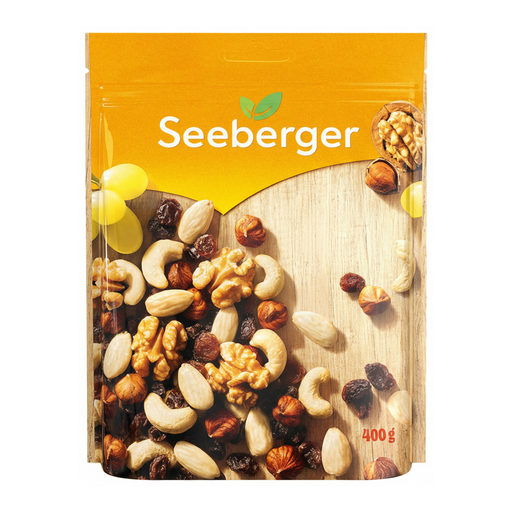 Image unavailable
Seeberger Studentenfutter Classic Trail Mix, 400 g
A trail mix for anyone looking to take a nut and fruit snack on a hike. The pack contains 400 g; check the protein, sugar and allergen information on the specific product label.
View at Joybuy
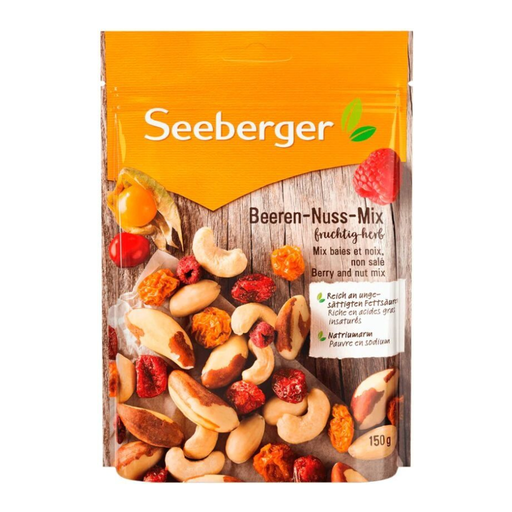 Image unavailable
Seeberger Soft Berry & Roasted Nut Mix, 150 g
A berry and nut mix for a break on the trail if you’re looking for both ingredients in one snack. The pack contains 150 g; check the sugar information and allergen labelling when comparing products.
View at Joybuy
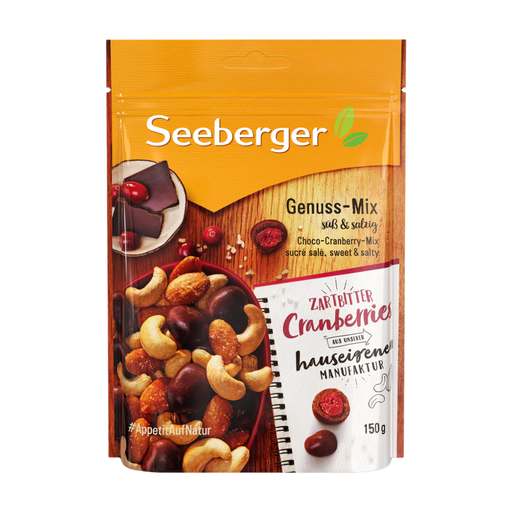 Image unavailable
Seeberger Pleasure Nut & Fruit Mix, 150 g
Another nut and fruit mix for the trail, if you’d like to compare recipes rather than just product categories. The pack contains 150 g; check the ingredients, nutritional information and allergen details before choosing.
View at Joybuy
Frequently asked questions
Is dried fruit on its own a high-protein hiking snack?
You can’t tell from the term ‘dried fruit’ alone. If protein is important to your choice, check the value per 100 g on the specific pack and consider comparing a nut and fruit mix or a separate snack.
How do I compare the protein content of nut and fruit mixes?
Use the protein value per 100 g to compare products in different pack sizes. The figures from EDEKA and ALDI SÜD for three specific trail mixes range from 12,1 g to 17,2 g per 100 g. Also check the ingredients, sugar, fat and allergens.
Does ‘no added sugar’ mean it contains little sugar?
No. Dried fruit naturally contains sugar. The Verbraucherzentrale explains the difference between sugar and added sugar; to check the total amount, look at the ‘of which sugars’ figure per 100 g on the pack.
What should I look out for if I have a nut allergy?
Check the ingredients and allergen information on the specific pack, including any warnings about possible traces. Don’t assume that the name ‘Studentenfutter’ tells you exactly which nuts or peanuts it contains.


