Households that eat dried fruit regularly
If you eat the same dried fruit on several days during the holidays and afterwards, you’re more likely to use up a larger pack. If you’re trying a new variety, a smaller quantity is the safer choice.


A 500 g pack is a good fit for holiday snacks if your household regularly eats that variety but doesn’t need a large stock. A 1 kg pack may be more suitable if you’ll still use the fruit for snacks or baking after the holidays. If you’re buying for children, it’s also important to serve small portions and check the information on the specific pack.
If you eat the same dried fruit on several days during the holidays and afterwards, you’re more likely to use up a larger pack. If you’re trying a new variety, a smaller quantity is the safer choice.
You can divide a large pack into smaller portions before serving. The German Nutrition Society recommends 25 g of dried fruit as a guide for one portion of fruit. The consumer advice centre recommends offering children small snack portions rather than letting them graze throughout the day.
If you need to avoid certain ingredients, check the label of each variety individually. Recipes can vary even within the dried fruit category: the ja! dried plums listed by REWE include water and potassium sorbate as well as plums in the ingredients list.
Start by choosing a fruit that people in your household will actually eat. Then you can decide which pack size suits your needs, and whether the ingredients and portioning work for the snack you have in mind.
| Factor | What to check | Who it matters to |
|---|---|---|
| Pack size | Check whether you’ll use up 500 g or 1 kg of the same fruit during and after the holidays. | If I’m preparing snacks for several days, I don’t want to choose a pack that leaves me with lots of leftovers. Around 40% of consumers put choosing the right pack size first. |
| Portioning | Check how the product is packaged and look at the nutritional information per 100 g or per portion. | When preparing snacks for children, I want to be able to portion them out before serving. Small, manageable portions are the top priority for around 30% of consumers. |
| Ingredients and allergens | Read the ingredients list and, for mixes, check which allergens are highlighted on the specific pack. | If I need to avoid certain ingredients, the exact composition determines whether a product is suitable. This is the first thing around 20% of consumers look for. |
| Choice of variety | Try an unfamiliar fruit in a smaller quantity before buying a larger supply. | If I have fussy eaters, I want to know whether they’ll eat the variety at all. For around 10% of consumers, this comes before pack size. |
A large pack isn’t much help if your household only eats that variety occasionally and some of it goes to waste.
Choose a larger pack of varieties you already know and enjoy. With new dried fruit, first see whether it goes down well during the holidays.
Ingredients vary by product. For example, the ja! dried plums listed by REWE also contain water and potassium sorbate.
Check the ingredients list and nutritional information on the pack you’re choosing, especially for mixes or if you want to avoid certain additives.
The German Nutrition Society recommends 25 g of dried fruit as a guide for one portion of fruit. The consumer advice centre recommends offering children small snack portions rather than letting them graze throughout the day.
Portion out the amount you want to serve instead of putting the whole pack out.
Other ingredients in a mix are important when choosing, particularly if anyone in your household needs to avoid allergens.
Check the full ingredients list and any allergens highlighted on the specific pack.
ALDI SÜD sells sultanas under this own-brand label in 500 g and 1 kg packs.
Seeberger sells a range of dried fruit, including sultanas and dates in 500 g packs.
EDEKA24 sells Alnatura organic raisins in a 500 g pack.
Lidl describes Alesto as a brand for nuts, dried fruit and snacks, including mango strips.
This selection includes dates, dried plums and sultanas for holiday snacks. Pack sizes are the main difference between the fruit varieties, and one of the products comes in individual packs.
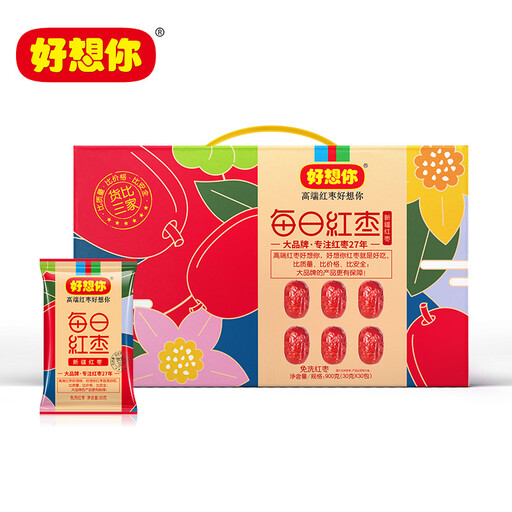 Image unavailable
For households planning to enjoy dates as an individually wrapped snack over several days.
The pack contains 30 portions of 30 g each. One whole pack therefore exceeds the 25 g the German Nutrition Society recommends as a guide for one portion of fruit from dried fruit.
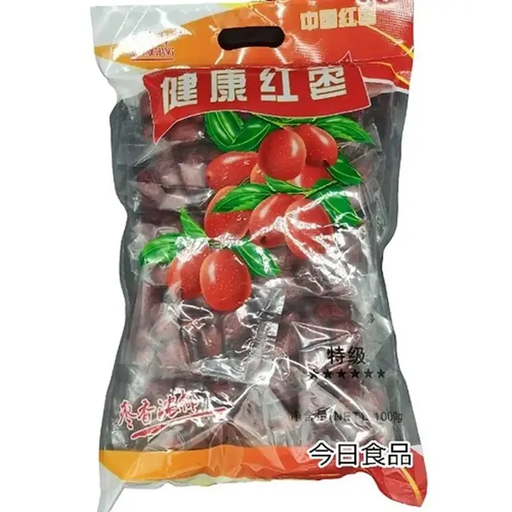 Image unavailable
For households that eat red dates regularly and want to portion out a larger quantity themselves.
The pack contains 1 kg. For children’s snacks, portion out the amount you want to serve and check the nutritional information on the pack.
 Image unavailable
For households that prefer plums as a snack rather than dates or sultanas.
The pack contains 500 g. Check the ingredients list before buying. Even with pitted plums, be aware that small pieces of stone may occasionally remain.
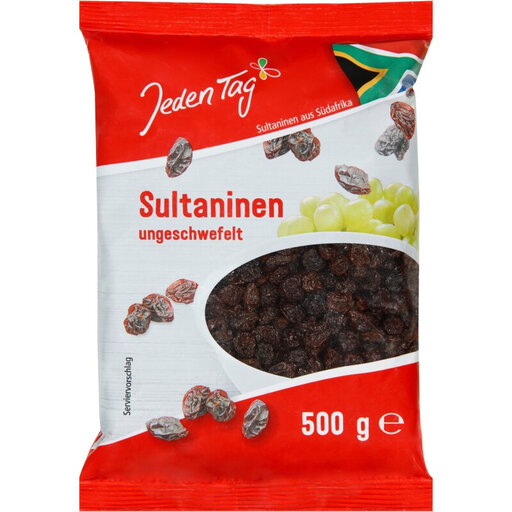 Image unavailable
For households that already use sultanas regularly as a snack or baking ingredient.
The pack contains 500 g. Portion out snacks for children yourself and check the ingredients and nutritional information on the specific pack.
The German Nutrition Society recommends 25 g of dried fruit as a guide for one portion of fruit. If you have a large pack, you can portion out the amount you want before eating. Individually wrapped portions may not match this guide.
The ingredients list on the specific pack is what matters, not just the words ‘dried fruit’. For example, the ja! dried plums listed by REWE contain water and potassium sorbate as well as plums.
Read the full ingredients list and look for any highlighted allergens. Lebensmittelklarheit explains that the requirement to label allergens applies to ingredients intentionally added to a food; warnings about possible traces are a separate matter.
Follow the storage instructions for the product and reseal the pack after taking some out. REWE recommends storing the ja! dried plums it lists in a dry place away from heat. Instructions may differ for other products.