People who avoid sulphites
You’re specifically looking for unsulphured dried fruit. Even with organic products, check the information on the pack itself rather than assuming that everything sold at an organic shop has the same ingredients.


Choose dried fruit for your organic shop based on what matters to you: ‘unsulphured’ refers to sulphuring, while you can check for added sugar in the ingredients list. If you have an allergy, the ingredients and any precautionary allergen information on the specific pack must also meet your needs; a short ingredients list or organic label alone isn’t enough.
You’re specifically looking for unsulphured dried fruit. Even with organic products, check the information on the pack itself rather than assuming that everything sold at an organic shop has the same ingredients.
You want to know whether the recipe includes sugar or starch, for example, as well as fruit. The ingredients list is more helpful than a general description such as ‘natural’.
You need to consider both allergens deliberately used as ingredients and any warnings about possible traces. You can’t tell whether a product is suitable if you need to avoid certain allergens strictly just by looking for ‘unsulphured’ or ‘vegan’.
First decide whether sulphuring, additional ingredients, possible allergen traces or the type of product matters most to you. Then check that specific information on the pack.
| What to check | What to look for | Who it matters to |
|---|---|---|
| Sulphuring | Look for ‘unsulphured’ and read the ingredients and allergen information on the specific pack. | If I want to avoid sulphites, I look specifically for unsulphured fruit rather than judging by its colour alone. This is the main priority for around 40% of consumers. |
| Additional ingredients | Compare the ingredients lists and, if you’re interested in the sugar content, check the nutritional information per 100 g. | I want to know whether sugar or any other ingredients have been added to the fruit in my snack. For around 30% of consumers, the recipe is the main consideration. |
| Allergens and traces | Check for allergens highlighted in the ingredients list, as well as any warnings about possible traces of nuts or peanuts. | If I have a relevant allergy, a short ingredients list isn’t enough if accidental contact is also important to my choice. Around 20% of consumers make this their top check. |
| Product type | Tell classic dried fruit apart from freeze-dried fruit, and check the ingredients for the variety you choose. | For a topping, I’m more likely to look for a crunchy fruit than the usual soft dried fruit. This use is the priority for around 10% of consumers. |
These labels don’t tell you whether the product contains an allergen that matters to you or whether the pack carries a warning about possible traces.
If you have an allergy, check the allergens highlighted in the ingredients list and look out for any precautionary allergen information on the specific product.
These describe different things. For example, the unsulphured GEPA mango listed by REWE contains cane sugar.
Check the information about sulphuring and the ingredients list separately.
Dried fruit contains naturally occurring fruit sugars, even when no sugar has been added. The North Rhine-Westphalia Consumer Advice Centre highlights the high sugar content of dried fruit.
Compare the sugar content per 100 g in the nutritional information and consider the portion you’ll actually eat.
Seeberger describes its freeze-dried range as crunchy. A claim about the product type doesn’t replace checking the ingredients of the variety you choose.
Choose the type that suits how you plan to use it, as a snack or topping, and read the ingredients on the pack.
These examples show how specific dried fruit products and ranges can differ. Whether a product suits you depends on the individual item.
The range includes both classic and freeze-dried fruit.
The dried mango strips are an example of a fruit product labelled as unsulphured.
ALDI SÜD sells sultanas in a 500-g pack as an example of classic dried fruit.
The listed dried mango shows why sulphuring and added sugar are separate things to check when buying.
The mango listed by REWE shows why it’s important to check precautionary allergen information for each product.
These goji berries are a dried fruit option for snacks or meals. If you need to avoid sulphites or particular allergens, check the labelling on the specific pack before deciding.
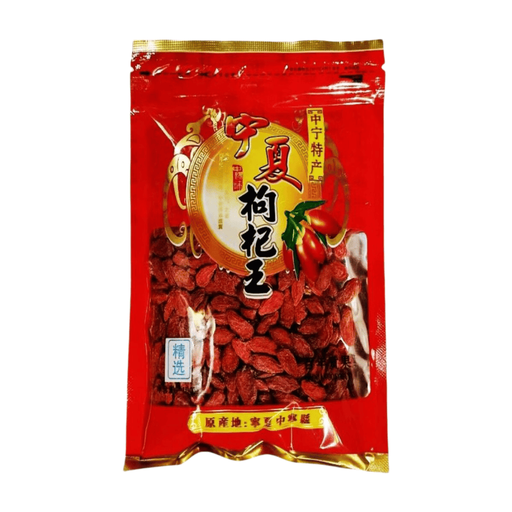 Image unavailable
Goji berries for a dried fruit snack or as an ingredient. If needed, check the pack for information about sulphuring and allergens.
Pack size: 100 g.
No. ‘Unsulphured’ refers to sulphuring, not to every allergen or possible trace. So check the ingredients list and any precautionary allergen information on the specific pack.
No. Dried fruit contains naturally occurring fruit sugars, even when no sugar has been added. If the amount matters to you, compare the sugar content per 100 g in the nutritional information.
According to Lebensmittelklarheit, sulphur dioxide and sulphites must be labelled when present at a concentration of more than 10 mg/kg or 10 mg/l. For packaged foods, allergens that must be declared need to be highlighted in the ingredients list under EU rules, as explained by Your Europe.
No. The absence of a warning doesn’t prove that accidental contact with nuts or peanuts has been ruled out. If you need to avoid these allergens strictly, check whether the specific product is suitable for your individual needs.