Low fat doesn’t automatically mean low in calories: drying concentrates the energy and sugar in dried fruit, per 100 g. If you’re choosing dried fruit as a snack on a low-fat diet, compare the fat, calorie and sugar content per 100 g and for the portion you plan to eat. Also check the ingredients list, particularly for sweetened products and mixes.
Who should compare these products?
People keeping an eye on fat and calories
You want to keep track of both fat and calories when choosing a snack. That means checking the nutritional information per 100 g and considering how much you actually plan to eat – not relying on the label ‘dried fruit’ alone.
People watching their added sugar intake
You’re looking for dried fruit without added sweetening ingredients. Compare the ingredients list with the sugar content in the nutrition table: even fruit with no added sugar contains naturally occurring fruit sugars.
People for whom sulphur dioxide matters
You want to know whether dried fruit has been treated with sulphur dioxide. Check the specific labelling or look for an explicit ‘unsulphured’ claim. You’ll need to assess the fat and calorie content separately.
What should you look for when buying?
For a low-fat snack that’s also calorie-conscious, start by checking the energy and fat content per 100 g. The ingredients and sugar content can then help you compare different options, while sulphur dioxide is an additional point to check if it matters to you.
| Criteria |
What to check |
Who it matters to |
| Calories and fat |
Compare the energy and fat content per 100 g, then relate the figures to the portion you plan to eat. |
I want to plan a snack without assuming that a low fat content means fewer calories; for around 42% of consumers, calorie and portion control come first. |
| Sugar and ingredients |
Check the ingredients list and sugar content per 100 g; for mixes, check the other ingredients too. |
If I want to avoid added sweetening ingredients, a claim on the front of the pack isn’t enough; for around 33% of consumers, checking the ingredients is the main priority. |
| Sulphur dioxide |
Check the labelling on the specific pack and, where relevant, look for an ‘unsulphured’ claim. |
If sulphur dioxide matters to my choice, I need to check for it separately; around 25% of consumers prioritise sulphur dioxide labelling when choosing. |
Which mistakes can you avoid?
-
Assuming that low fat means fewer calories
The nutritional information for two types of dried fruit from ALDI SÜD shows the difference: its prunes are listed as containing 0.5 g of fat and 221 kcal per 100 g, while its apricots contain 0 g of fat and 260 kcal per 100 g.
Compare both figures and decide how much you plan to eat.
-
Looking only at appealing claims on the pack
‘No added sugar’ doesn’t mean ‘sugar-free’. According to Lebensmittelklarheit, this is a legally defined claim; it doesn’t change the fact that dried fruit can contain naturally occurring fruit sugars.
As well as checking the claim on the pack, read the ingredients list and the sugar content per 100 g.
-
Treating mixes like pure dried fruit
Assortments of dried fruit can also contain nuts and other snack products. You can’t work out their ingredients and nutritional values from the fruit alone.
For every mix, check the full ingredients list and the energy and fat content in the nutrition table.
-
Overlooking sulphur dioxide if it matters to you
Whether a fruit is right for you may depend on its sulphur dioxide labelling. You can’t answer this question by looking at the fat content.
Check the specific pack and, if needed, look for an explicit ‘unsulphured’ claim.
Brands and own-label ranges to consider
The ranges below include different types of dried fruit and snacks. Always check the information for the specific product you’re considering.
Seeberger
Seeberger’s range includes dried fruit, soft fruit, freeze-dried fruit and fruit crisps.
- The different parts of the range make it easy to compare fruit and snack formats.
- You’ll need to check the ingredients and nutritional information for each product; Seeberger, for example, explicitly labels its apricots as unsulphured.
REWE / REWE Beste Wahl
REWE’s dried fruit category includes a range of different fruits and brands.
- You can compare different types of fruit within the category.
- Being part of this category tells you nothing about the fat or calorie content of an individual product.
EDEKA / EDEKA Herzstücke
EDEKA24 stocks dried fruit such as apricots, currants and mango strips alongside nuts.
- The type of fruit and pack size are easy to identify as starting points for comparison.
- For nut products and mixes, check their individual ingredients and nutritional information.
Lidl / Alesto
According to Lidl, Alesto includes nuts and dried fruit as well as seasoned snack products.
- Dried fruit is part of the snack range.
- The brand name alone doesn’t tell you how much fat a product contains.
ALDI SÜD / FARMER NATURALS und NATURLIEBLINGE
ALDI SÜD sells products including prunes and dried apricots under these ranges.
- For these two examples, the product information gives the energy and fat content per 100 g, making a direct comparison possible.
- According to ALDI SÜD, the information may vary by supplier, so check the pack of the product you’re buying.
Dried fruit at Joybuy
These two fruit products are worth considering for a snack comparison. To see whether their nutritional values fit your fat and calorie targets, check the information on the specific pack and consider the portion you plan to eat.
 No image available
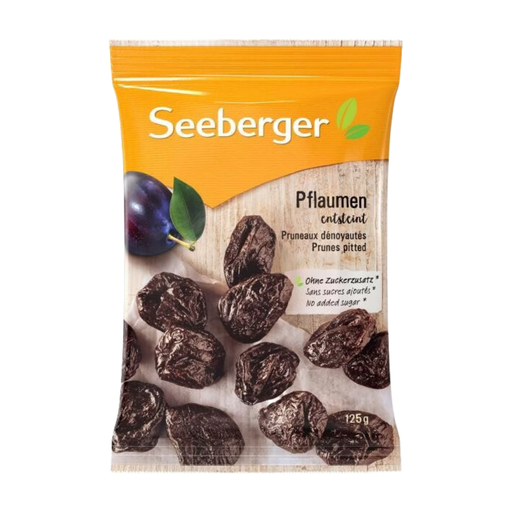
Seeberger soft dried prunes, pitted, 125 g
These soft dried prunes are worth comparing with other fruit snacks if you want to decide on your portion in advance.
Pack size: 125 g. Despite being pitted, watch out for any possible fragments of stone when eating.
View at Joybuy
 No image available
Seeberger dried apple rings, 80 g
Dried apple rings are another fruit option whose fat, sugar and calorie content you can compare with other snacks.
Pack size: 80 g. If sulphur dioxide matters to your choice, check the labelling before buying.
View at Joybuy
Frequently asked questions
Is dried fruit automatically low in calories on a low-fat diet?
No. Low fat and fewer calories are two different things. ALDI SÜD lists its prunes as containing 0.5 g of fat and 221 kcal per 100 g, and its dried apricots as containing 0 g of fat and 260 kcal per 100 g. So compare the nutritional information and relate it to your portion.
Does ‘no added sugar’ also mean ‘sugar-free’?
No. Dried fruit can contain naturally occurring fruit sugars even when no sweetening ingredients have been added. If these values matter to your choice, also check the sugar and energy content in the nutrition table.
How can I check for other ingredients in a dried fruit snack?
The ingredients list shows whether the product contains anything besides fruit. The Verbraucherzentrale, for example, lists glucose syrup and fruit juice as ingredients that can contribute to a food’s sugar content. For mixes, you should also check the energy and fat content of the whole product.
What should I check about sulphur dioxide in dried fruit?
If sulphur dioxide matters to your choice, check the labelling on the specific pack or look for an explicit ‘unsulphured’ claim. This doesn’t replace comparing the fat, sugar and calorie content.


