What should you look for when buying?
Start by comparing the calories per 100 g, then check the sugar and ingredients. For your lunch break, it also matters how much you’ll actually pack and whether the fruit and packaging suit your journey.
| Criterion | What to check | Who it matters to |
|---|
| Calories and portion size |
Compare kcal per 100 g and decide how much to take with you. |
If I want to plan a small snack, I need a clear idea of my portion as well as the information on the packet. Around 36% of consumers put calorie content first. |
| Sugar and ingredients |
Check ‘of which sugars’ per 100 g and the ingredients list for added sugar or sweetened fruit. |
When I choose a fruit mix, I want to know whether it contains any sugars other than those naturally present in the fruit. For around 29% of consumers, checking the ingredients comes first. |
| Sulphites |
Check the ingredients and allergen information; ask for details if buying loose. |
If I need to watch my sulphite intake, I don’t rely on the colour of the fruit. Around 21% of consumers put this check ahead of texture and calorie content. |
| Format and texture |
Check the pack size and resealable packaging, and choose the soft or crunchy texture you prefer. |
For my journey to lunch, I want to be able to take my snack with me without any preparation and portion it as needed. For around 14% of consumers, practical use is the main consideration. |
Brands to consider
The product ranges below include different types of fruit and ingredients. When you’re choosing what to buy, check the details for the specific product rather than relying on the brand name alone.
Seeberger
Seeberger’s range includes apricots, dates, soft fruit and freeze-dried fruit.
- Seeberger’s range information makes it easier to search for the type of fruit and ingredients you’re looking for.
- The claim ‘no added sugar’ doesn’t replace checking the sugar or kcal figures for the specific product.
REWE Beste Wahl
The own-brand range includes freeze-dried fruit mixes and dried berry mixes.
- REWE lists 345 kcal and 69 g of sugar per 100 g for its freeze-dried fruit mix.
- Sweetened cranberries are listed as an ingredient in the Beste Wahl berry mix, so check each mix individually.
EDEKA
EDEKA sells both organic soft apricots and Herzstücke apricots treated with sulphites.
- EDEKA lists 239 kcal per 100 g for its organic soft apricots and 263 kcal per 100 g for its Herzstücke apricots.
- The Herzstücke apricots contain sulphur dioxide. Check the information on the specific pack when you buy.
ALDI SÜD / FARMER NATURALS
FARMER NATURALS includes dried pineapple in a resealable 100 g bag.
- ALDI SÜD lists 319 kcal and 52 g of sugar per 100 g for this pineapple product.
- The bag format doesn’t tell you how much to have as a snack; consider the calories and portion size separately.
Dried fruit at Joybuy
These dried apple rings and dates are options to consider for snacking on the go. For a calorie-conscious choice, compare the nutrition information on the specific packs and portion out larger bags before taking them with you.
 No image available
Seeberger dried apple rings, 80 g
These dried apple rings are a fruity option to pack for your lunch break. The pack contains 80 g; check the nutrition information and, if needed, the sulphite information on the specific pack to compare.
View at Joybuy
 No image available
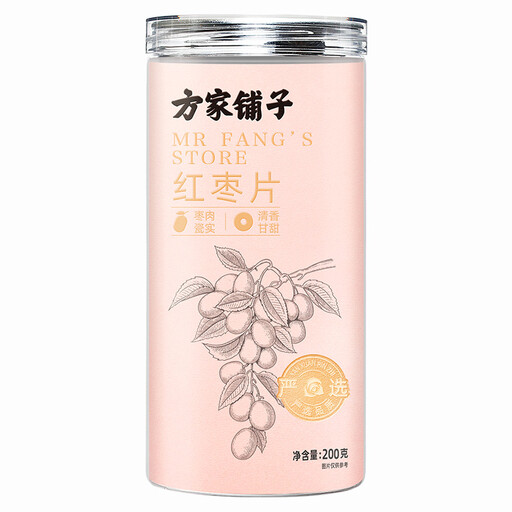
Fang Jia Puzi dried red date slices, 200 g
You can portion these sliced dates straight from the pack for a snack on the go. As the pack contains 200 g, it’s worth setting aside the amount you want beforehand and checking the sugar content on the label.
View at Joybuy
 No image available
Seeberger pitted Deglet Nour dates, 500 g
These pitted dates are a handy option if you want to pack fruit for the go without removing the stones. The 500 g pack isn’t a set single portion, so choose how much to take according to your plans and compare the nutrition information per 100 g.
View at Joybuy
Frequently asked questions
Are freeze-dried fruits automatically low in calories?
No, the drying method alone doesn’t answer that. According to the Verbraucherzentrale, removing water concentrates the sugar and calories per 100 g; REWE lists 345 kcal and 69 g of sugar per 100 g for its freeze-dried Beste Wahl fruit mix.
Is dried fruit with no added sugar sugar-free?
No, it still contains naturally occurring fruit sugars. So when comparing snacks, check the ‘of which sugars’ and calorie figures as well as the ingredients list.
How can I tell if dried fruit has been treated with sulphites?
For packaged dried fruit, check the ingredients and allergen information, not just the front of the pack. Lebensmittelklarheit says sulphited fruit should be identified in the ingredients list; if buying loose, you can ask for allergen information.
Can I pack dried fruit instead of fresh fruit?
Dried fruit is a portable snack, but it isn’t a like-for-like substitute for the same quantity of fresh fruit. The Verbraucherzentrale NRW highlights its concentrated sugar and energy content, so plan separately how much you want to eat on the go.
Which information should I follow if the product page and packaging differ?
When buying, refer to the information on the specific pack. EDEKA notes that details on its product pages may differ from the packaging.


